



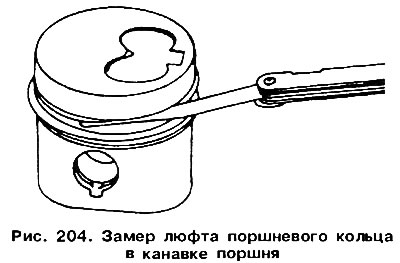
Measure the gap between the piston rings and the ring groove flanges using the method shown in Figure 204. If this measurement, measured with a feeler gauge, exceeds 0.20 for a compression ring or 0.15 mm for an oil scraper ring, this indicates wear of the ring or piston. The nominal gap values are given in Table 1. Then insert the piston rings into the cylinders one by one from the cylinder block side. In a turbocharged engine, the oil supply nozzles should be unscrewed in advance. With the piston upside down, press each ring down by approximately 20, with the rings being perpendicular to the cylinder axis. Insert a feeler gauge into the ring joints to determine the gap in the joint (see figure 74). For compression rings, the gap should be 0.30-0.50 mm, and for oil scraper rings - 0.25-0.40 mm. The maximum permissible gap in the lock for all types of rings is 1.0 mm.
If the gap is very small (this happens on new rings, which also need to be checked), then you can increase it by filing the ends (see figure 75). If the gap in the lock exceeds 1 mm, the rings should be replaced. Check the degree of wear of the piston pin and connecting rod head bushing. A connecting rod that does not meet the requirements must be replaced together with the rest of the connecting rods, even if they are in good condition. The connecting rod cap bolts and nuts should always be replaced. It is recommended to check the connecting rods for bending. Method for measuring play in connecting rod bearings described here.
Visitor comments