Currently, the main competitors of the Sharan are Chrysler Voyager, Dodge Caravan, Ford Galaxy, Ford S-Max, Kia Carnival, Honda Odyssey, Honda Stepwgn, Hyundai Starex (H-1), Mazda Bongo, Mazda 5, Mercedes-Benz Viano, Mitsubishi Delica, Nissan Serena, Renault Espace, SsangYong Rodius, Toyota Sienna, Toyota Noah.
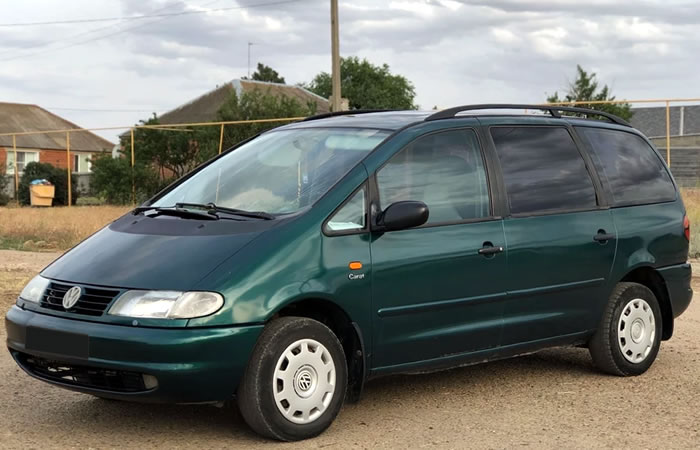
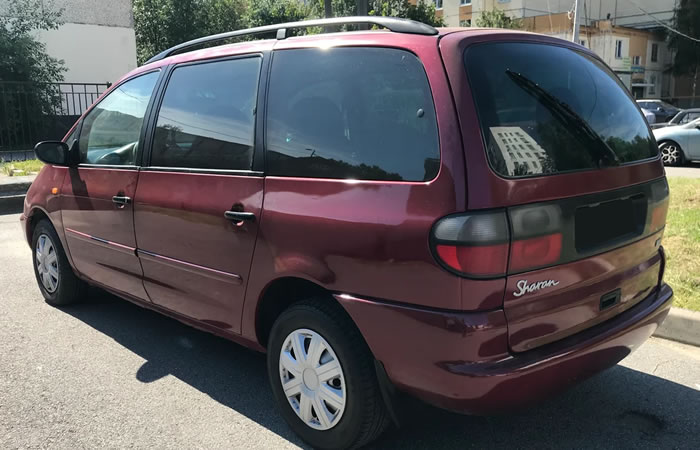
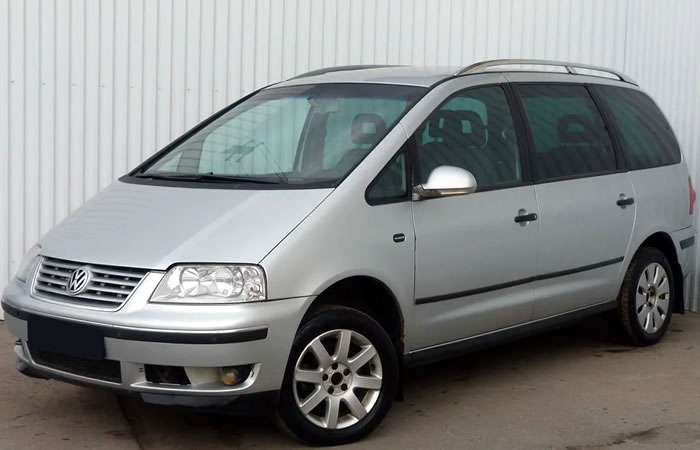
Sharan 1 (Phase 1, 1995–2000)
The first generation with the code "Typ 7M" began to be produced in May 1995. The concept of this car was first shown at the Paris Motor Show in October 1994. The body was made in the form of a five-door minivan with five or seven seats. Its length was 4615 mm, width 1810 mm, height 1728 mm, wheelbase 2835 mm and unladen weight of 1650-1820 kg. About 670 thousand cars of the first generation were produced.
Petrol engines were presented by three models - two four-cylinder 1.8 - liter (1781 cm³, AJH, turbocharged, 150 hp) and 2.0 liters (1984 cm³, ADY, naturally aspirated, 115 hp), and also a six-cylinder 2.8-liter engine (2792 cm³, AAA/AMY, VR6, 174/204 hp). The diesel engine had only one volume - 1.9 liters (1896 cm³, 1Z/AHU/AFN/AVG, TDI, 90/110/115/130/150 hp). The transmission was a five- or six-speed manual, as well as a five-speed automatic "Tiptronic". An all-wheel drive model was produced with a VR6 engine "Sharan Syncro" with torque distribution to all wheels.
In 1999, the "European New Car Assessment Program" EuroNCAP tested the car for safety and gave it a rating of three stars out of five. Also in 1999, the car received the award "Best MPV" according to the British magazine "Auto Express".
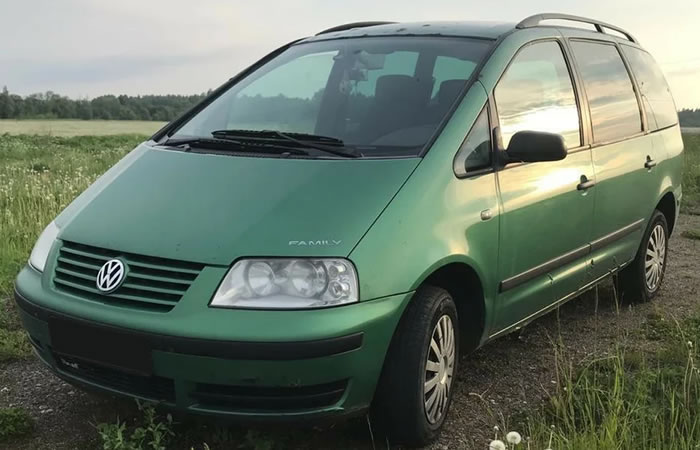
Sharan 1A (Phase 1.5, 2000—2004)
In May 2000, the car underwent a major update. In addition to aesthetic improvements that made the appearance more similar to other Volkswagen cars, the wheelbase was increased by 6 mm and the front and rear tracks. A completely new dashboard was also installed instead of the one previously supplied by Ford. The standard equipment was with seven seats. The external dimensions of the body were as follows - length 4634 mm, width 1810 mm, height 1730 mm, wheelbase 2841 mm and unladen weight of 1607 - 1770 kg.
The engines were slightly modified. The petrol engines were four-cylinder, 1.8-litre units (1781 cm³, AWC, 20V, turbo, 150 hp), 2.0 liters (1984 cm³, ATM, 8V, 116 hp) and a six-cylinder 2.8-liter engine (2792 cm³, AYL, VR6, 24V, 204 hp). The diesel engine was a four-cylinder 1.9-liter (1896 cm³, ANU/AUY/ASZ, 8V, 90/116/131 hp). The gearbox was a six- or five-speed manual or a six-speed automatic "Tiptronic". Cars with 2.8 l/VR6 and 1.9 l/AUY engines were equipped with all-wheel drive.
According to the automobile magazine "Auto Express" in 20000, the Sharan 1A received the "Best MPV" award, for the second year in a row.
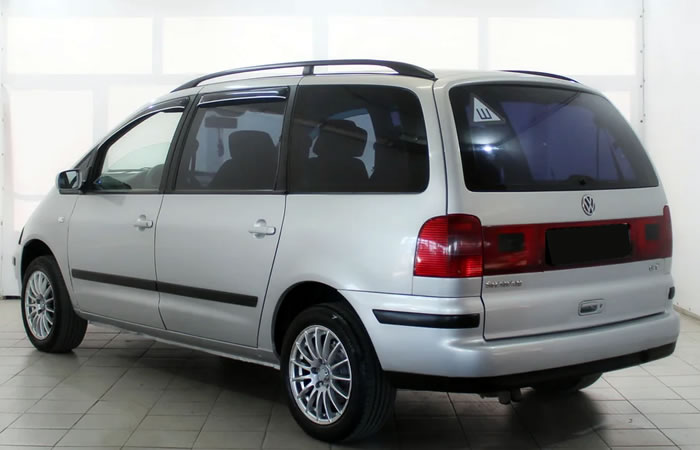
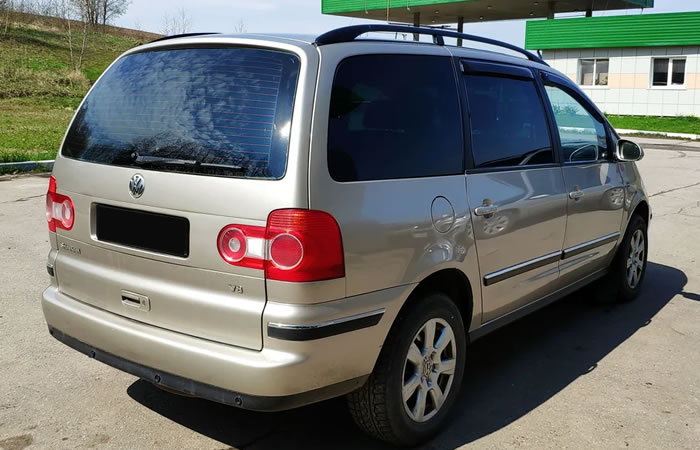
Sharan 1B (Phase 1.75, 2004—2010)
In September 2003, the updated "Sharan 1B" of the 2004 model year began to be produced. The updates were minor and affected mainly the appearance - the radiator grille and rear lighting devices were changed, and more equipment was added to the standard package - air conditioning and side airbags. The external dimensions of the body and the weight of the car remained virtually unchanged. Petrol and diesel engines remained the same, as did the transmission options.
In June 2006, PrinceGas and "Volkswagen" presented a car with an engine that could run on both gasoline and liquefied natural gas (LPG). The engine was a four-cylinder in-line 2.0-liter engine with a power of 114 hp. The gasoline tank capacity was 70 liters, like the standard model, plus the LPG tank capacity was 60 liters. This tank was located in place of the spare wheel and did not take up space in the cabin.
In 2006, Ford began producing the new Ford Galaxy, which was no longer based on the VW Sharan platform.
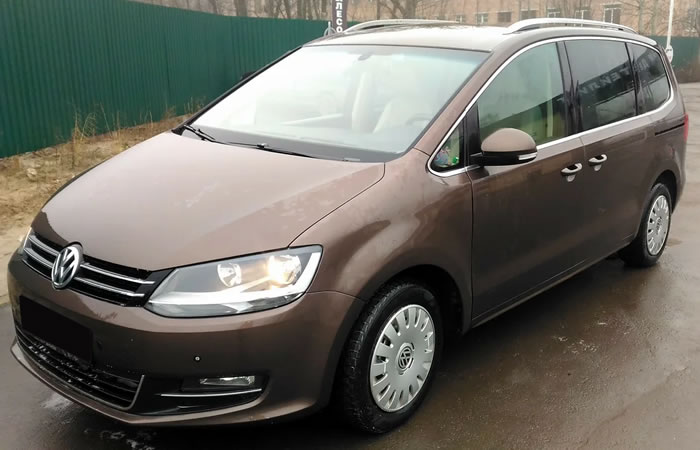
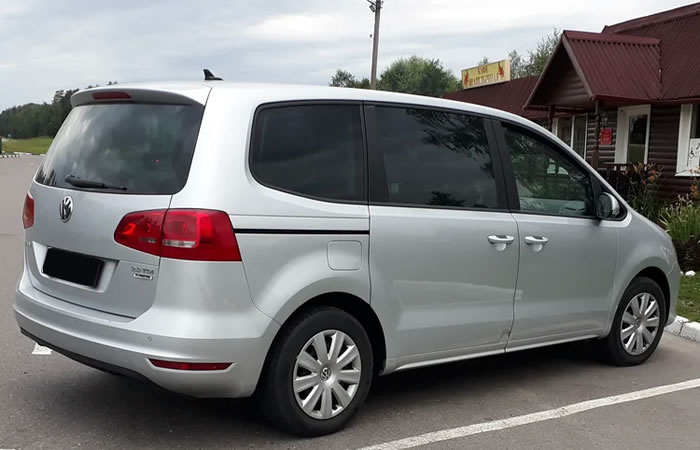
Sharan 2 (Typ 7N, 2010—present)
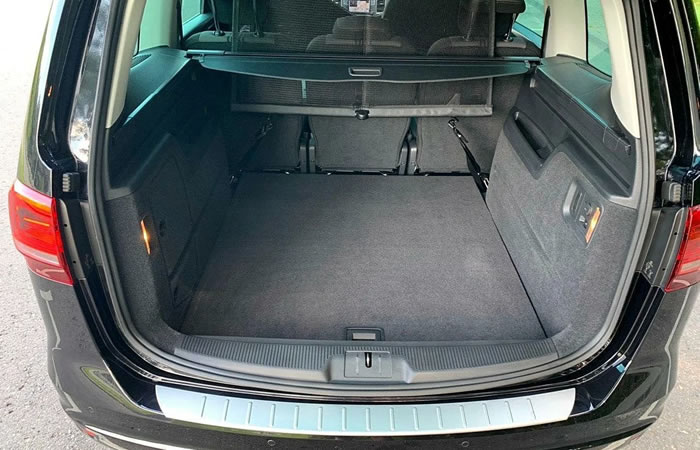
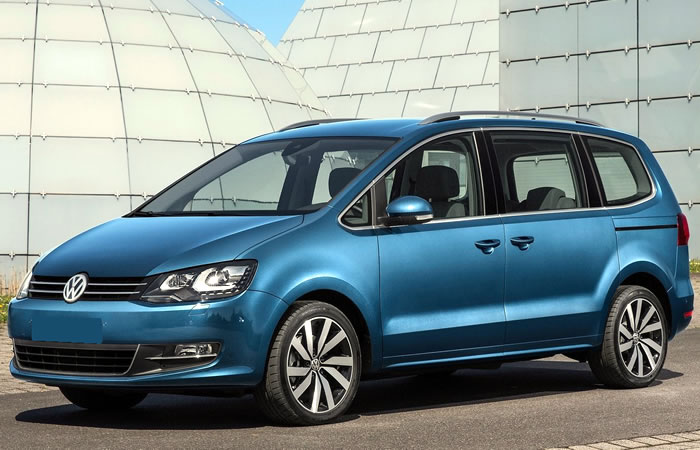
In March 2010, the second generation of the VW Sharan was presented at the Geneva International Motor Show. This car is based on the PQ46 platform, which was used for "VW Passat" seventh generation (B7). A month later, a related minivan appeared "Seat Alhambra" second generation. Sales of Sharan started in September 2010. Production was also located in Portugal, in the city of Palmela. The body of the minivan became much larger than the previous generation. Its length became 4854 mm, width 1905 mm, height 1720 mm, wheelbase 2918 mm, curb weight 1723-1800 kg. As you can see, the length increased by 220 mm and the width by 92 mm. Some body elements are very similar to parts "Touareg". Unlike the previous generation, the car has a sliding door system that can be controlled manually or electrically.
There were two types of petrol engines, both four-cylinder with a capacity of 1.4 liters (1390 cm³, CAVA/CZDA, TSI, 150 hp) and 2.0 liters (1984 cm³, CCZA/DEDA, TSI, 200/220 hp). The diesel engine was also a four-cylinder 2.0-liter unit (1968 cm³, TDI), but different modifications and capacities - CFFE/CUVA: 115 hp, CFFB: 140 hp, CUVC: 150 hp, CFGB: 170 hp, CFGC: 177 hp and CUWA: 184 hp. The gearbox was a six-speed manual, as well as a six- or seven-speed robot with dual clutch (DSG). With some diesel engines, the car came with all-wheel drive "4Motion". To reduce fuel consumption, the "Start-Stop" system and regenerative braking were used.
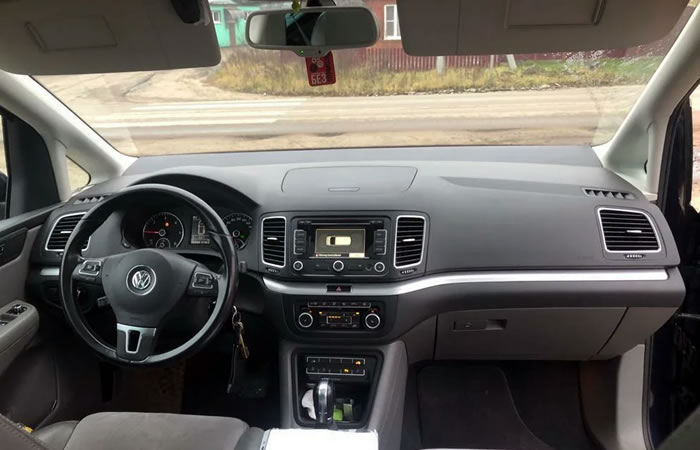
In March 2015, an updated version of the second generation of the "VW Sharan" was presented at the Geneva Motor Show, and in July its production began. The external dimensions of the body have remained virtually unchanged. The engines have been slightly updated, fuel consumption has been reduced with the help of new electronics. External changes include new headlights, daytime running lights, taillights, and a slightly changed dashboard.