English Русский
Български
Беларускі
Український
Српски
Hrvatski
Română
Polski
Slovenský
Magyar
  |  Articles  |  Sitemap  |  Contacts  |  Search  |
Car maintenance Ford Car maintenance Hyundai Car maintenance Chevrolet Car maintenance BMW Car maintenance Audi Car maintenance Opel Car maintenance AvtoVAZ
VWmanual.ru


Main   Passat   Golf   Polo   Touareg   Tiguan   Sharan   Transporter   Others  
Polo 3 (1995-2003) Polo 4 (2001-2009)

Technical characteristics of the Volkswagen Polo car

  • Main
  • Polo
  • Technical characteristics of the Volkswagen Polo car


Polo is a popular small B-class car of the German company Volkswagen, produced from 1975 to the present day. The predecessor was the mini-car Audi 50, produced from 1974 to 1978. Further company Audi reoriented to the production of premium cars, and Polo completely covered the compact segment. The oil crisis of the 70s allowed it to gain great popularity and it is consistently among the top 10 best-selling European cars. There were five generations of Polo. The car bodies are hatchback, sedan, station wagon and cargo-passenger van. In 2010, it won the "World Car of the Year" award. Its closest competitors are Ford Fiesta, Daewoo Nexia, Honda Fit, Hyundai Solaris, Kia Rio, Lada Granta, Nissan Almera, Opel Astra, Peugeot 208, Renault Logan, Skoda Rapid, SEAT Ibiza and Toyota Yaris.

Polo I (1975-1981)


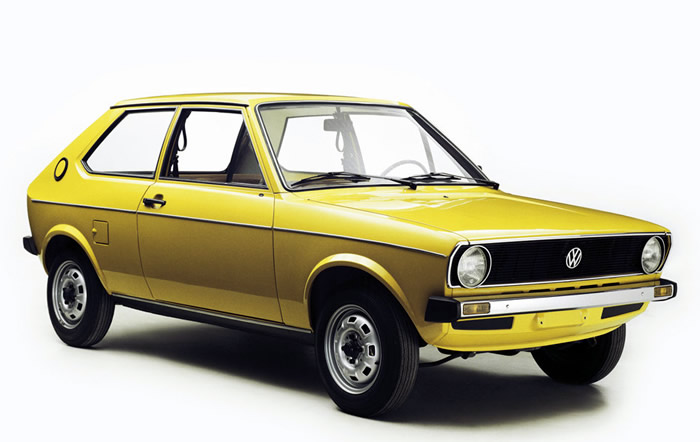
Volkswagen Polo 1975 year 
Volkswagen Polo 1975 year
The first generation of Polo was released in 1975, replacing the Audi 50. It was cheaper than Audi and therefore became much more popular. About 500,000 copies were produced in total. All cars were produced at the Volkswagen plant in Wolfsburg. The body was of two types - a sedan and a hatchback, the interior trim was inexpensive and simple, a fairly large trunk with a volume of 260 liters.

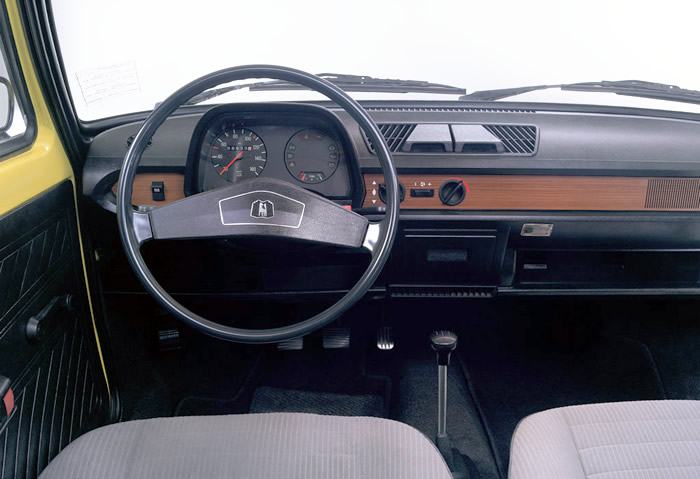
Dashboard Volkswagen Polo I 
Dashboard Volkswagen Polo I
The car had front-wheel drive with four-cylinder in-line petrol engines, located transversely and with a volume of 0.9, 1.1 and 1.3 liters with a capacity of 39, 50 and 60 hp. Four-stroke engines with liquid cooling and a cast-iron cylinder block. Transmission only mechanical 4-speed together with a dry single-disc clutch.

The brakes were drum at the rear and disc at the front. The rear suspension was semi-independent with a torsion beam, the front was MacPherson type with an anti-roll bar.

Polo II (1981-1994)
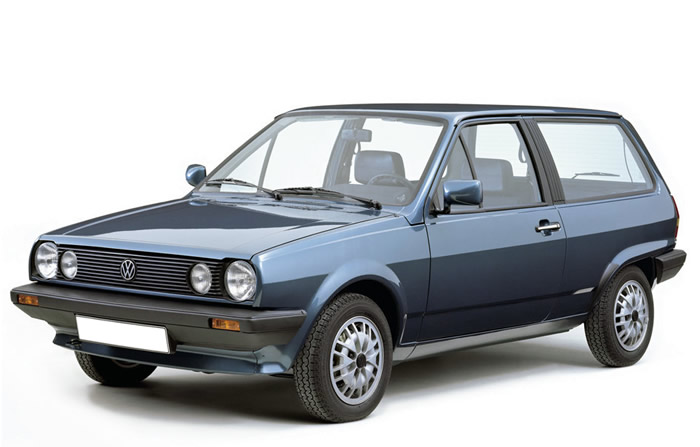

Polo II, 3-doors hatchback 
Polo II, 3-doors hatchback
The world saw the second generation in September 1981. The car was manufactured at the same plant in Wolfsburg, but in the mid-80s, production was also established in Spain. A new body type was added to the already produced sedans and hatchbacks - a 3-door station wagon. Three types of equipment appeared - C, CL and GL.

The car gained popularity and by 1986 more than two million units of both generations had been produced. In total, 1.7 million cars were produced during the 13-year production period of the Polo II. The main competitors were the Austin Metro, Ford Fiesta, Fiat Uno and Peugeot 205, but the Polo stood out for its higher reliability and build quality.
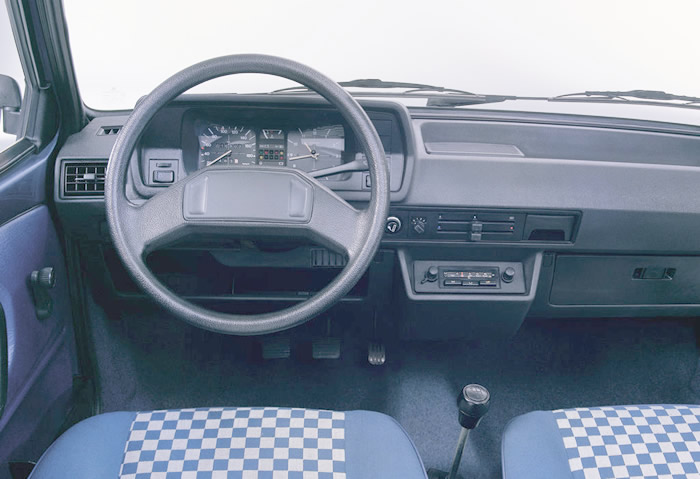
Dashboard Volkswagen Polo II 
Dashboard Volkswagen Polo II
At first, the car was equipped with four-cylinder petrol engines with a capacity of 1.0, 1.1 and 1.3 liters and a power of 45 to 116 hp. In 1986, the first diesel engines with a capacity of 1.3 and 1.4 liters appeared (45 and 48 hp), but they were not in great demand. The suspension, brake system and steering remained the same.

In 1990, this model underwent modernization. The biggest visual difference is the rectangular headlights, a new radiator grille, larger taillights, larger bumpers and a new interior (door trim and instrument panel). The chassis, suspension and braking system were also modified. All engines were equipped with catalytic converters.

Polo III (1994-2001)
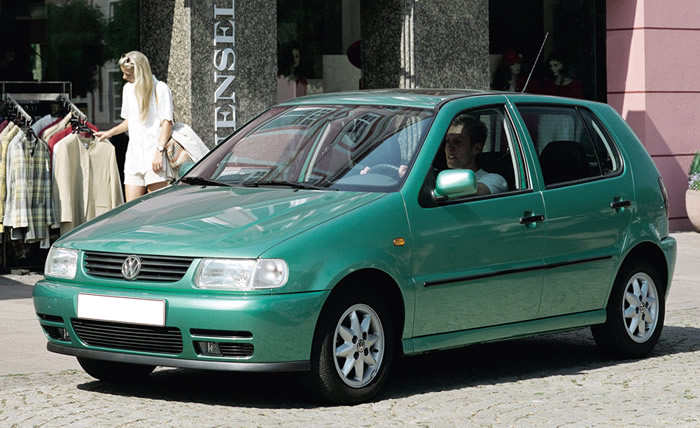

Polo III, 5 doors hatchback 
Polo III, 5 doors hatchback
This generation was completely new, assembled on the Volkswagen A03 platform. Production began in 1994 in Spain (pamplona city) and Germany (city of Wolfsburg), and in October the car was presented at the Paris Motor Show and went on sale. The shape of the car became more rounded, which allowed to reduce aerodynamic resistance and look more modern. The dimensions slightly increased, the body types are as follows - 3-door hatchback, 4-door sedan and for the first time 5-door hatchback and station wagon appeared.

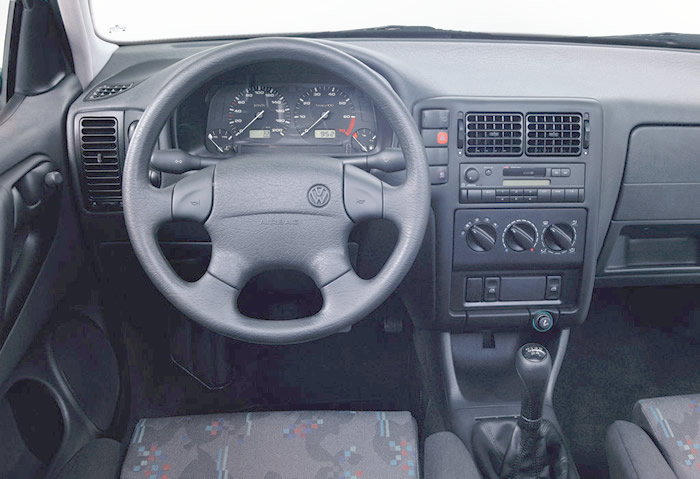
Dashboard Volkswagen Polo III 
Dashboard Volkswagen Polo III
The suspension was significantly improved, despite the previous concept. This improved the car's behavior when turning. It became possible to order the car with power steering. The brakes could also be ordered with the ABS option and electronic brake force distribution.

At first there were three petrol engines - 1.0, 1.4 and 1.6 litres (50, 60 and 75 hp). Since 1996 they have been replaced by new 16-valve engines with a capacity of 1.4 and 1.6 liters (100 and 120 hp). The choice of diesel engines has expanded significantly. At first there were naturally aspirated diesel engines with a capacity of 1.7 and 1.9 liters (60 and 64 hp), then in 1996, turbodiesels with direct injection appeared in volumes of 1.4 and 1.9 liters (75 and 90 hp).
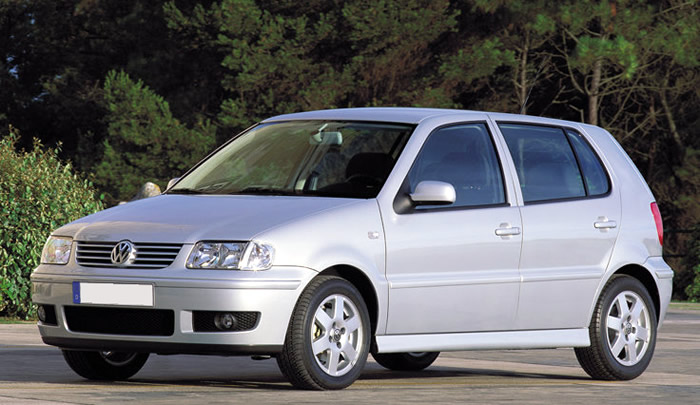
Polo III after modernization 
Polo III after modernization
New assembly plants in addition to the existing ones were opened: November 17, 1995 at the plant in General Pacheco, Argentina; in the fall of 1995 at the plant in Martorell, Spain; in June 1999 at the plant in Bratislava, Slovakia.

In 1999, the Polo 3 was modernized. The large Volkswagen emblem on the trunk lid and radiator grille immediately catches the eye. Airbags and ABS were added to the basic configuration, the quality of the interior trim was improved, and the body was reinforced.

Polo IV (2001-2009)
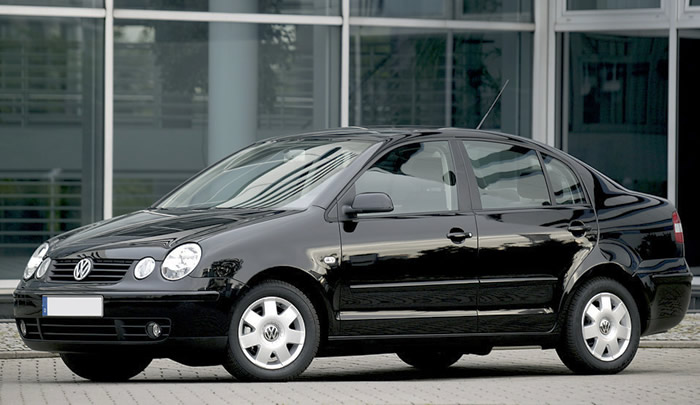

Polo IV, 4-doors sedan 
Polo IV, 4-doors sedan
Introduced on September 11, 2001 at the Frankfurt Motor Show, the fourth generation Polo is completely new and has a structural similarity to the Golf IV. The external difference from the previous generation is the four round headlights. All body parts are galvanized and the overall rigidity of the body has been increased by one third. The interior space has also increased, and the quality of the interior trim has improved. The body types were as follows - 3- and 5-door hatchback and 4-door sedan.

The range of petrol engines expanded and included volumes from 1.2 to 1.6 liters (from 55 to 105 hp). A turbocharged 1.8-liter petrol engine with 150 hp was also available. There were three types of diesel engines to choose from - one naturally aspirated 1.9-liter (64 hp) and two turbodiesels with a capacity of 1.4 (75 hp) and 1.9 liters (101 hp). All engines comply with the Euro-4 standard. There are two transmissions to choose from - a 4-speed automatic or a 5-speed manual.
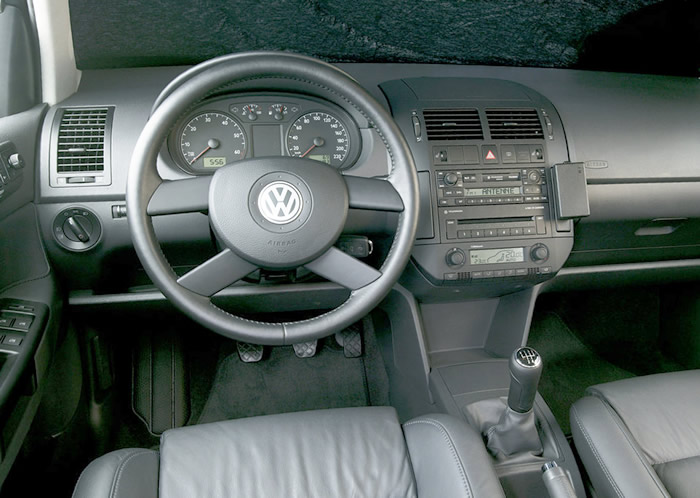
Dashboard Volkswagen Polo IV 
Dashboard Volkswagen Polo IV
By default, the brakes were equipped with an ABS system with an electronic brake force distribution system, as well as an emergency braking assistance system. All cars have ventilated disc brakes, except for models with engines less than 75 hp, on which the rear brakes are drum.

Height-adjustable seat belts with tension limiters, as well as enlarged airbags, are responsible for the safety of passengers and the driver. Side airbags can be installed as an option.

Polo V (2009-2017)
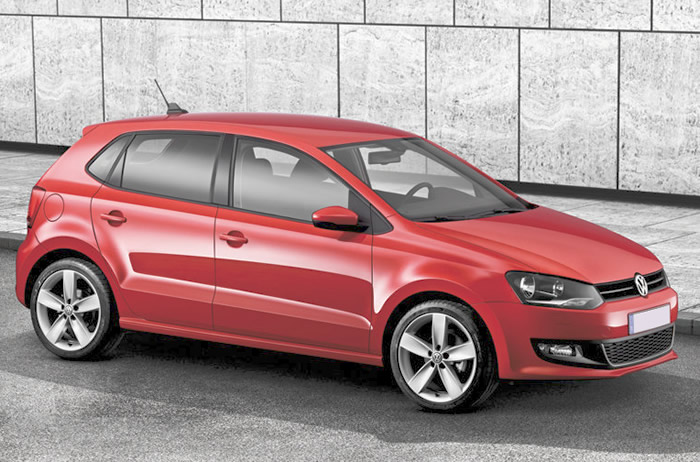

Polo V, 5 doors hatchback 
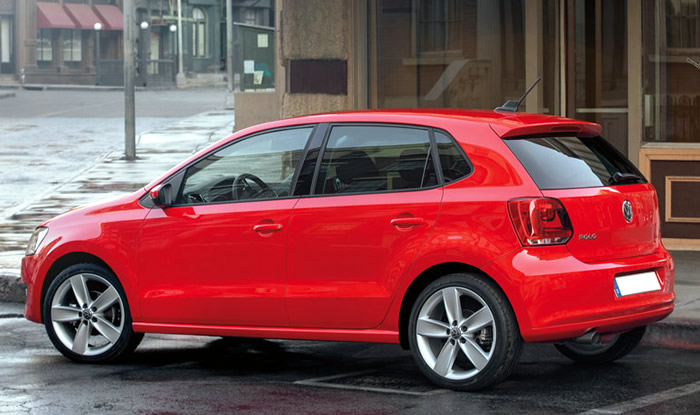
Polo V, 5 doors hatchback
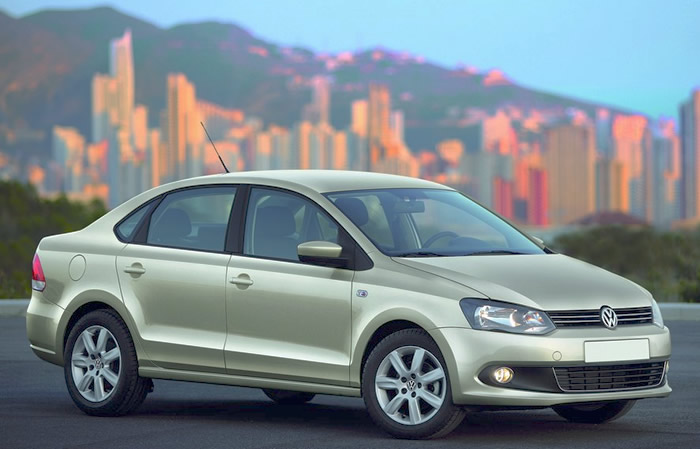
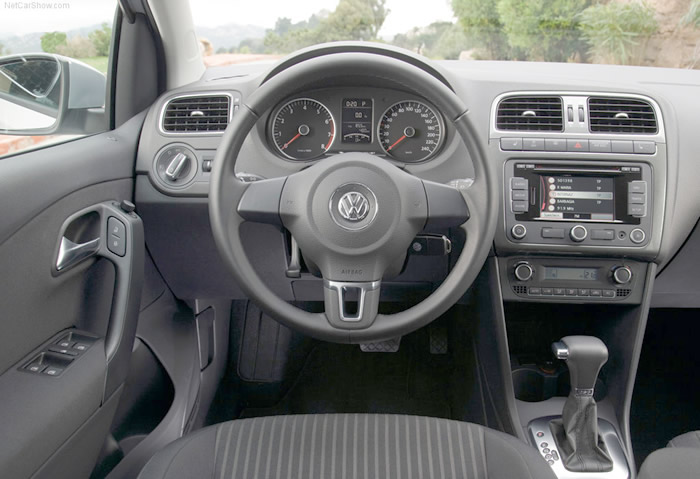
In March 2009, the fifth generation of the Volkswagen Polo was launched and its production began at the plant in Pamplona, Spain. In December, production began at a new plant in India in the city of Pune. The design of the car is a continuation of the corporate style of the Golf VI. The length has increased by 44 mm, the width has increased by 32 mm compared to the previous generation. The body types remained the same - sedan and hatchback. The central console has been completely redesigned, and the comfort of the cabin has also increased.

Polo V, 5 doors hatchback, back view 
Polo V, 5 doors hatchback, back view
A wide range of petrol engines with a capacity of 1.2 to 1.6 litres and a power of 70 to 180 hp is presented. There are two diesel engines - 1.2 litres (75 hp) and 1.6 litres (105 hp). The transmission is available as a 6-speed manual or 7-speed automatic preselective DSG. The chassis has not changed much, only design improvements have been made to improve stability and controllability.

The braking system, in addition to those already described above, is equipped with an electronic stability program (ESP), a hill start assist system and a differential lock simulation system.
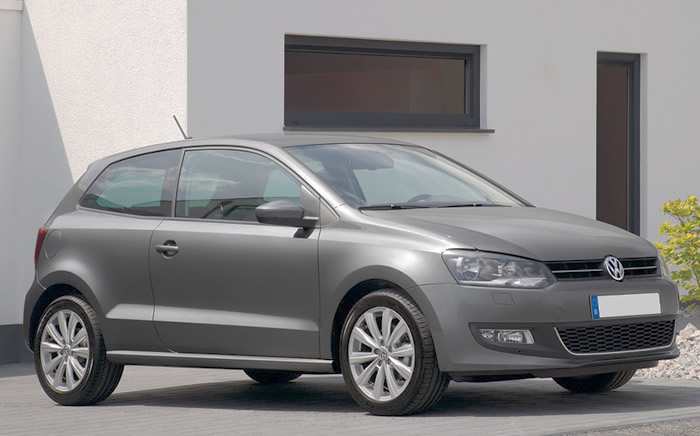
Polo V, 3-doors hatchback 
Polo V, 3-doors hatchback
The car's passive and active safety has been improved. The bumper, central pillars and doors have been reinforced. Two front and two side airbags, front seat belts with pretensioners, and three-point belts for rear passengers are included in the basic package.

In 2010, Polo was awarded the European Car of the Year award for the first time, as well as the World Car of the Year. For 2010–2011, it was awarded the Japan Import Car of the Year award.
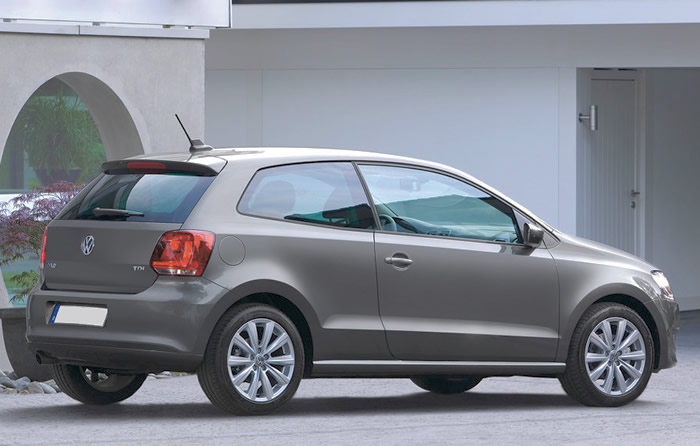
Polo V, 3-doors hatchback, вид  сзади 
Polo V, 3-doors hatchback, вид сзади
Polo V, 4-doors sedan 
Polo V, 4-doors sedan
Dashboard Volkswagen Polo V 
Dashboard Volkswagen Polo V

Polo VI (2017-present)


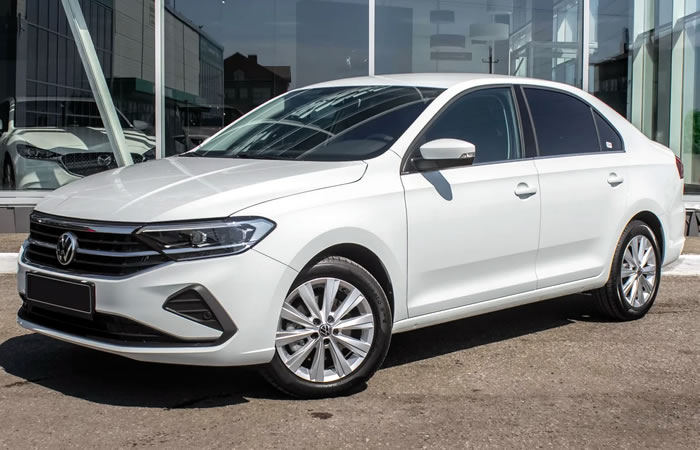
Polo VI, sedan, front view 
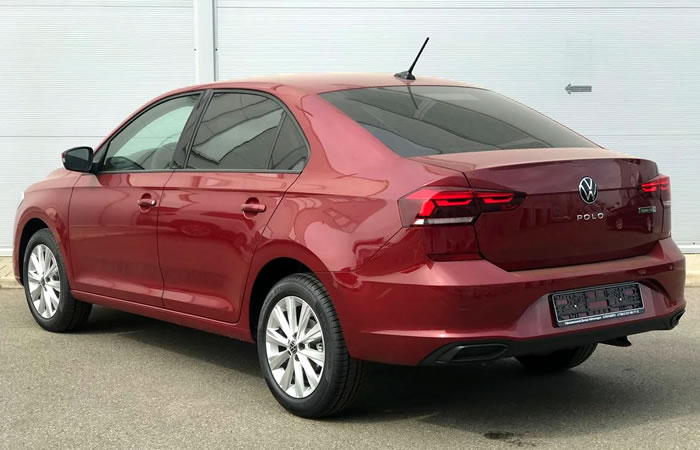
Polo VI, sedan, front view
The sixth generation of the Volkswagen Polo was presented in June in Berlin, and production began at the end of 2017. The car is based on the VW MQB A0 platform, which is also used for the Audi A1, SEAT Arona / Ibiza, Skoda Kamiq / Scala / Fabia, Volkswagen Nivus / T-Cross / Virtus. The body is presented in two versions - a 5-door hatchback and a 4-door sedan. The length of the body was 4053 mm (hatchback) or 4482 mm (sedan), width 1751 mm and height 1438 mm. The rigidity of the body was increased by 28% due to the more active use of high-strength steels. The car is equipped with a frontal collision detection system, blind spot monitoring and emergency stop function as standard.

Polo VI, sedan, back view 
Polo VI, sedan, back view
Petrol engines are represented by the following models - three-cylinder naturally aspirated 1.0 liter (999 cm³, EA211, 65/75/80 hp), turbocharged 1.0 liter (999 cm³, EA211, TGI/TSI, 90/95/110/115 hp), 1.5 liter four-cylinder turbocharged (1498 cm³, EA211 evo, 150 hp) and 2.0 liters (1984 cm³, EA888, 200/207 hp). Diesel engines turbocharged four-cylinder 1.6 liter (1598 cm³, EA288, 80/95 hp). The transmission is a 5- or 6-speed manual, 6-speed automatic, and also a 7-speed DSG with dual clutch.

In the fall of 2020, the model was restyled for the 2021 model year, the changes affected only the exterior of the car.
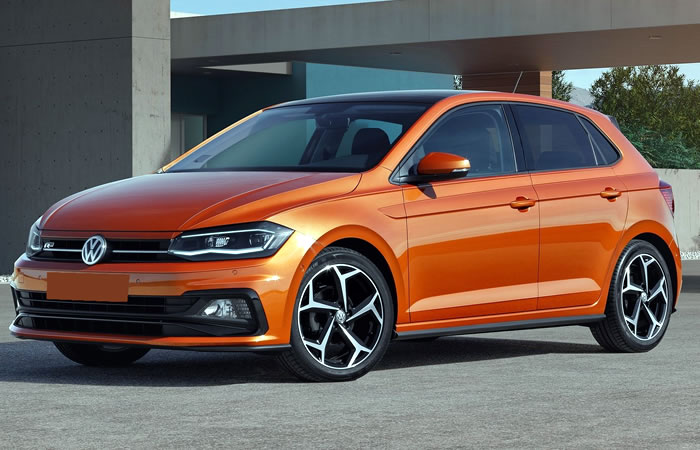
Polo VI, hatchback, front view 
Polo VI, hatchback, front view
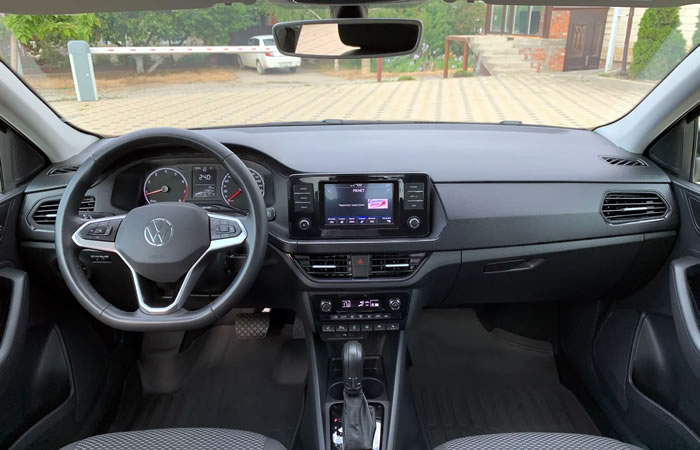
Polo VI, interior 
Polo VI, interior
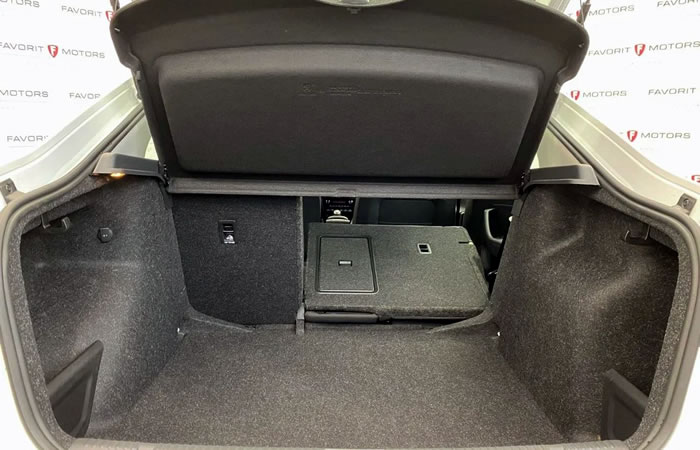
Polo VI, trunk 
Polo VI, trunk


Share information:


Link to this page in different formats
HTMLTextBB Code

Polo 4 
  • General information
  • User manual
  • Maintenance
  • Power unit
  • Engine repair
  • Cooling and lubrication system
  • Control system
  • Injection system (diesel)
  • Supply system
  • Exhaust system
  • Chassis
  • Front suspension
  • Rear suspension
  • Steering
  • Wheels and tires
  • Brake system
  • Body
  • Interior
  • Exterior
  • Electrical equipment
  • Equipment and devices
  • Wiper system
  • Lighting system
  • Electrical circuits
Polo 3 
  • General information
  • User manual
  • Maintenance
  • Power unit
  • Petrol engines 1.4 and 1.6
  • Petrol engines 1.4 (V16)
  • Petrol engines 1.6 and 1.8
  • Diesel engines 1.7 and 1.9
  • Diesel engines 1.9 D and TD
  • Transmission
  • Mechanical gearbox 085
  • Mechanical gearbox 020/02K
  • Chassis
  • Front suspension
  • Rear suspension
  • Steering
  • Brake system
  • Body
  • Exterior
  • Interior
  • Electrical equipment
  • Equipment and instruments (until 2000)
  • Equipment and instruments (after 2000)
  • Electrical circuits
  • Wiring diagrams (petrol)
  • Wiring diagrams (diesel)
VWmanual.ru © 2016-2025 | Mobile version | News and articles | Sitemap: EN BG BY UA RS HR RO PL SK HU | Write message | Site search
Passat B2 • Passat B3 • Passat B4 • Passat B5 • Passat B6 • Golf 1, diesel • Golf 1, petrol • Golf 2, petrol • Golf 2 • Golf 3 • Golf 4 • Golf 5 • Polo 3 • Polo 4 • Touareg 1 • Tiguan 1 • Sharan 1 • Transporter T3 • Transporter T4 • Beetle • Caddy 3 •