English Русский
Български
Беларускі
Український
Српски
Hrvatski
Română
Polski
Slovenský
Magyar
  |  Articles  |  Sitemap  |  Contacts  |  Search  |
Car maintenance Ford Car maintenance Hyundai Car maintenance Chevrolet Car maintenance BMW Car maintenance Audi Car maintenance Opel Car maintenance AvtoVAZ
VWmanual.ru


Main   Passat   Golf   Polo   Touareg   Tiguan   Sharan   Transporter   Others  
Golf 1 (1974-1984, diesel) Golf 1 (1974-1984, petrol) Golf 2 (1984-1993, petrol) Golf 2 (1984-1993) Golf 3 (1991-1997) Golf 4 (1997-2004) Golf 5 (2003-2008)

Technical characteristics of the car Volkswagen Golf

  • Main
  • Golf
  • Technical characteristics of the car Volkswagen Golf


The German company Volkswagen has been producing the Golf since 1974 and up to the present time. The name comes from the warm sea current Gulf Stream. This model ranks third in the world and first in Europe as the best-selling car. Thanks to the new concept of front-wheel drive and economy, it became the savior of the Volkswagen concern and brought it out of the economic crisis of the 70s, associated with the rise in oil prices.

Throughout its history, the car has undergone 7 generations of changes and received many awards. The last "Car of the Year" awards were received by the 6th generation in 2009 and the 7th generation of Golf in 2013.

It is mostly a three-door hatchback, but there are also five-door, station wagon, sedan and even convertible versions. In some countries it has other names - Jetta, Bora, Vento, Rabbit and Caribe. The closest competitors of the Golf are Audi A3, Chevrolet Cruze, Fiat Bravo, Ford Focus, Honda Civic, Hyundai Elantra, Kia Ceed, Lada Vesta, Mazda 3, Mitsubishi Lancer, Nissan Sentra, Opel Astra, Peugeot 308, Skoda Octavia, Renault Fluence and Toyota Corolla.

Golf I (1974-1983)
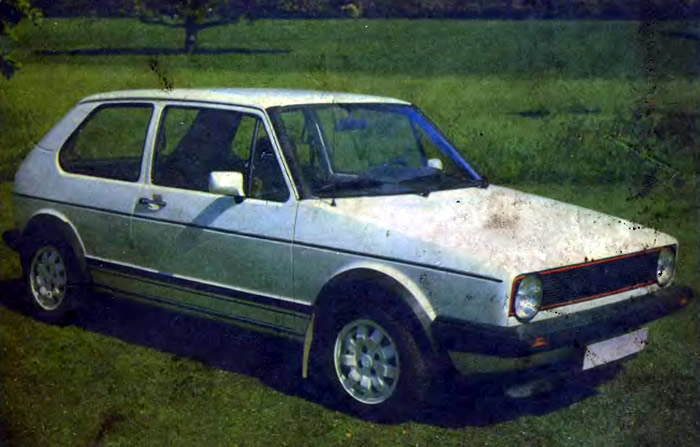

Volkswagen Golf 1974 year 
Volkswagen Golf 1974 year
The model appeared on the market in the spring of 1974 and served as the basis for a new compact class of cars. The predecessor of the Golf was the VW Beetle (Beetle), which was produced simultaneously until 1985. From the first day of sales, the car became a bestseller. During the 10 years of production of the first model, about 6 million copies were produced, including 1 million diesel variants.

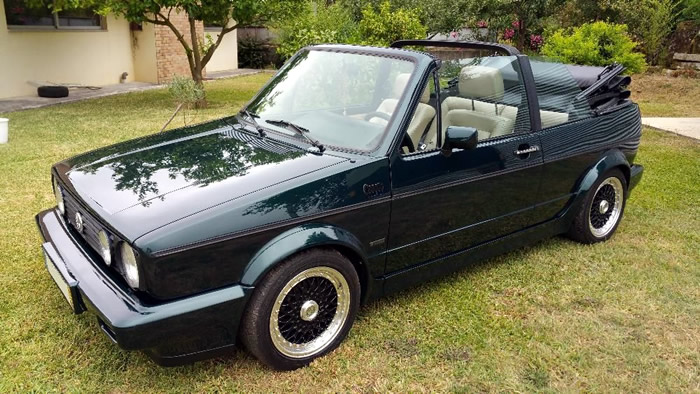
Volkswagen Golf I cabriolet 
Volkswagen Golf I cabriolet
At first the engines were borrowed from the Auda 50 and Audi 80 (50 and 70 hp). They were economical, which was very important during the oil crisis (consumption was about 6.5 liters per hundred). In 1976, a 50 hp diesel engine appeared. Front-wheel drive with a transverse engine. Front suspension is of the MacPherson type, the rear is a semi-independent torsion beam at the rear. Three transmission options are available: 4- and 5-speed manual transmission and 3-speed automatic transmission.

The basic body shape is a 3-door hatchback, but there were also 5-door ones. In 1979, the Jetta model appeared - a sedan with a 2- and 4-door body. It was mainly popular in North America. With a convertible body, the first generation was produced from 1980 to 1993. In 1975, air conditioning was offered as an option.

Golf II (1983-1991)
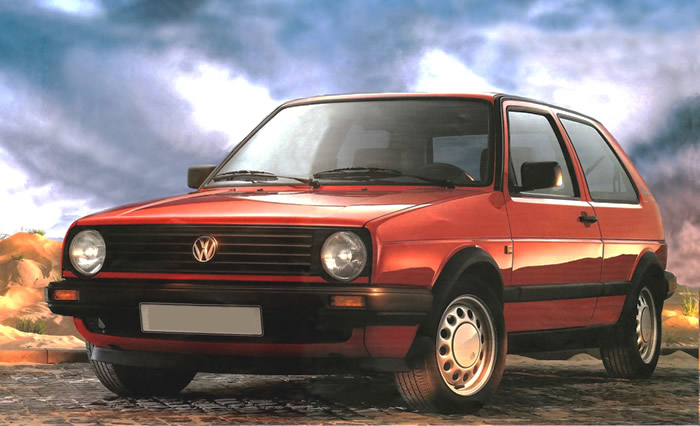

Golf II, 3-doors hatchback 
Golf II, 3-doors hatchback
In 1983, the second-generation Golf model was introduced. Over 6 million units were produced in 9 years. In the 90s, many of these used cars were driven to Russia. The body is only a hatchback with 3 or 5 doors. The number of options and additional equipment has increased.

The engines were petrol with a volume of 1.3 to 2.0 liters (50-133 hp) and diesel with a volume of 1.6 (54-70 hp), naturally aspirated and turbocharged. In 1989, the 1V ecodiesel with a capacity of 60 hp and SB - the most powerful (80 hp) appeared. Diesel fuel consumption is about 6 liters per hundred.
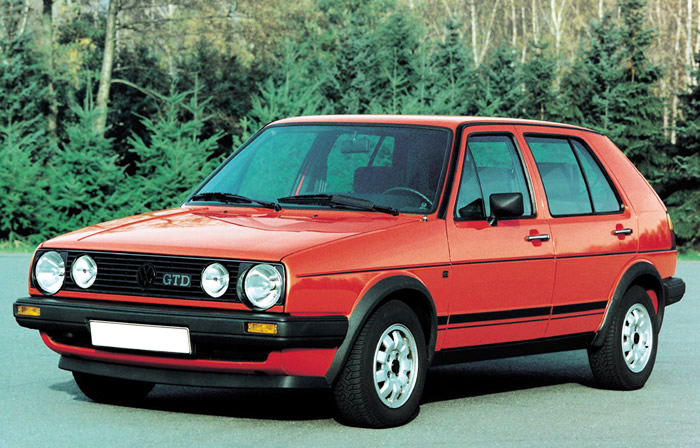
Golf II, 5 doors hatchback 
Golf II, 5 doors hatchback
The transmission can be chosen from three options - 4- and 5-speed manual transmission or 3-speed automatic transmission.

It is worth mentioning a separate branch of the model - Golf Country. This is a frame all-wheel drive vehicle with increased ground clearance. The rear axle is driven automatically through a viscous coupling when the front wheels slip. In total, about 7 thousand copies were produced and due to the high price and low demand, it was discontinued.

Golf III (1991-1997)
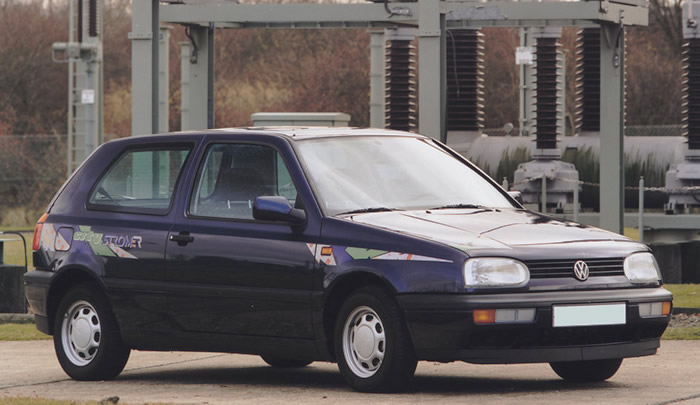

Golf III, 3-doors hatchback 
Golf III, 3-doors hatchback
It was first shown at the Geneva Motor Show in 1991. This generation of cars also became very popular. In 1992, it received the "European Car of the Year" award. A total of about 4.8 million copies were produced. In addition to the standard 3- and 5-door hatchback bodies of the second model, a 5-door station wagon and a convertible were added. The Golf III became the predecessor of the "diesel mania" that began in Europe in the 90s. In the 2000s, several tens of thousands of used cars were imported to Russia.

Golf III, 5 doors hatchback 
Golf III, 5 doors hatchback
All engines from the start of production became with direct injection to meet the requirements of the EEC. The range of petrol engines also expanded in power and volume - from 1.4 to 2.9 liters (55-190 hp). The diesel engine was 1.9 liters - one naturally aspirated (64 hp) and three turbocharged (75, 90 and 110 hp). The transmission has also undergone changes - 4- and 5-speed manual transmission and 4-speed automatic transmission.

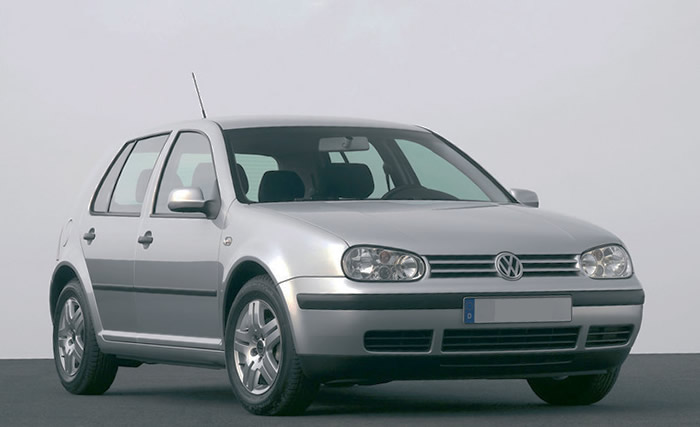
Golf IV (1997-2004)


Golf IV, 5 doors hatchback 
Golf IV, 5 doors hatchback
The fourth generation Golf became the best-selling car in Europe in 2001, but in 2002 it fell to second place, losing first place to the Peugeot 206. The car was produced in Mexico and China until 2010. In total, about 4 million units were produced. During its production, it won 6 different prestigious awards.

The interior trim and equipment have improved significantly - it has become the closest to premium cars in its form factor. The body is made in three versions - 3- and 5-door hatchbacks and a 5-door station wagon. A sedan called the Volkswagen Bora was also released based on the Golf, in America the name remained the same - VW Jetta.
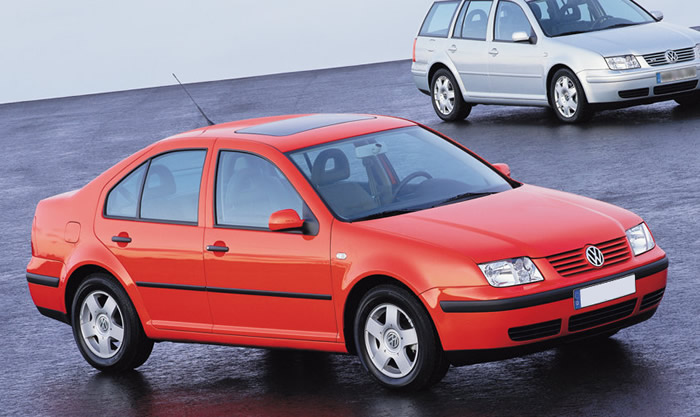
Volkswagen Bora 1998 year 
Volkswagen Bora 1998 year
The fourth Golf has a very wide choice of engines. Petrol engines - 1.4, 1.6, 1.8, 2.0, 2.3 liters BP5 (from 75 to 170 hp), 2.8 liter V6 (from 177 to 204 hp) and 3.2 liters R32 (240 hp). Diesel engines - 1.9 liters naturally aspirated SDI, as well as 1.9 liter turbodiesel with a capacity of 90 to 150 hp. Transmission options have greatly expanded - 5- and 6-speed manual transmission, 4-speed automatic transmission, 5-speed automatic transmission "tiptronic" and 6-speed DSG (preselective gearbox).

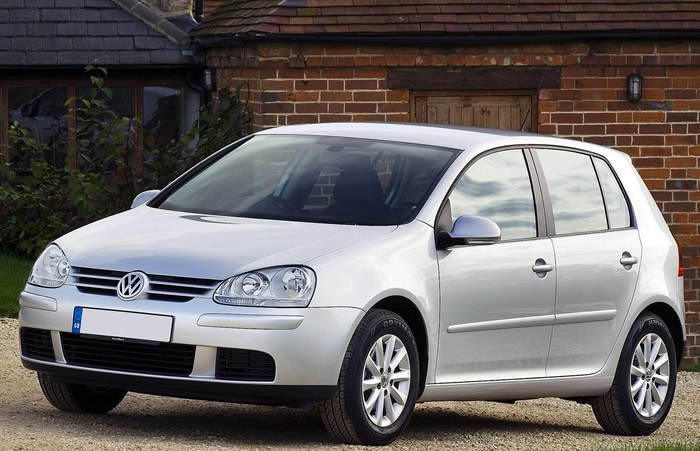
Golf V (2003-2008)


Golf V, 5 doors hatchback 
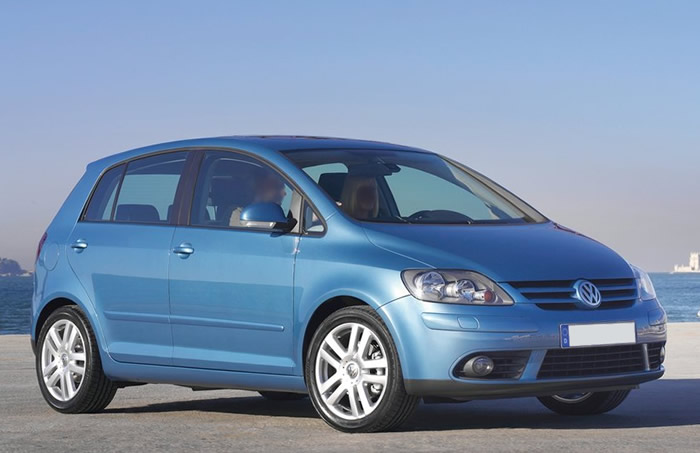
Golf V, 5 doors hatchback
It was first exhibited in October 2003 at the Frankfurt Motor Show and went on sale almost immediately. It is based on the Volkswagen Group A5 (PQ35) platform. The design of the car has been redesigned, but the general features and silhouette have remained the same, the size of the body has increased slightly, and therefore the interior, as well as the trunk from 330 to 350 liters. The suspension and chassis settings have undergone significant changes, which has led to improved handling and smoothness. The interior trim has remained at the very high level achieved in the fourth Golf. During its release, the Golf V has won more than 20 different awards.

Volkswagen Golf Plus 2005 year 
Volkswagen Golf Plus 2005 year
The body is available in four variants - 3- and 5-door hatchback, 5-door station wagon and 5-door MPV (compact minivan), called the Golf Plus. The convertible was not produced because the Volkswagen Eos with a folding hardtop was released in 2006, and the VW New Beetle convertible version appeared in 2004, replacing the Golf.

The choice of engines is very large. Petrol - 1.4 liters (l4) with a capacity of 75 to 170 hp, 1.6 liters (l4) from 102 to 116 hp, 2.0 liters (l4) from 150 to 230 hp, 2.5 liters (l5), 3.2 liters (VR6) 250 hp. Diesel from 1.9 to 2.0 liters (TDi) with a capacity of 91 to 170 hp, all turbocharged with direct injection. There is also a lot to choose from transmissions - 5- and 6-speed manual transmission, 6-speed automatic transmission "tiptronic", as well as 6- and 7-speed DSG (preselective gearbox).

Golf VI (2008-2012)
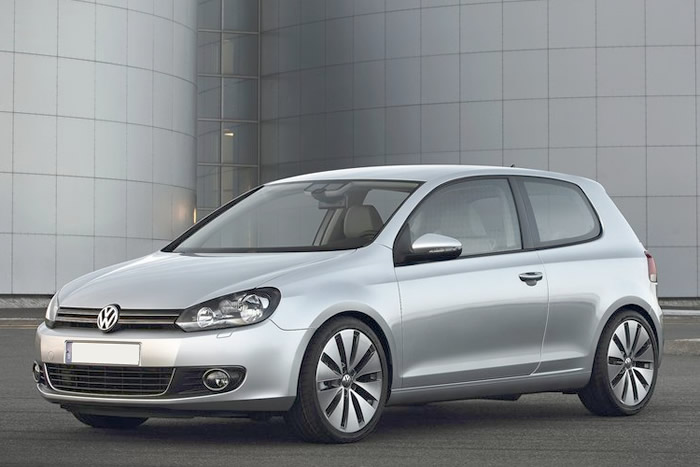

Golf VI, 5 doors hatchback 
Golf VI, 5 doors hatchback
The sixth Golf was first shown on August 6, 2008 at the Paris Motor Show, and went on sale at the beginning of winter. The design has not undergone any major changes, mainly a facelift, but engineering solutions were made that allowed to reduce production time and made the interior a little cheaper. The chassis remained the same - the Volkswagen Group A5 (PQ35) platform.

For the first time in the Golf's history, air conditioning was included as standard. The car also had at least seven airbags, making it the safest car in its class at the time of its release, according to the Euro NCAP rating. During its production, the car won more than 20 different awards, including "World Car of the Year" in 2009.

Golf VI cabriolet 
Golf VI cabriolet
The body is made in four versions - 3- and 5-door hatchback, 5-door station wagon and in 2011 a 2-door convertible was presented. The convertible has a soft top with an electro-hydraulic drive, which opens in 9.5 seconds, and the ability to open at speeds up to 30 km / h.

The range of engines is also extensive. Petrol from 1.2 to 2.5 liters with a capacity of 80 to 270 hp, diesel from 1.6 to 2.0 liters with a capacity of 105 to 140 hp. (all turbocharged), and one 1.6-liter (102 hp) liquefied gas engine. The choice of transmissions is the same as in the previous generation.

Golf VII (2012-2020)
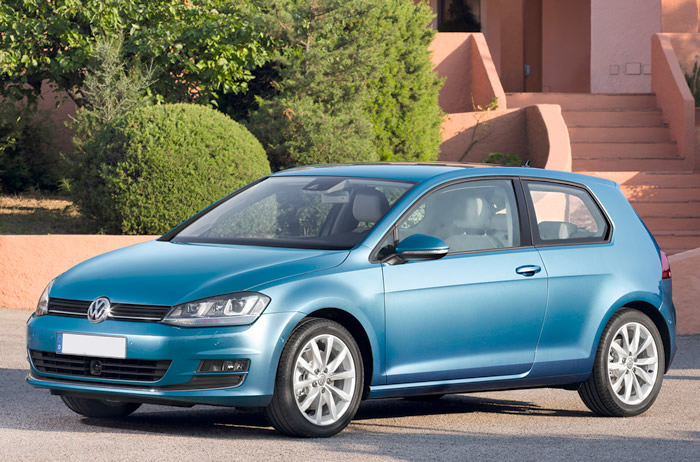

Golf VII, 3-doors hatchback 
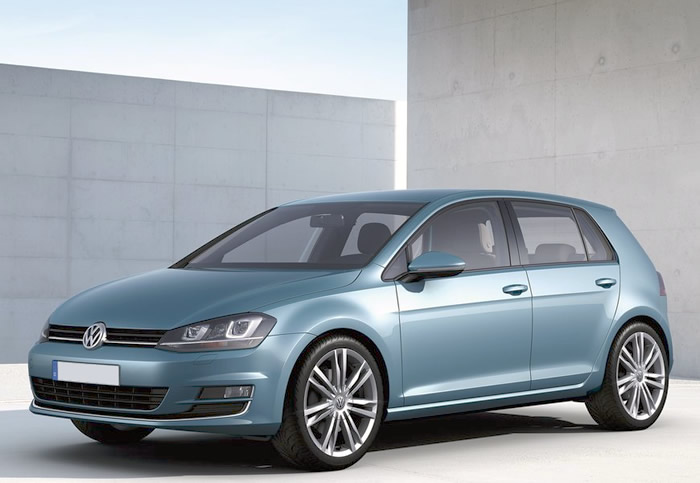
Golf VII, 3-doors hatchback
The Golf Mk7 was announced on 4 September 2012 in Berlin and then exhibited at the Paris Motor Show. Sales in Europe began on 10 November 2012. The car is based on the new Volkswagen Group MQB platform (in German Modularer Querbaukasten, in Russian Modular transverse matrix), which is used on Audi A3, Seat Leon and Skoda Octavia. Thanks to this platform, the interior space has increased. The overall length (56 mm) and width (20 mm) have also increased slightly. The body is available in three versions - 3- and 5-door hatchback, 5-door station wagon.

Golf VII, 5 doors hatchback 
Golf VII, 5 doors hatchback
A new safety system has been introduced that additionally tightens the driver and passenger seat belts if the radar detects a risk of collision. The car will automatically brake after the first collision to avoid a second collision. Other safety systems are also used - control of road markings and signs, warning of driver fatigue, automatic parking. The seventh Golf has won many awards - "North American Car of the Year" (2015), "European Car of the Year" (2013), "World Car of the Year" (2013), "Car of the Year of Japan" (2013), etc.

As always, the widest choice of engines. Petrol with a volume of 1.0 to 2.0 liters and a power of 84 to 296 hp. Diesel with a volume of 1.6 to 2.0 liters and a power of 90 to 184 hp. (all turbocharged). Four types of transmissions: 5- and 6-speed manual transmission, 6- and 7-speed DSG.
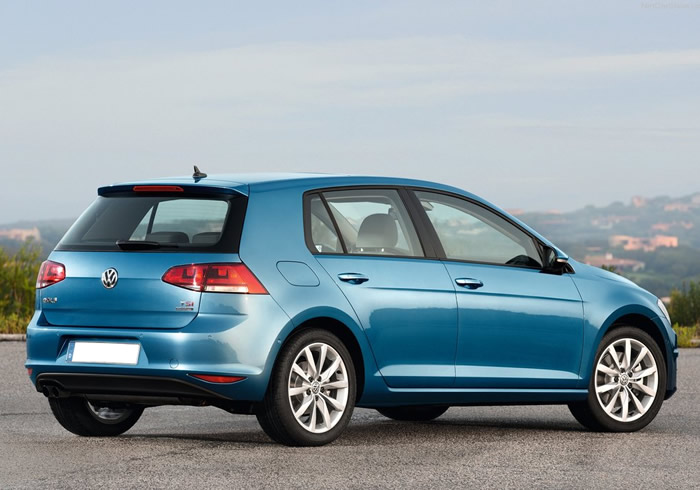
Golf VII, 5 doors hatchback, back view 
Golf VII, 5 doors hatchback, back view
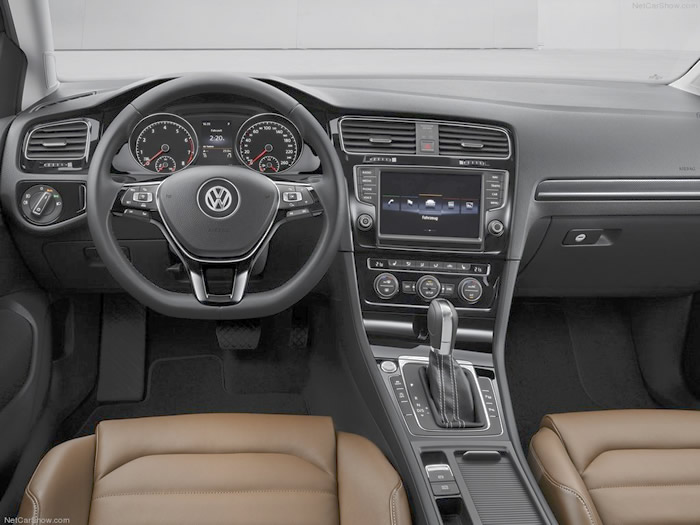
Dashboard Volkswagen Golf VII 
Dashboard Volkswagen Golf VII
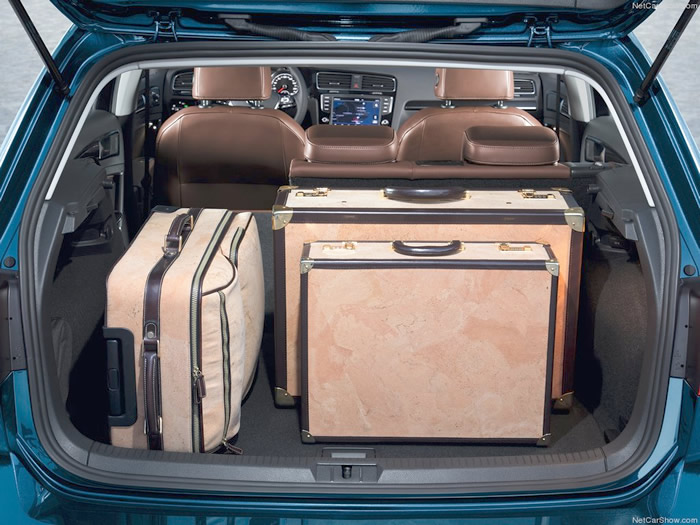
luggage space Volkswagen Golf VII 
luggage space Volkswagen Golf VII

Golf VIII (2019—present)


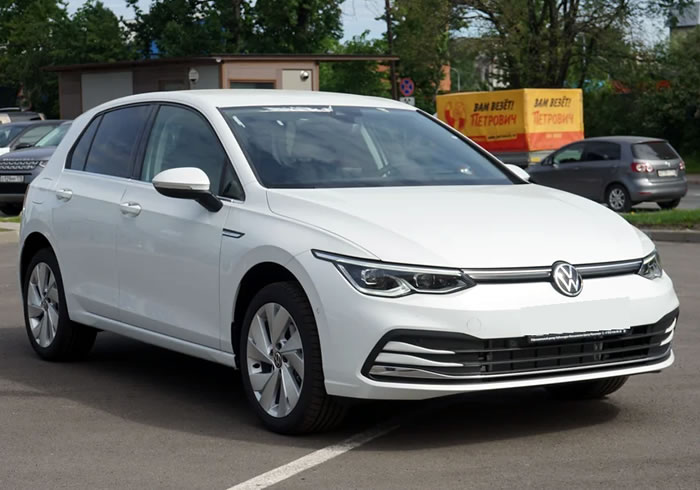
Golf VIII, hatchback, front view 
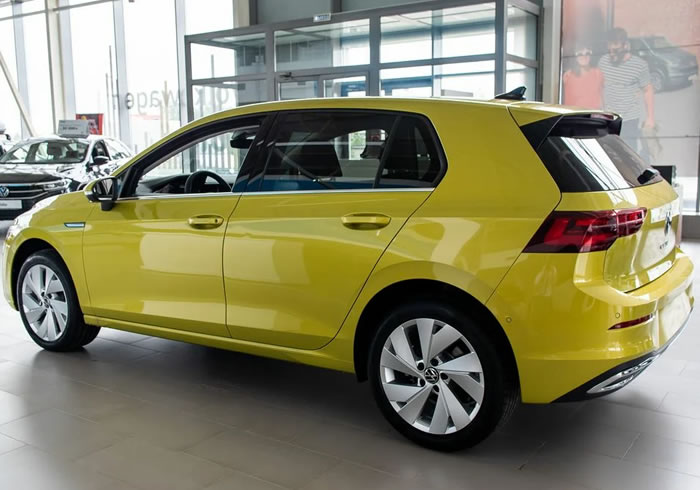
Golf VIII, hatchback, front view
The eighth generation of the Volkswagen Golf was presented in October 2019 in Wolfsburg. The car is based on the "MQB Evo" platform, which is also used for Audi A3 4, Cupra Formentor, SEAT Leon 4, Skoda Octavia 4, VW Caddy 4 and VW Talagon. Two body styles are offered - station wagon and hatchback. The length of the station wagon is 4633 mm, width 1789 mm, height 1498 mm. The length of the hatchback is 4284 mm, width 1789 mm, height 1456 mm. The drag coefficient is 0.275 versus 0.29 for the previous generation.

Golf VIII, back view 
Golf VIII, back view
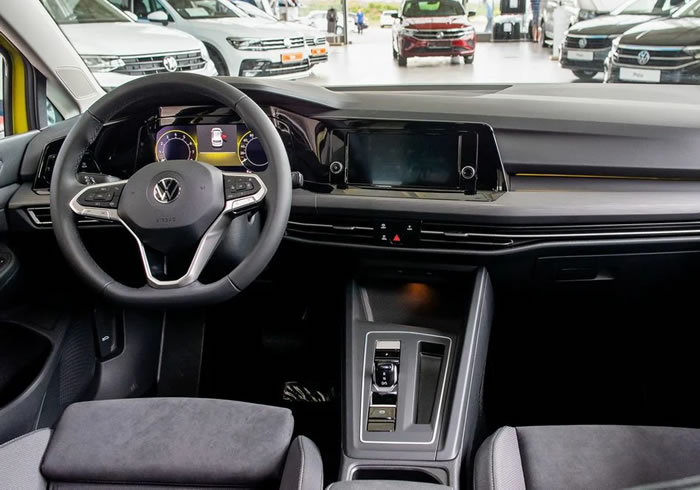
The car has become even more digital - the dashboard has become a display, in the center there is a touch screen for controlling audio/video, air conditioning, headlights and more. The adaptive cruise control system and various driver assistance systems allow you to drive the car in a semi-autonomous mode. All models use LED headlights. Additionally, they install a projection display, matrix LEDs, push-button gear shifting, integration with the Amazon Alexa virtual assistant and many other functions.

Golf VIII, interior 
Golf VIII, interior
Petrol engines were installed in the following volumes: three-cylinder 1.0 liter (999 cm³, EA211, TSI/eTSI, 90/110 hp), four-cylinder 1.2 liters (1197 cm³, EA211, TSI, 115 hp), 1.4 liters (1395 cm³, EA211, TSI, 150 hp), 1.5 liters (1498 cm³, EA211, TSI/eTSI/TGI, 130/150 hp), 1.4 liters (1395 cm³, GTE, 245 hp) and 2.0 liters (1984 cm³, GTI/R, 245/320 hp). Diesel engines are all 2.0 liters (1968 cm³) - TDI with 115/150 hp and GTD with 200 hp. The hybrid car uses a 1.4 liter (1395 cm³) gasoline engine with a total power of 204 hp. Transmission choice - 5-, 6-speed manual, 6-, 7-speed dual-clutch DSG or 8-speed automatic.


Share information:


Link to this page in different formats
HTMLTextBB Code

Golf 5 
  • General information
  • User manual
  • Maintenance
  • Troubleshooting
  • Power unit
  • Engine repair
  • Cooling and ventilation system
  • Fuel system
  • Ignition system
  • Transmission
  • Clutch
  • Mechanical gearbox
  • Automatic gearbox
  • Chassis
  • Brake system
  • Car suspension
  • Steering
  • Body
  • Interior (internal elements)
  • Exterior (external elements)
  • Doors and covers
  • Electrical equipment
  • Power devices
  • Washers and wipers
  • Lighting and appliances
  • Electrical circuits
Golf 4 
  • General information
  • User manual
  • Weekly checks
  • Maintenance
  • Power unit
  • Petrol engines
  • Diesel engines
  • Cooling system
  • Fuel system (petrol)
  • Control system (petrol)
  • Fuel system (diesel)
  • Exhaust system
  • Transmission
  • Clutch
  • Car gearbox
  • Drive shafts
  • Chassis
  • Car suspension
  • Steering
  • Wheels and tires
  • Brake system
  • Body
  • Exterior (external elements)
  • Interior (internal elements)
  • Ventilation and heating
  • Car doors and sunroof
  • Washers and glass cleaners
  • Electrical equipment
  • Power devices
  • Lighting and appliances
  • Electrical circuits
Golf 3 
  • Petrol engine
  • Engine repair
  • Lubrication system
  • Cooling system
  • Ignition system
  • Diesel engine
  • Engine repair
  • Diesel injection system
  • Pre-glow system
  • Transmission
  • Clutch
  • Gearbox and drive shafts
  • Chassis
  • Steering
  • Wheels and suspension
  • Brake system
  • Electrical equipment
  • Lighting and appliances
  • Electrical circuits
Golf 2 
  • General information
  • Introduction to guide
  • User manual
  • Petrol engines 1.3 l
  • Engine repair
  • Lubrication system
  • Cooling system
  • Carburetors
  • Supply system
  • Ignition system
  • Petrol engines 1.6/1.8 l
  • Engine repair
  • Supply system
  • Ignition system
  • Diesel engines
  • Engine repair
  • Lubrication system
  • Cooling system
  • Power and exhaust system
  • Transmission
  • Clutch
  • 4-speed gearbox 084
  • 5-speed gearbox 085
  • 4-speed gearbox 020/4R
  • 5-speed gearbox 020/4T
  • Automatic gearbox
  • Drive shafts
  • Chassis
  • Steering
  • Car suspension
  • Brake system
  • Body
  • Body elements
  • Doors, locks and windows
  • Electrical equipment
  • Equipment and devices
  • Power devices
Golf 2 (petrol) 
  • General information
  • Characteristics
  • Car care
  • Maintenance
  • Power unit
  • Engine repair
  • Engine 1.05/1.30
  • Engine 1.60/1.80
  • Cooling and lubrication system
  • Power and exhaust system
  • Transmission
  • Clutch
  • Car gearbox
  • Drive shafts
  • Chassis
  • Brake system
  • Steering
  • Suspension
  • Body
  • Body and equipment
  • Electrical equipment
  • Lighting and appliances
  • Electrical circuits
Golf 1 (petrol) 
  • General information
  • Characteristics
  • User manual
  • Maintenance
  • Power unit
  • Engine adjustment
  • Engine 1.1/1.3
  • Engine 1.5/1.6/1.8
  • Engine electrical equipment
  • Cooling system
  • Fuel system
  • Transmission
  • Clutch and manual gearbox
  • Automatic gearbox
  • Chassis
  • Steering
  • Front suspension
  • Rear suspension
  • Brake system
  • Electrical equipment
  • Lighting and appliances
  • Electrical circuits
  • Body
  • Body and equipment
  • Optional equipment
Golf 1 (diesel) 
  • General information
  • Specifications
  • Maintenance
  • Power unit
  • Engine repair
  • Exhaust and turbocharger
  • Cooling system
  • Fuel system
  • Fuel injection system
  • Transmission
  • Clutch and drive shafts
  • Car gearbox
  • Chassis
  • Suspension and wheels
  • Steering
  • Brake system
  • Wheels and tires
  • Body
  • Heating and ventilation
  • Exterior (external elements)
  • Interior (internal elements)
  • Doors and windows
  • Electrical equipment
  • Equipment and devices
  • Lighting system
  • Power devices
  • Electrical circuits
VWmanual.ru © 2016-2025 | Mobile version | News and articles | Sitemap: EN BG BY UA RS HR RO PL SK HU | Write message | Site search
Passat B2 • Passat B3 • Passat B4 • Passat B5 • Passat B6 • Golf 1, diesel • Golf 1, petrol • Golf 2, petrol • Golf 2 • Golf 3 • Golf 4 • Golf 5 • Polo 3 • Polo 4 • Touareg 1 • Tiguan 1 • Sharan 1 • Transporter T3 • Transporter T4 • Beetle • Caddy 3 •