Volkswagen Caddy
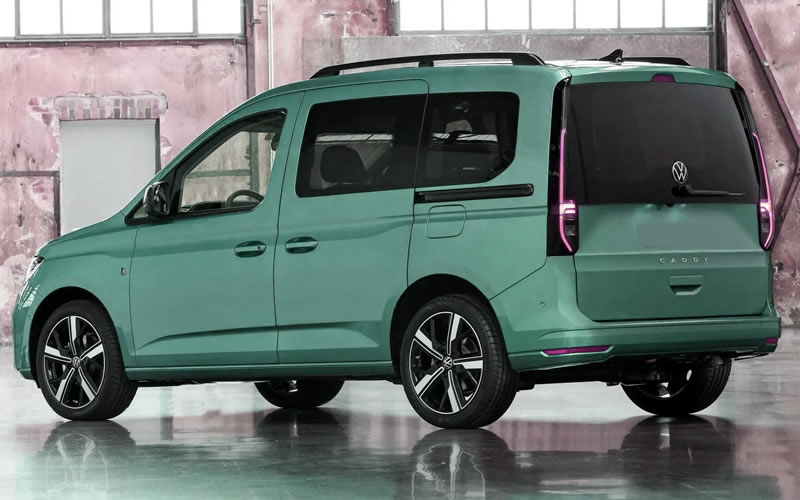
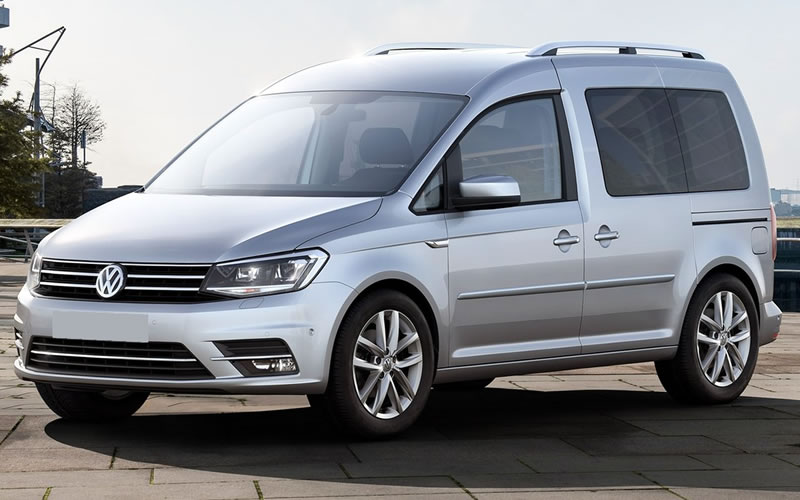
Volkswagen Caddy — is currently a German minivan for commercial use (M-segment), produced by Volkswagen from 1979 to the present. Introduced to global markets in 1980, it arrived in Europe in 1982. The first and second generations also had a pickup body. The fourth generation is currently in production.
Some of its current competitors include the Citroen Berlingo, Fiat Doblo, Ford Connect, Hyundai H-1, LADA Largus, Mercedes Citan, Nissan NV200, Peugeot Partner, Renault Kangoo, Suzuki APV and Opel Combo.
First generation (Typ 14, 1979-1995)
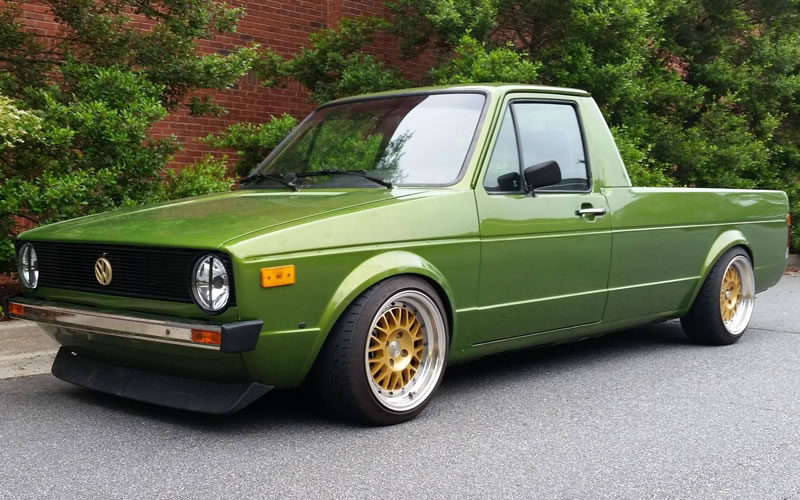
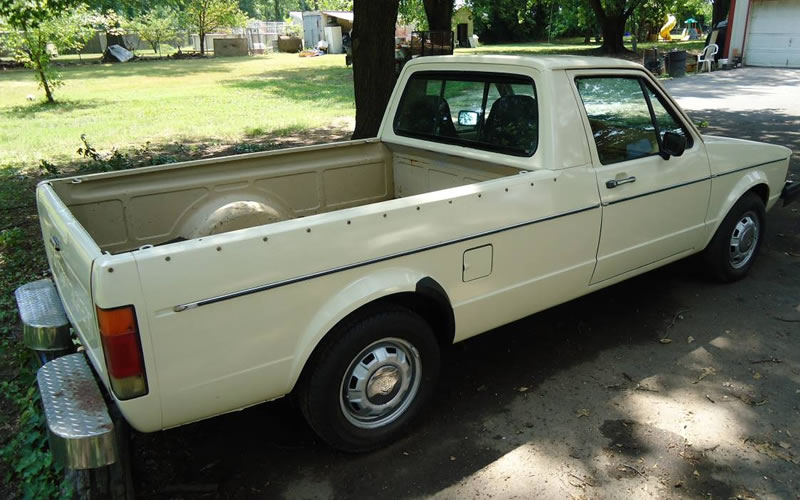
First generation "VW Caddy 1" with a pickup body was developed for the North American markets, first presented to the public in 1978, and production began in 1979. The pickup was based on the A1 platform, which was also used to produce "VW Golf" first generation and had a name "VW Rabbit Pickup". The body length was 4,370 mm, width 1,640 mm, height 1,430 mm, wheelbase 2,625 mm, and ground clearance 149 mm. Trim levels such as "LX" and "Sportruck" were available. Production and assembly took place in the USA, Yugoslavia, and South Africa. At the time, "Rabbit Pickup" competed with compact pickups such as the Ford Courier, Datsun Truck, Toyota Hilux and Subaru BRAT.
The petrol engine range includes three models, all in-line four-cylinder with a capacity of 1.5 litres (1457 cm³, 70 hp), 1.6 liters (1595 cm³, 75 hp) and 1.8 liters (1781 cm³, 95 hp). There were two models of 1.5-liter diesel engines (1471 cm³, 48 hp) and 1.6 liters (1588 cm³, 54 hp). The transmission was only a 4-speed manual. During the long period of production in South Africa, the engines were modernized and their power increased slightly.
Second generation (Typ 9K, 1995-2004)
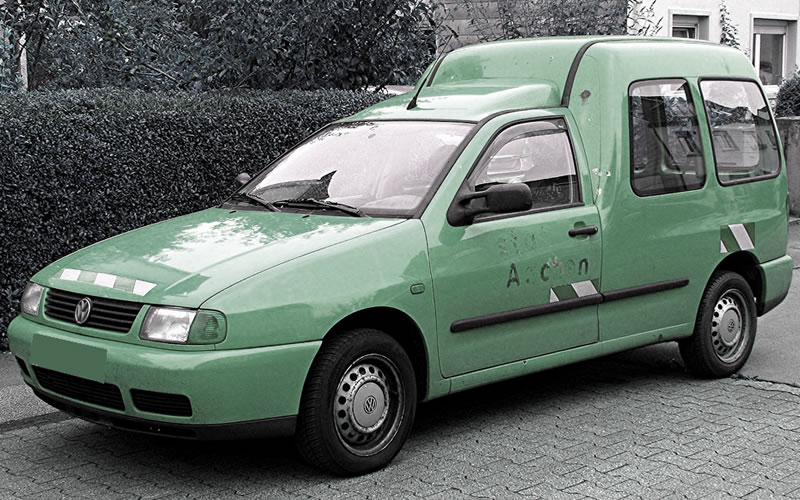
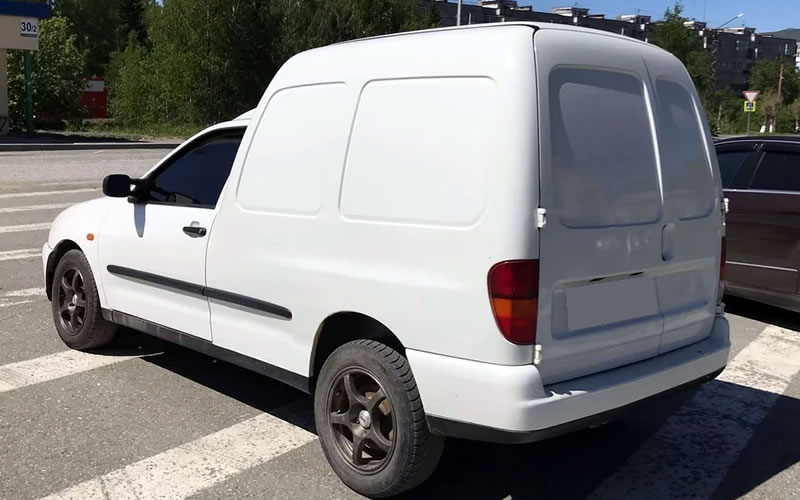
The second generation, coded "Typ 9K", began production in 1995, with production in Spain until 2004 and in Argentina until 2008. The car is based on the "A03" platform, which was also used for "VW Polo" third generation, "SEAT Inca", "SEAT Cordoba" and "SEAT Ibiza" second generation. In 1996, a modification called "Type 9U" appeared, which was produced in the Czech Republic and was essentially a model "Skoda Felicia Pickup". The body was available in two types: a windowless van and a compact passenger minivan, 4207 mm long, 1695 mm wide, 1846 mm high, with a 2600 mm wheelbase, 176 mm ground clearance, and a curb weight of 1115 kg.
The petrol engines were four-cylinder with fuel injection and had the following characteristics: 1.4 litres (1390 cm³, AEX/APQ, SOHC, MPI, 60 hp), 1.4 liters (1390 cm³, AUA, DOHC, MPI, 75 hp), 1.6 liters (1595 cm³, 1F, SOHC, SPI, 75 hp) and 1.6 liters (1598 cm³, AEE, SOHC, MPI, 75 hp). Diesel engines also all have direct fuel injection of the following volumes: 1.7 liters (1716 cm³, AHB, SDI, 57 hp), 1.9 liters (1896 cm³, 1Y, 64 hp), 1.9 liters (1896 cm³, AEY/AYQ, SDI, 64 hp) and 1.9 liters (1896 cm³, 1Z/AHU/ALE/ALH, TDI, turbo, 90 hp). Only a five-speed manual transmission was installed.
Third generation (Typ 2K, 2003-2020)
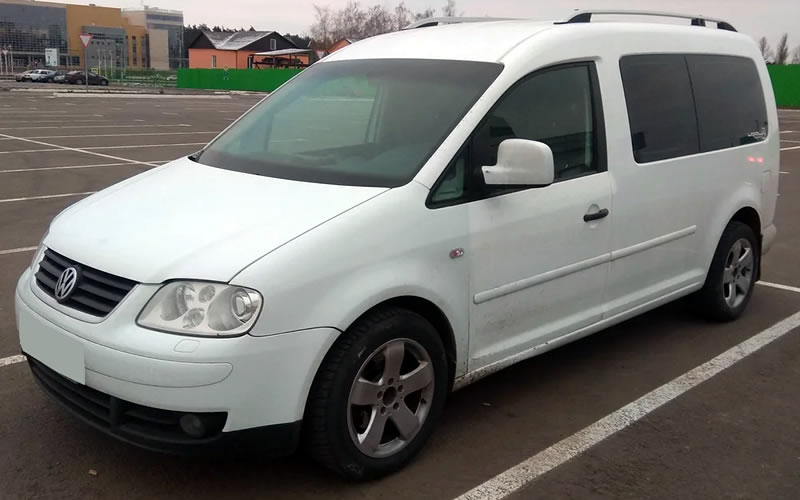
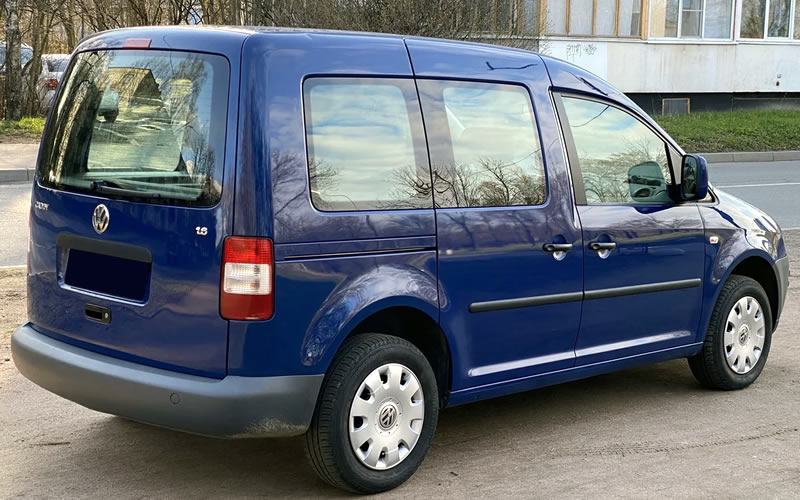
The third generation began production in the fall of 2003 under the code "Typ 2K" and was produced until 2020 in Algeria, China, Poland, and Russia. The minivan is based on the A5 platform, which is also used for "VW Golf" fifth generation and the first generation VW Touran, but the Caddy has a rigid axle with leaf springs at the rear instead of independent suspension. There are two body styles: a van and a minivan (Life). Each body style is available with an extended wheelbase, with the "Maxi" suffix added to the name. The vehicle has the following dimensions: length 4405 mm (4875 mm Maxi), width 1794 mm, height 1834 mm, wheelbase 2682 mm (3002 mm Maxi), ground clearance of 179 mm and a curb weight of 1,325-1,551 kg. This generation ceased to be a pickup truck and was replaced by the VW Amarok.
All petrol engines were four-cylinder in-line with fuel injection and a volume of 1.2 liters (1197 cm³, CBZA/CBZB, turbo, 85/110 hp), 1.4 liters (1390 cm³, BCA/BUD, 75/80 hp) and 1.6 liters (1598 cm³, BGU/BSE/BSF, 102 hp). Diesel engines were also four-cylinder, all turbocharged with a volume of 1.6 liters (1598 cm³, CAYE/CAYD, 75/102 hp), 1.9 liters (1896 cm³, BSU/BJB/BLS/BLS, 75/105 hp) and 2.0 liters (1968 cm³, BDJ/BST/BMM/CFHE/CLCA/CFHF/CFHC/CFJA, 96-170 hp). The factory also produced cars with 1.6-liter liquefied natural gas (LPG) or compressed natural gas (CNG) engines (1598 cm³, BFX/BFW, LPG, 98 hp) and 2.0 liters (1984 cm³, BSX, CNG, 109 hp). Almost all models were equipped with a 5-speed manual transmission, and some diesel models were equipped with a 6-speed robotic transmission.
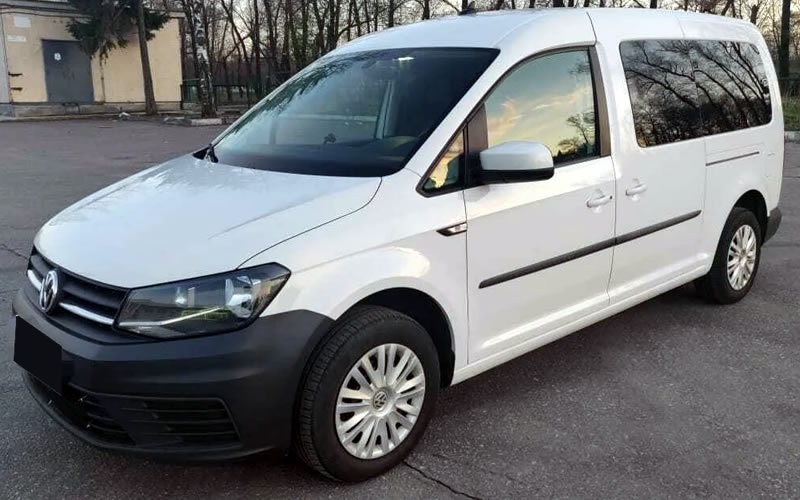
In the summer of 2010, a minor update to the exterior was carried out. In 2015, a more thorough restyling was carried out, which also included the conversion of engines to Euro 6 standards. This update received the code "Type 2K SA" and is presented by Volkswagen as fourth generation (Mk4).
Fifth generation (2020-present)
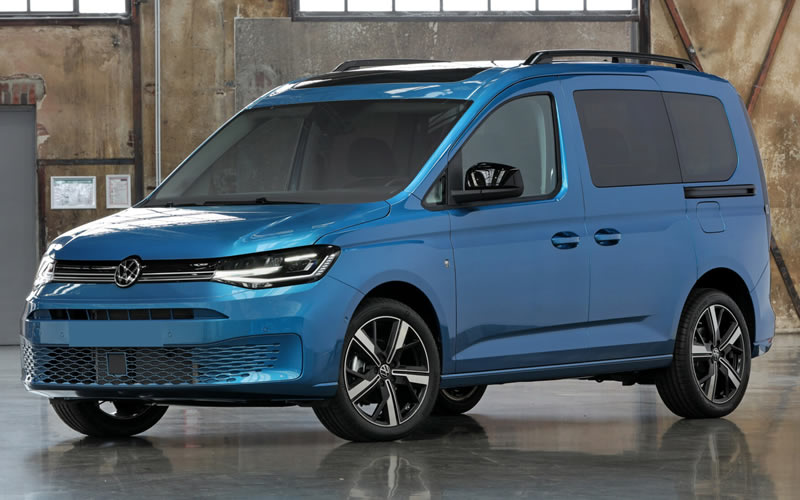
"VW Caddy 5" it was unveiled in February 2020 and was scheduled to make its public debut at the Geneva International Motor Show in March 2020, but was cancelled due to the coronavirus outbreak. The car went on sale in January 2021. The car is based on the modular platform "MQB evo", which is also used for other cars of the concern "Volkswagen Group": "Audi A3 8Y", "Seat Leon IV", "Skoda Octavia IV" and "VW Golf VIII". This fifth generation is truly new, compared to the fourth, which was simply a restyling. Here the rear suspension on leaf springs has been replaced by an axle with a torsion beam.
The car is equipped with the latest electronic driver assistance systems. There are still two body styles: a commercial van and a passenger minivan, both in two variants with the "Maxi" prefix. The body dimensions are as follows: length 4601 mm (4954 mm Maxi), width 1855 mm, height 1819 mm, wheelbase 2755 mm (2970 mm Maxi), ground clearance 144-169 mm and curb weight 1515-1684 kg.
Since the launch, the car has been available with a 1.5-liter petrol engine (1498 cm³, TSI, 114 hp), 1.5-liter natural gas engine (1498 cm³, TGI, 130 hp) and 2.0-liter diesel engines (1968 cm³, TDI, 75-122 hp). Almost all models were equipped with a six-speed manual transmission, and also had a seven-speed robotic automatic transmission.
Volkswagen Beetle
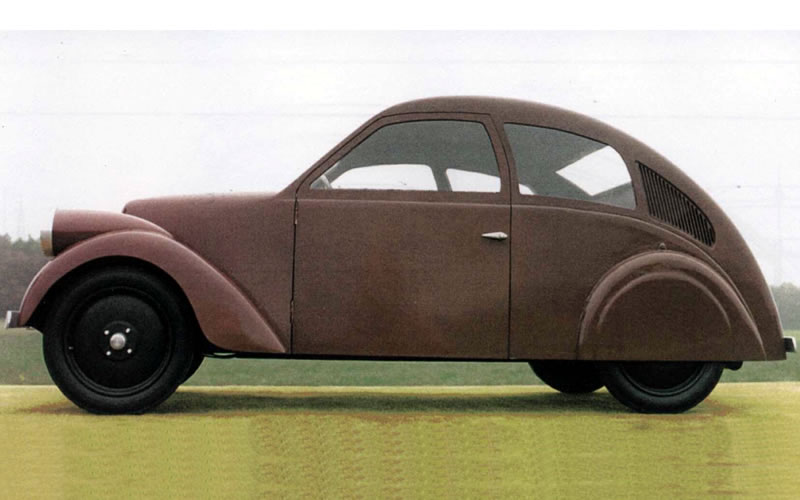
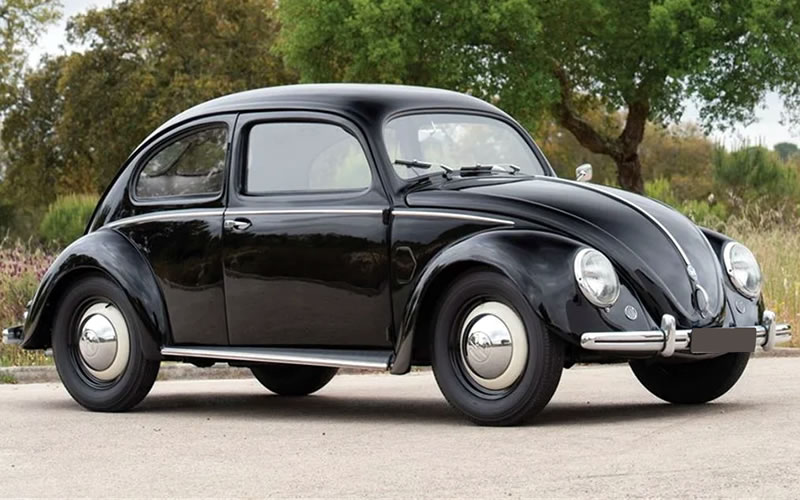
Volkswagen Beetle — (English - beetle, bug; german-kafer) subcompact two-door economy car, which was produced by the German automaker Volkswagen from 1938 to 2003. This is the first car with a rear - mounted engine, and is also one of the most produced in the world-in total, more than 21 million units were produced and sold. It was designed by Ferdinand Porsche in 1931 as part of the "people's car" concept, but mass production only began in the late 1940s.
The body is made in the shape of a shell, and the interior is designed for four people. The body length was 4030-4080 mm, width 1540-1585 mm, height 1500-1550 mm, wheelbase 2400 mm, curb weight 695-890 kg. Front and rear suspension was independent with torsion bars and leaf springs. The steering system of cars of the first years of production used a worm gear mechanism. It was later replaced by a more advanced ball nut screw. In the 1960s, a damper was added to reduce vibration in the steering wheel, and the steering column began to fold in the event of a frontal collision. The braking system was initially cable-operated, but hydraulic brakes were installed in the 1950s, and disc brakes appeared at the front in the 1960s.
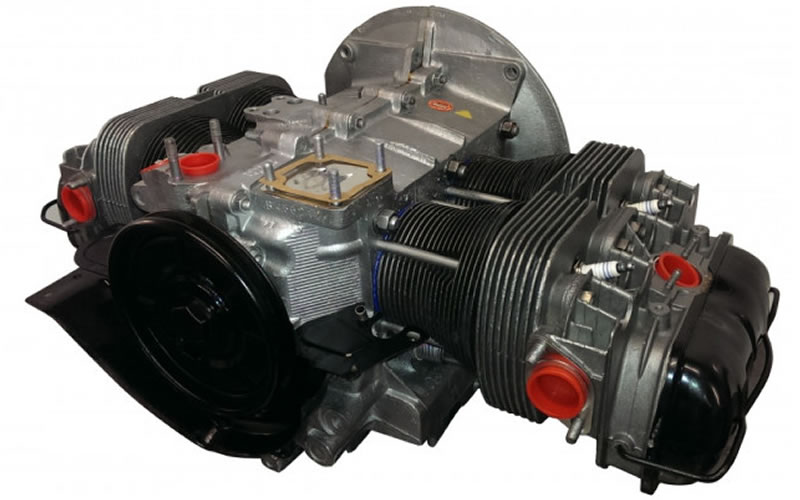
At first, the car had a four-cylinder, air-cooled, boxer engine. The first engine had a capacity of 1.0 liter (995 cm³, OHV, 25 hp, 1938-1942.). Then 1.1 liter engines appeared (1131 cm³, 30 hp, 1945-1953.), 1.2 liters (1192 cm³, 36-40 hp, 1954-1966.), 1.3 liters (1285 cm³, 50 hp, 1966-1967.), 1.5 liters (1493 cm³, 44 hp, 1967-1970.), 1.6 liters (1584 cm³, 41 hp, 1971-1979.). Until 1975, all engines were equipped with a carburetor, but then they began to install an electronic fuel injection system.
The transmission was a four-speed manual, but from 1961 it was possible to install a "Saxomat" - a semi-automatic gearbox, with which it was not necessary to engage the clutch, but the gears were changed manually.
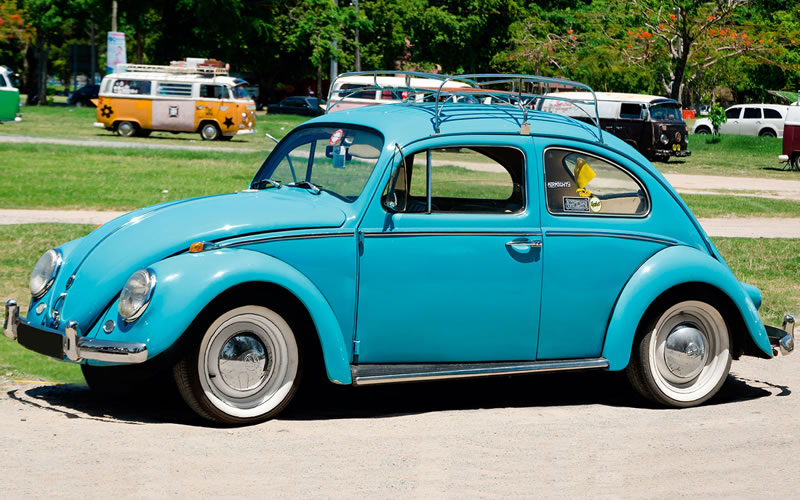
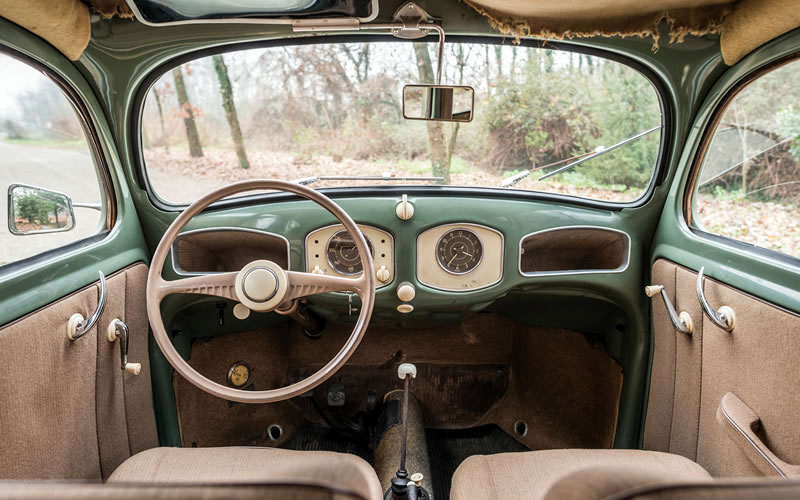
As technology advanced, the Volkswagen Beetle was upgraded throughout its production years. In the 1950s, a major modernization was carried out - hydraulic brakes were added, the split rear window became one, a new dashboard, engine displacement was increased, as well as external design changes, including twin chrome exhaust pipes.
The 1960s also saw a number of improvements - a front anti-roll bar, a hydraulic steering damper, increased engine power for the same displacement, flashing turn signals instead of "traffic lights", a significantly redesigned rear suspension, as well as smaller improvements and changes to the exterior design. In 1967, a 1.5-liter engine was introduced and the entire electrical system was converted from 6 volts to 12 volts.
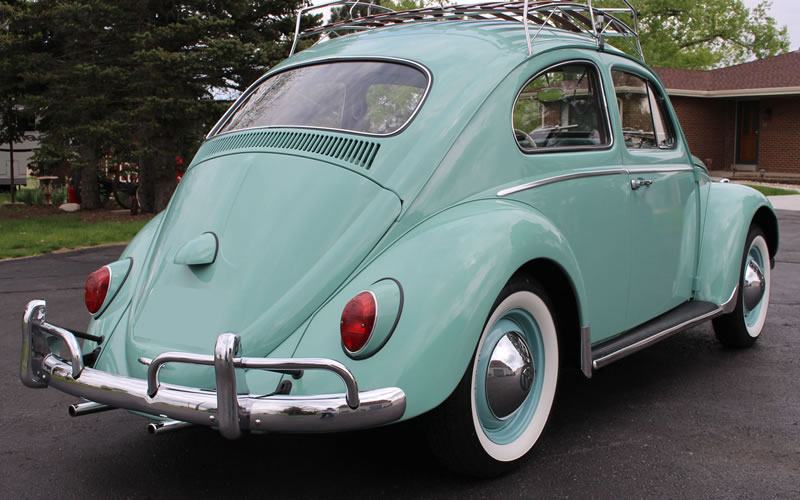
In 1968, the headlights and taillights were significantly changed. A number of safety enhancements have been made, including trigger-operated exterior door handles, a secondary front hood latch, a folding steering column, soft-touch vent window latches, a rotating glove box latch, and labeled instrument panel handles. A new semi-automatic three-speed gearbox with a torque converter and vacuum clutch was introduced, and the cars were sold under the name "VW Automatic".
In the 1970s, a luxury "Luxus" model was introduced, adding the letter "L" to the name. In addition to the standard-sized Beetle, a larger version was introduced, with trunk space increased by 40%. The engine was enlarged to 1.6 liters. A new front suspension with MacPherson struts was introduced, and the front track was slightly widened. Since 1975, some models have been equipped with Bosch L-Jetronic fuel injection and a catalytic converter.
Initially, the car was produced only in Germany. In 1953, they began assembling it in Brazil from imported parts, and in 1959, full-scale production began. In 1955, assembly was established in Mexico, and full-cycle production began in 1964. Some countries, such as Australia, Ireland, Indonesia, Nigeria, Thailand, South Africa, and Yugoslavia, assembled the car using the completely knocked-down (CKD) method under license from Volkswagen.
Volkswagen New Beetle (1997-2011)
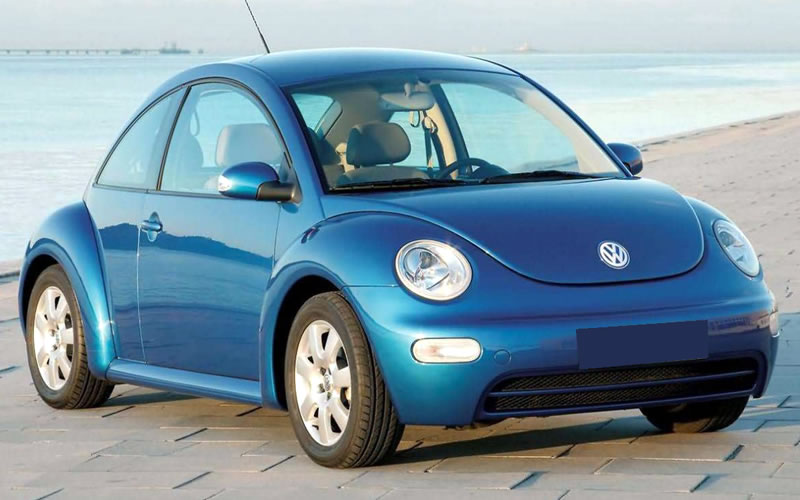
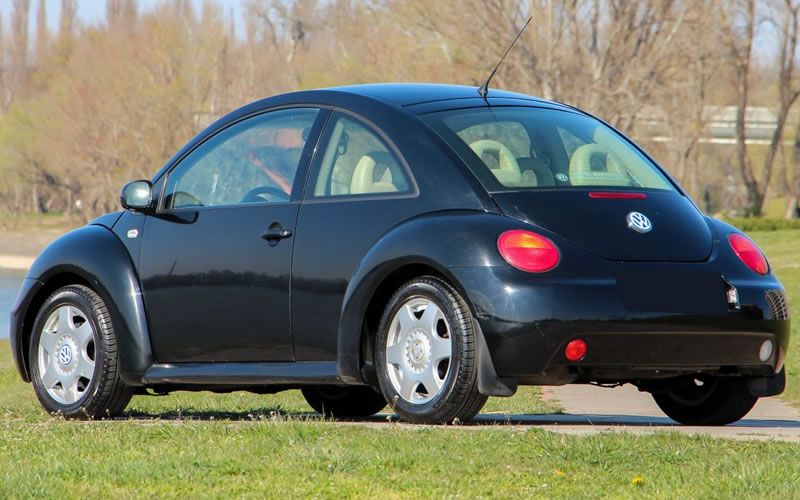
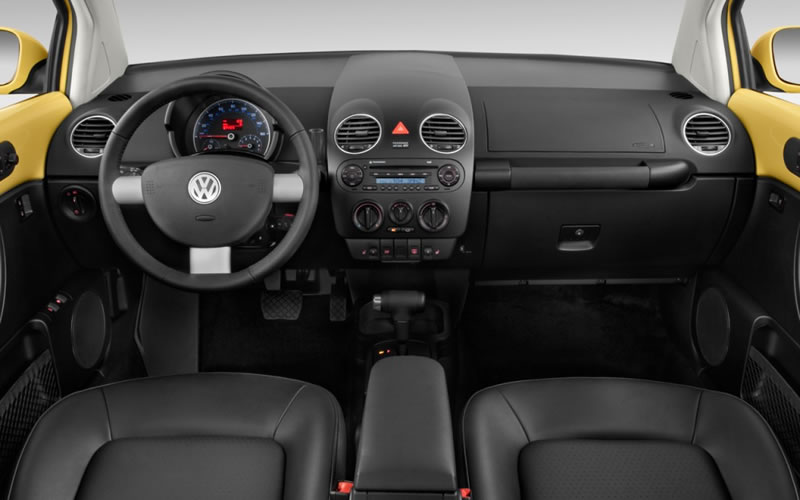
In 1997, Volkswagen introduced a compact car with the exterior design of the classic Beetle, but technically it is a completely different car - the engine is located in the front with front-wheel drive, and the trunk is in the rear, like most modern cars. Production lasted until 2011. Based on the platform "VW Group A4 (PQ34)", which is also used for cars Audi A3, VW Golf, VW Bora/Jetta, VW Lavida, SEAT Leon, SEAT Toledo, Skoda Octavia. The body dimensions weren't much different from the classic model, measuring 4129 mm long, 1721 mm wide, 1511 mm high, and a 2515 mm wheelbase. The curb weight was 1230 kg.
The concept of this car was presented in 1994 at the North American International Auto Show under the name "Concept One", and a convertible version was also shown at this year's Geneva Motor Show. It was also shown at the Tokyo Motor Show in 1995. The strong positive response from car show visitors led the company to decide to produce a production model.
In 2006, the car was restyled - the exterior was slightly redesigned, the bumpers and wheel arches became more angular, and the engines were also updated.
The petrol engine range consisted of the following 1.4 litre models (1390 cm³, I4, 75 hp), 1.6 liters (1595 cm³, I4, 101 hp), 1.8 liters (1781 cm³, I4, turbo, 150/180 hp), 2.0 liters (1984 cm³, I4, 116 hp), 2.3 liters (2324 cm³, VR5, 170 hp), 2.5 liters (2480 cm³, I5, 150 hp) and 3.2 liters (3189 cm³, VR6, 225 hp). The diesel engine had a single volume of 1.9 liters (1896 cm³, 90/101/105 hp), four-cylinder, in-line, turbocharged. The transmission offered was 5- and 6-speed manual, 4- and 6-speed automatic.
Volkswagen Beetle A5 (2011-2019)
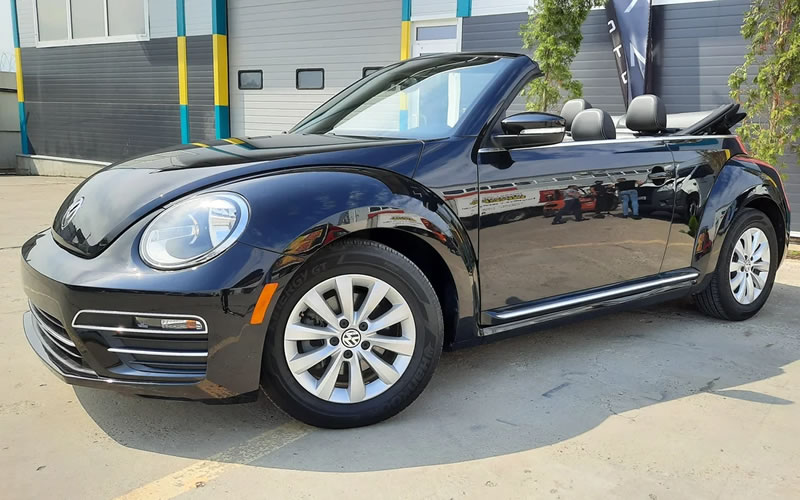
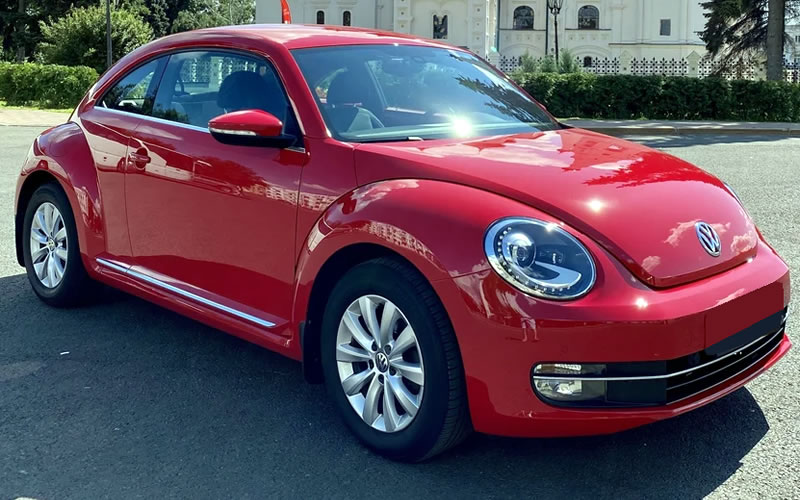
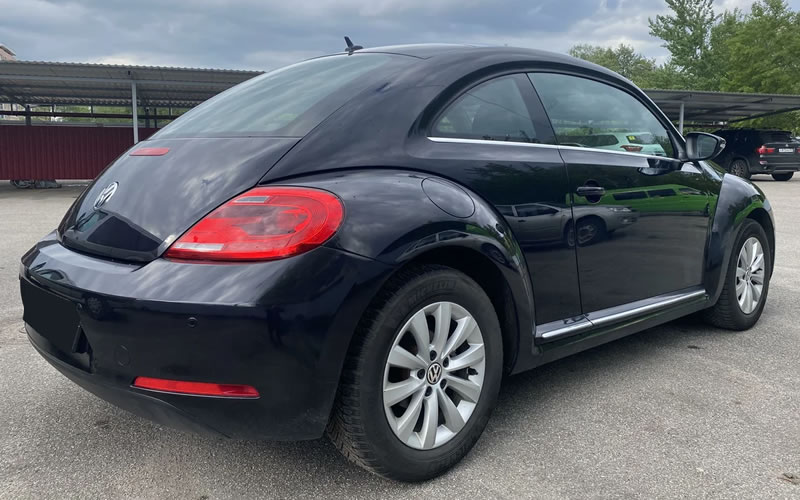
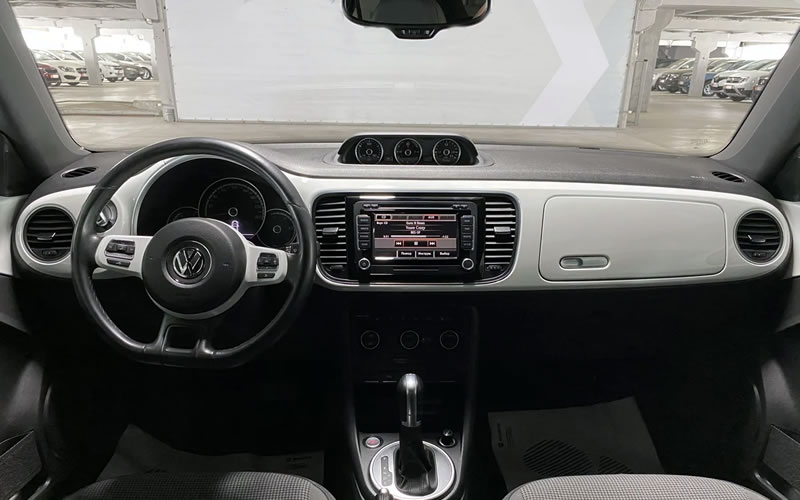
This is the second generation reincarnation of the original Volkswagen Beetle and is a small family car produced from 2011 to 2019. Based on the platform "Group A5 (PQ35)", which is also used for other vehicles of the concern - Audi A3, Audi Q3, Audi TT, SEAT Altea, SEAT Leon, SEAT Toledo, Skoda Octavia, Skoda Yeti, Volkswagen Touran / Caddy / Golf / Jetta / Scirocco / Eos of the same years of production. The body dimensions have increased slightly compared to the previous one and are: length 4278 mm, width 1808 mm, height 1486 mm, wheelbase 2537 mm and curb weight 1307 kg.
The car was first shown simultaneously at the 14th Shanghai Auto Show and the New York International Auto Show in April 2011. At the 2018 Geneva Motor Show, it was announced that this is the final generation of the Beetle.
Four-cylinder petrol engines were turbocharged with the following characteristics and volumes: 1.2 liters (1197 cm³, EA111, 105 hp), 1.4 liters (1395 cm³, EA211, 150/160 hp), 1.8 liters (1798 cm³, EA888, 170 hp) and 2.0 liters (1984 cm³, EA888, 200/210/220 hp), the five-cylinder petrol engine had a volume of 2.5 liters (2480 cm³, 170 hp) and without turbocharging. All diesel engines were four-cylinder turbocharged, with a capacity of 1.6 liters (1598 cm³, EA189, 105 hp) and 1.9 liters (1968 cm³, EA189/EA288, 110/140/150 hp). The transmission was a six-speed manual or a DSG robot.