



a) Disconnect the ground wire from the battery.
b) Remove the air filter.
c) Disconnect the gas rod.
d) Mark the electrical wires with adhesive tape and then disconnect them.
d) In the 2E2 carburetor, unscrew the hex bolt on the starter equipment cover.
e) Remove the low pressure pipes and mark them.
g) Remove the fuel supply pipes.
c) Unscrew the three through-bolts in the middle of the carburetor (figure 3.12).
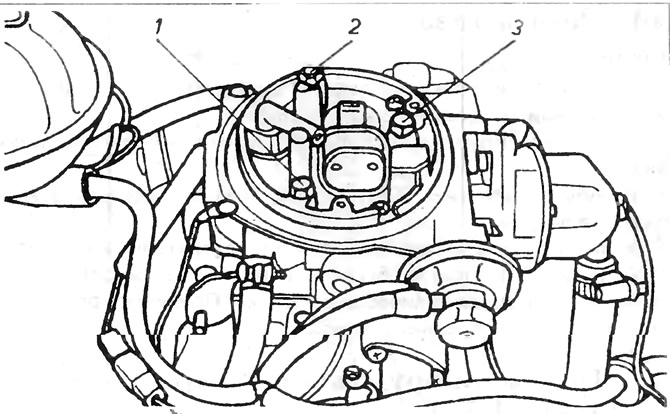
Figure 3.12. Fastening the 2E2 carburetor
1, 2, 3 diametrical bolts securing the carburetor to the manifold
c) Remove the carburetor and close the intake manifold.
Installation
Note: Since December 1984, the bolts securing the rubber cuff have been protected by a metal washer. If dismantling is necessary, tighten the bolts to 13 Nm and then bend the metal washer. These washers can also be installed on vehicles in which they were not previously installed.
4. Install the carburetor, paying attention to the washer and tighten the through-bolts. Connect the electrical wires, paying attention to the consistency with the previous designation.
l) Put on the fuel pipes and secure them with straps.
m) Put on the low pressure pipe.
n) Connect the battery ground wire.
o) Install the rod and secure the rubber boot.
p) Put on the starting equipment casing and tighten the hex bolt.
p) Install the air filter.
c) Adjust idle speed
2. The steps for removing and inspecting the 2E2 carburetor are exactly the same as for the 2E3 carburetor. Below are additional steps that differ from those given in that paragraph.
3. Partial load channel heater unit 27 (figure 3.27) To check this unit, connect a test light between the plug of the unit's electrical wires and the positive pole of the battery. Connect the unit to ground. The test light should light. If it does not light, the unit must be replaced.
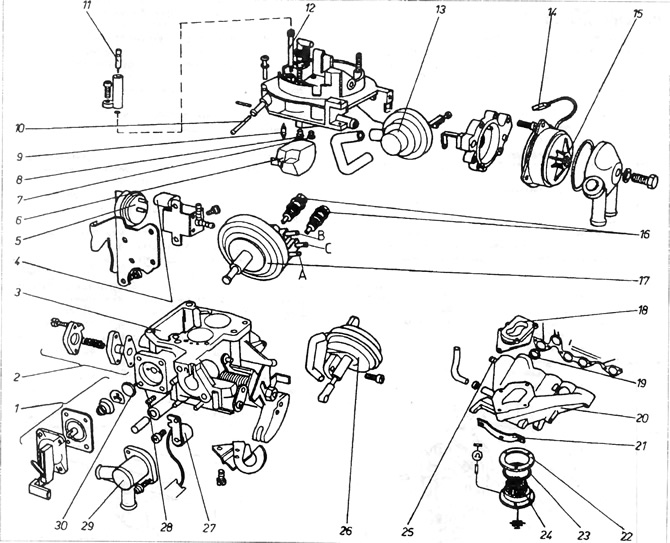
Figure 3.27. Carburetor 2E2
1 - accelerator pump unit; 2 - mixture enrichment valve when the throttle is partially opened (once the valve is removed, it must be replaced with a new one); 3 - float chamber; 4 - valve that controls the disconnection of the idle system and at speeds higher than idle speed; 5 - thermo-time valve; 6 - float; 7 - first pass main jet; 8 - main jet of the second pass; 9 - needle valve; 10 - filter; 11 - exhaust gas composition adjusting bolt; 12 - idle jet; 13 - servomotor; 14 - plug; 15 - Automatic start equipment cover; 16 - valves for adjusting idle speed (the lower one is only available with a four-output servomotor); 17 - servo motor with three outputs; 18 - A, B, C - servomotor connection nipples (four outputs have servomotors in cars with automatic transmission); 18 - shock-absorbing cuff; 19-additional gasket type o-ring (ring) between the collector and the head, 20-drive manifold; 21 - holder; 22 - washer; 23 - gasket; 24 - mixture heater; 25 - nipple for connecting servo; 26 - servomotor controlling the opening of the second passage; 27 - partial throttle opening channel heater; 28 - adjusting bolt; 29 - valve cover with coolant fittings; 30 - mushroom valve.
Current is supplied to the heater via a thermal switch. It can be checked by connecting a pressure gauge and clamping it. At temperatures below 55°C, the ohmmeter should show "0", and only at temperatures above 65°C - infinity. If this does not happen, it is damaged and needs to be replaced.
When installing the heater unit, make sure it is well connected to the carburetor ground
4. The starting equipment servomotor serves to slightly open and hold the diaphragm in a certain position immediately after the engine is started. This prevents the mixture from becoming excessively rich beyond the flammability limit.
After the engine starts, the increasing vacuum acts on the servomotor diaphragm and causes the diaphragm to open at a certain angle by straining the spring. It can be checked by performing the following actions
a) Remove the air filter cover
b) Start the engine and let it idle.
c) Try to close the diaphragm manually. If it closes easily all the way, then the servomotor is damaged. In a normally working servomotor, a certain resistance will appear during the diaphragm closing, when there is a gap of 5 mm between the edge of the diaphragm and the carburetor neck.
5. Accelerator pump (carburetor removed):
To check the accelerator pump, the carburetor must be removed. You will need a vacuum pump and a 20mm long M8 bolt.
a) Disconnect the elastic low-pressure pipes from the servomotor with three or four outputs 17, then connect the vacuum pump to the connection A and plug the connection B (and additionally C with a servomotor with four outputs). Using the pump, reduce the pressure to hold the servo motor pusher in the contracted position (decrease) stroke. A gap appears between bolt 3 and pusher 5 (fig. 3.28 and 3.29)
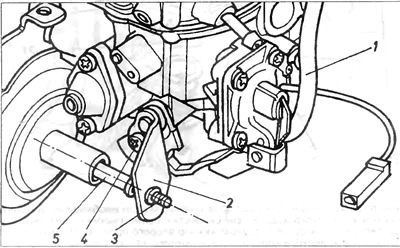
Figure 3.28. Carburetor 2E2
1 - low pressure branch pipe; 2 - cam plate; 3 - engine speed adjustment bolt on the suction side; 4 - fixing screw; 5 - three-output servomotor pusher.
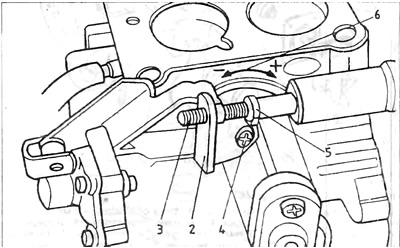
Figure 3.29. Carburetor 2E2
1 - low pressure branch pipe; 2 - cam plate; 3 - engine speed adjustment bolt on the suction side; 4 - fastening screw; 5 - servomotor pusher with three outputs; 6 - designation of the direction of rotation of the plate: (+) - increase in portion, (-) - decrease in portion.
b) Turn the starting equipment lever and insert an M8x20 mm bolt between it and the carburetor so that the lever remains in an inclined position
c) Hold the carburetor over a funnel inserted into the measuring cylinder, and then fully open and close the throttle 5 times. The throttle must be opened quickly and closed slowly.
Each throttle opening stroke must last at least 3 seconds. Divide the amount of fuel collected in the measuring cylinder by 5 and check whether the resulting flow rate of the accelerator pump agrees with that specified in the technical data.
If adjustment is necessary, loosen screw 4 and turn cam plate 2 in the required direction to increase or decrease the injection volume (see designation 6 figure 3.29). Finally, tighten screw 4 and protect it with paint in this position.
6. Adjusting the carburetor first pass throttle:
The throttle limit bolt is factory set and should not be changed under normal conditions. Only if the setting is inadvertently changed should the bolt be re-set as follows:
a) Turn the starting cam 2, Fig. 3.30, until the throttle control rod leaves the contact position.
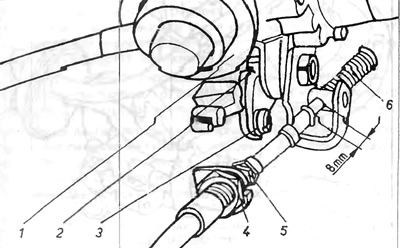
Figure 3.30. Adjusting the 1st pass throttle 2E2
1 - servomotor; 2 - cam of the starting equipment; 3 - lever; 4 - adjusting nut of metal protection of cable 8 mm bend of spring during checking of adjustment of carburetor cable (automatic transmission).
b) Lock the starting cam in this position using a screwdriver on the lever.
6. Remove all low pressure flexible hoses from the three-output servomotor and plug nipple B (figure 3.27).
d) Connect a low-pressure pump to fitting A (rarefied air) and reduce the pressure so that the diaphragm is held in the switching position.
d) Check if there is a gap between the suction speed adjusting screw 3 and the servomotor pusher 5 (figure 3.29).
e) Loosen adjusting screw 1 until a gap is formed between the adjusting screw and limiter 2 (figure 3.31).
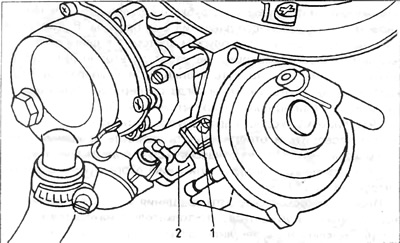
Figure 3.31. Adjusting the 1st pass throttle
1 - adjusting screw, 2 - limiter.
e) Turn the adjusting screw until it meets the limiter.
g) Turn the adjusting screw ¼ turn and seal the thread with paint.
7. The 2-way throttle adjustment is factory set and should not be changed. If for any reason the adjustment bolt setting is changed, it must be corrected as follows:
Open the throttle fully and hold it in this position by inserting a wooden lever or something similar between it and the neck (figure 3.32).
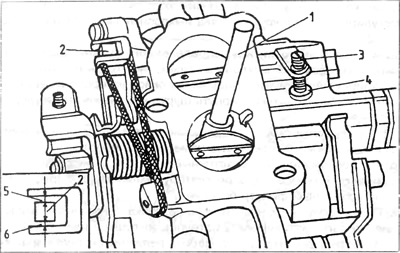
Figure 3.32. Adjusting the 2nd Pass Throttle 2E2
1 - throttle lock; 2 - locking lever, 3 - buffer bolt; 4 - buffer; 5 and 6 - gaps on both sides of the locking lever.
Using a rubber band, pre-tension the second-pass throttle lever locking bolt, then unscrew the buffer bolt to a position where a gap appears between the buffer bolt and buffer 4. Screw in the bolt until it touches the buffer. This point of contact between the bolt and the buffer can be captured by inserting a piece of thin paper between the bolt and the limiter. When the paper begins to squeeze these two elements, this means that the contact point has been reached. From this position, screw in the buffer bolt another ¼ turn and protect it with paint. Close the two throttles and measure the gaps 5 and 6 (figure 3.32).
The gaps should be equal to:
5 - 0.3...0.5 mm
6 - 0.9...1.1 mm
If the gaps have different values, these levers must be bent.
The original article is posted on the website VWmanual.ru
Visitor comments