



2. Loosen and remove the screws securing the carburetor cover, then carefully remove the cover so as not to tear the gasket. After this, you can remove the corresponding elements from the cover and the main body of the carburetor, using Figure 3.36.
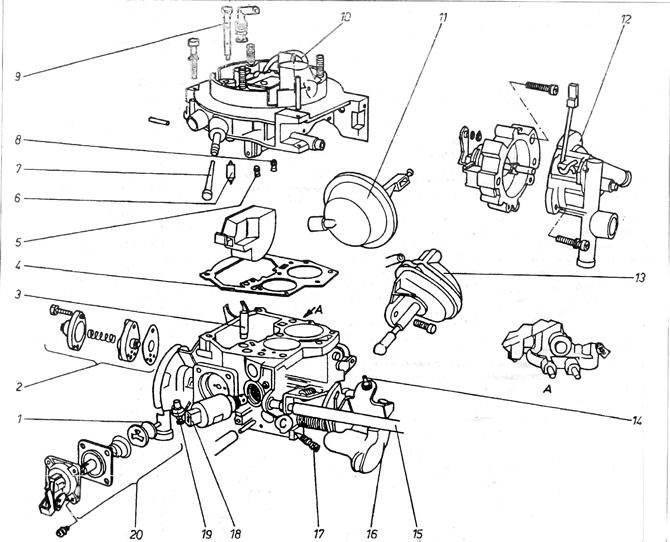
Figure 3.36. Carburetor 2EZ
1 - mushroom valve; 2 - mixture enrichment valve with partially open throttle; 3 - the injection pump injector must supply fuel in the direction selected in the carburetor throat; 4 - cover gasket; 5 - main jet - passage 1; 6 - needle valve 7 - strainer; 8 - main jet - passage 2; 9 - idle jet; 10 - economizer tube; 11 - servomotor of starting equipment; 12 - Launch equipment cover; 13 - servomotor controlling the opening of the second passage; 14 - adjusting bolt; 15 - idle speed adjustment; 16 - lever, 17 - mixture composition adjusting bolt; 18 - idle cut-off valve; 19 - limit screw; 20 - accelerator pump unit.
Do not change the full throttle limiter or second pass throttle adjustment bolt of the carburetor.
3. Clean the internal elements of the carburetor. To clean the jets from debris, do not push the jets with a wire, but perform this operation with compressed air.
4. Removing the mixture enrichment valve with the throttle 2 partially open requires replacing it with a new one (figure 3.36).
5. To check the level of the shut-off valve 18, it is necessary to connect power directly from the battery to it. After applying voltage to the valve, a crackling sound should be heard.
6. The carburetor is installed in the reverse order of removal. All gaskets and rubber rings are replaced. Then the necessary checks and adjustments are made.
7. To check the clearance of the diaphragm of the starting equipment, it is necessary to remove its cover 12 (figure 3.36).
Turn the throttle and the adjusting cam 3 of the engine speed on the suction side so that the adjusting screw 1 rests on the uppermost tooth of the cam 2 (figure 3.37) Then screw in the adjusting screw 1 until it stops in the direction of the starting equipment servomotor, then check the gap size between the starting equipment diaphragm and the neck wall using a drill of the appropriate diameter. If necessary, it should be adjusted by turning the adjusting bolt 1 until the normal gap size is obtained.
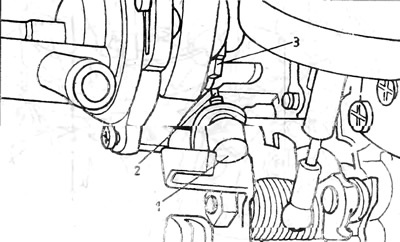
Figure 3.37 Adjusting the diaphragm clearance - carburetor 2EZ
1 - adjusting bolt; 2 - the topmost tooth of the cam; 3 - cam.
8. The flow rate of the accelerator pump is checked as follows:
a) Remove the carburetor from the vehicle and fill the float chamber with fuel to the normal level.
b) Place the carburetor horizontally over the measuring vessel (the float chamber must be filled with fuel). To do this, it is necessary to connect a 1 m long elastic hose to the carburetor drive nipple. The hose is filled with fuel using a syringe, and its upper end is suspended vertically above the carburetor.
c) Hold the adjusting bolt 1 of the intake speed moved away from the cam 2 and smoothly fully open and close the throttle 6 times (figure 3.36).
Open the throttle with a strong but smooth movement, and the time intervals between individual strokes should be equal to 3 seconds.
d) Measure the amount of fuel collected, divide it by 6 and compare the resulting value with the technical data
d) If the obtained value does not correspond to the required one, it is necessary to adjust the amount of fuel injected by the pump by loosening the locking bolt 1 and rotating the control cam 2 clockwise to reduce the amount of fuel - B.
e) Repeat this experiment after clamping the locking cam, and if the amount of fuel obtained is correct, install the carburetor as described above.
9. In order to check the starting equipment, connect a test lamp between the positive pole of the battery and the electrical equipment. The test lamp should light, otherwise the starting equipment is faulty and needs to be replaced
It is necessary to pay attention to the fact that the markings on the cover and the body of the automatic starting equipment match.
10. Starting equipment cam:
a) Remove the carburetor from the vehicle and ensure that the diaphragm clearance is within normal limits.
b) Connect the vacuum pump to the servomotor as described above and create and maintain a vacuum of approximately 300 milliatores (figure 3.42).
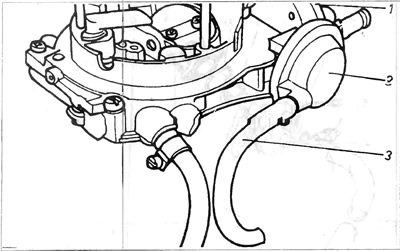
Figure 3.42. Checking the sealing of the starting equipment servomotor
2 - servomotor; 3 - rarefied air branch pipe
c) Open the throttle wide enough so that the intake speed adjusting bolt 1 is clear of the teeth and the starting cam 2 (figure 3.39).
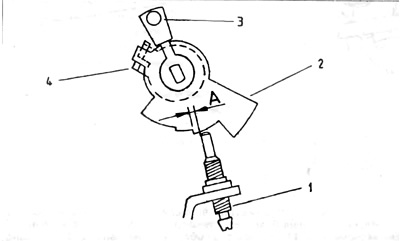
Figure 3.39. Starting equipment cam - 2EZ
1 - suction speed adjusting bolt; 2 - cam.
d) Carefully press the diaphragm lever 2 and 3 and release the throttle. The suction speed bolt 1 must be on the uppermost tooth of the cam 2 so that dimension A is equal to 0.5 mm (figure 3.39).
d) If the dimension A does not correspond to the normal value, adjust it by bending the lever 4 (figure 3.39).
e) After completing the adjustment, disconnect the vacuum pump and connect the low pressure pipe.
e) Install the carburetor on the vehicle.
11. The starting equipment servo motor can be checked when it is removed from the carburetor, but since this requires a vacuum pump and a measuring device, it is best to leave this work to a Volkswagen service station. The servo motor can also be checked when the carburetor is installed on the engine.
a) The air filter must be removed.
b) Start the engine and stop it at idle speed, then manually close the diaphragm of the starting equipment 1 until noticeable resistance. At this point, the gap should be approximately 4 mm. If the size does not correspond to the normal value, it is necessary to adjust the gap of the starting diaphragm (figure 3.41).
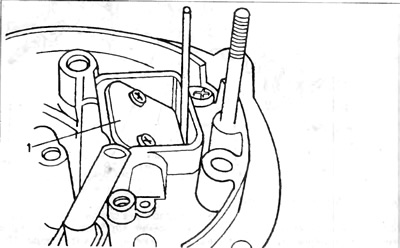
Figure 3.41. Adjusting the diaphragm clearance - 2E3
1 - launch equipment diaphragm.
c) If there is no resistance at all in the vacuum system, the system is leaky or the vacuum servomotor membrane is damaged.
d) If the servomotor is faulty, it is necessary to check all connections of the rarefied air pipes for reliability, as well as the pipes themselves for cracks and damage.
d) Disconnect the elastic pipe 3 and connect a vacuum pump to the servomotor 2 in its place. Create a vacuum in the servomotor chamber equal to 300 mbar.
e) Check if the vacuum is maintained for 2 minutes. If the vacuum disappears earlier, the servomotor must be replaced.
e) Disconnect the vacuum pump from the servomotor and reinstall the low pressure pipes.
12. The 2-way throttle adjustment is complete, but it cannot be changed. If for any reason the fixation of the adjusting bolt is changed, the adjustment is carried out as follows: open the throttle completely and hold it in this position, inserting a wooden lever or something similar between it and the neck (figure 3.32).
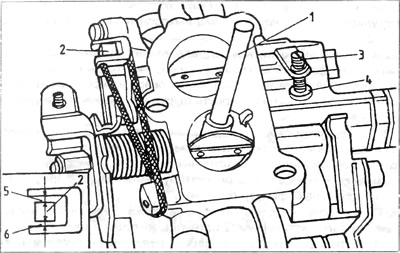
Figure 3.32. Adjusting the 2nd Pass Throttle 2E2
1 - throttle lock; 2 - locking lever, 3 - buffer bolt; 4 - buffer; 5 and 6 - gaps on both sides of the locking lever.
Using a rubber band, pre-tension the lever that locks the second-pass throttle, then unscrew the buffer bolt 3 to a position where a gap appears between the locking bolt and the stopper 4. Screw the bolt in until it meets the stopper (buffer). This point of contact with the stopper can be determined by inserting a piece of thin paper between the bolt and the stopper. When the paper begins to squeeze between these two elements, this means that the contact point has been reached. From this position, screw the locking bolt in another ¼ turn and protect it with paint.
Close the two throttles and measure the clearances of locking levers 5 and 6. These clearances should be equal to:
5 — 0.3...0.5 mm
6 — 0.9...1.1 mm
If the gaps have different values, these levers must be bent accordingly.
13. 2nd Pass Carburetor Rarefied Air Servomotor:
a) Connect a vacuum pump to the low-pressure pipe 1 and create a slight vacuum in the servomotor and pipe. If the low pressure read from the measuring device noticeably disappears within about 2 minutes, the low-pressure pipe and servomotor are damaged and need to be replaced.
The original can be seen on the portal vwmanual.ru
14. Locking the 2nd pass throttle of the carburetor:
a) Ensure that the second pass throttle is closed and adjusted correctly.
b) Check the dimensions A and B between the second-pass throttle lever 1 and its control forks 2 (figure 3.44).
A - 0.5 mm B - 0.3 mm
If these values require adjustment, it is necessary to carefully bend the arms of the snare 2.
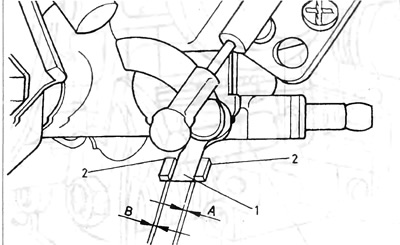
Figure 3.44. 2nd Pass Throttle Lever
1 - lever; 2 - lever forks.
15. Throttle clearance:
a) Remove the carburetor as described above, unscrew it and install the intake speed bolt on the cam tooth 3 itself (figure 3.37).
b) Measure the throttle clearance with a drill. If it does not match the specifications, adjust it by screwing in and out the speed adjusting bolt 1 (figure 3.45).
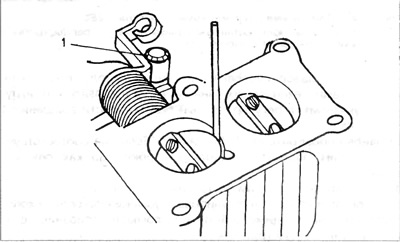
Figure 3.45. Adjusting the throttle clearance - 2EZ
1 - adjusting screw
c) Recheck the clearance. If it corresponds to the technical data, install the carburetor as described above.
16. Idle speed adjustment - 2E3:
a) To check and adjust the idle speed setting, follow the steps described below (figure 3.46).
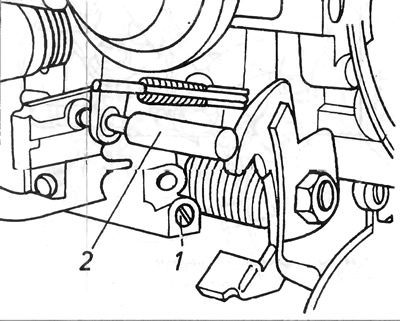
Figure 3.46. Position of adjusting bolts - 2E3
1 - exhaust gas composition adjustment bolt; 2 - idle speed adjusting bolt.
17. Adjusting the engine speed on the suction side of a hot engine:
a) Remove the air filter.
b) Plug the elastic hose from the air filter temperature regulator.
c) Restart the engine and open the throttle slightly to obtain an engine speed of approximately 2500 rpm. Press the intake speed cam to its limiter, then release the throttle so that adjusting bolt 1 is on the second highest tooth of intake speed cam 2 (figure 3.39).
In this position, the suction speed should be equal to the speed given in the technical data. If the value does not correspond to the technical data, it is necessary to turn the adjusting bolt in the required direction to obtain this value. It is necessary to pay attention to the fact that this bolt may have a safety cap.
d) Remove the plug from the temperature regulator pipe and install the air filter.
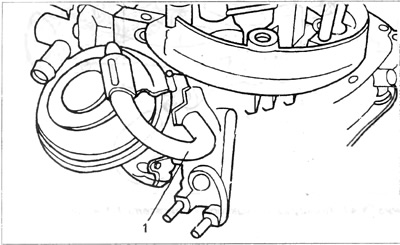
Figure 3.43. Rarefied air servomotor (low blood pressure) 2nd pass - 2EZ
1 - low pressure branch pipe (thin air).
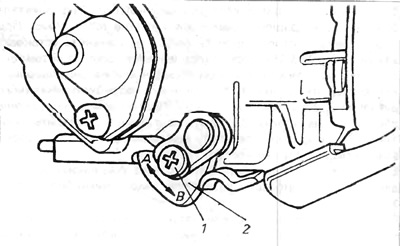
Figure 3.40. Adjusting the accelerator pump - 2E3
1 - locking screw; 2- control cam.
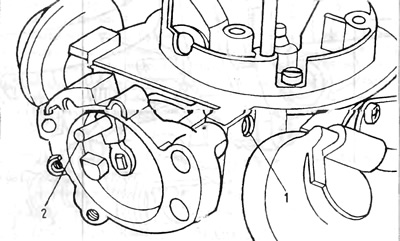
Figure 3.38. Adjusting the diaphragm clearance - carburetor 2EZ
1 - adjusting bolt; 2 - diaphragm lever.
Visitor comments