



a) Place the head with the combustion chambers facing upwards on a stand in the workshop and place wooden blocks on each side.
b) We apply copper or brass nuts to the valve plate on the combustion chamber side, with which we will rotate the valve during grouting
c) Place a soft spring, for example from a fuel pump, under the valve plate. It will pull the valve away from its seat during grinding,
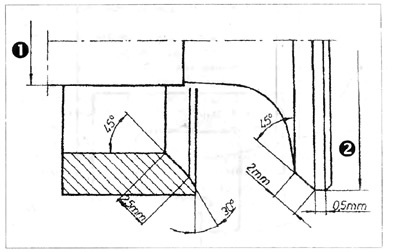
Fig. 1.9. Dimensions of the valve and seat in the head
1 - inlet - 7.97, outlet - 7.95; 2 - inlet - 34 mm, outlet - 31 mm
Note: After a certain period of time, the valve must be separated from the surface being rubbed to ensure a constant supply of paste into the fitted socket.
d) Apply a small amount of coarse-grained carborundum paste to the surface of the seat and, using a grinding machine, finished with, for example, a spanner, rub both elements one toward the other with half-turns, lifting the valve after a certain time to distribute the erasing paste. After obtaining a matte surface on the valve seat and on the valve, it is necessary to erase the paste and repeat the same operation with fine-grained carborundum paste. The grinding is finished after obtaining a perfectly smooth, light-gray matte ring on the valve and seat.
To check the tightness of a jammed valve, it is necessary to mount it in the head together with the springs and fuses. If it is a drive valve, it is necessary to pour kerosene into the drive channel of this cylinder. Install the head vertically with the drive manifold up and wait 10 minutes. If after this kerosene does not leak into the combustion chamber, the valve can be considered tight.
d) After finishing the grouting, it is necessary to very carefully wash and blow out the combustion chamber, valve seats, guide holes, manifolds - inlet and outlet - from the remains of carbon deposits and erasing paste.
1. Before installation, lubricate the surface of the fitted valve seat, valve stem and guide hole.
2. If possible, compare the length of the valve springs with new ones and replace the entire set if one is shorter.
3. If the engine is in a car, it is necessary to clean the piston bottoms and the upper edges of the cylinder liners. Pay attention to the fact that carbon deposits do not get between the piston and the cylinder. Set two pistons to TDC. Secure the remaining cylinders. Do not allow carbon deposits to get into the cylinders or oil and water channels. R block Do not blow compressed air on the engine, as this will facilitate the penetration of contaminants between the piston and the cylinder.
4. To localize a possible head crack, it is necessary to drain the coolant and add water with ink to the system before dismantling. Warm up the engine, since some leaks only appear when the head is hot. After removing the engine, traces of ink will remain in the cracked areas.
If this was impossible, all water holes must be plugged with wooden plugs, except for one, into which compressed air is supplied. By placing the head in a bath of hot water, you can see air bubbles in places where the connection is not tight. We do the same with the oil channels.
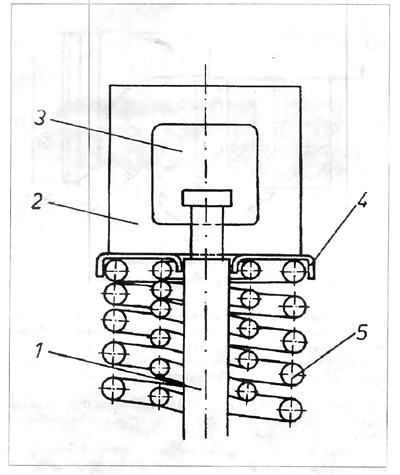
Fig. 1.10. Device for installing conical rings
1 - valve stem; 2 - device (adaptation); 3 - window for installing fuses; 4 - upper cup; 5 - outer valve spring
Visitor comments