



Lubricate the valve stems with clean engine oil and install them into the appropriate valve guides.
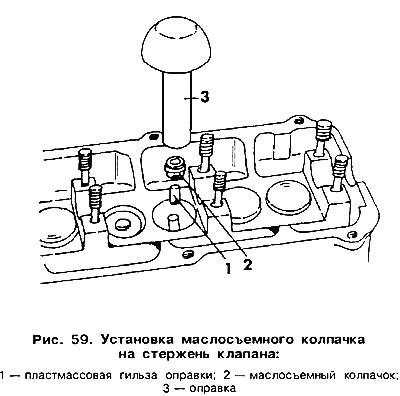
Install the valve stem seals onto the valve stems using the tool shown in Figure 59 as follows:
- place the plastic sleeve 1 of the mandrel on the valve stem;
- place the valve stem oil seal 2 on the valve stem lubricated with clean engine oil;
- lower the mandrel 3 onto the cap and carefully seat it onto the rod.
(View the original article on the resource VWmanual.ru)
Trying to install the cap without using a mandrel may result in damage to it, which will lead to increased oil consumption.
Install the valves and valve springs in their original locations.
Install the upper spring plates. Attach the special spring compressor (see figure 44). When the end of the valve stem appears above the plate after the spring is compressed, insert crackers into the annular groove (using tongs) and slowly remove the device.
Use a plastic hammer to hit the end of the valve stem several times. This will cause the crackers to fall out if they were installed incorrectly. Cover the valve with a rag to catch any parts that fall out.
Install the tappets with adjusting washers in their places.
Install the camshaft and timing pulley as shown described here.
Take the camshaft oil seal and determine which side its working edge is on. It should be facing the engine flywheel. Lubricate the outer part of the oil seal and the shaft journal with engine oil and install the oil seal using a mandrel or a piece of pipe of a suitable diameter.
Install the cylinder head as described in the next chapter.
Install the rear timing belt cover. Mounting bolts 5.6 (see figure 40) should be tightened to the recommended torque.
Install the toothed pulley. Tighten the mounting bolts to 80 Nm.
Install the intake and exhaust manifolds if they were removed, replacing their gaskets.
Visitor comments