



Adhesive rear wheel brake pads are available for replacement complete with pads. Riveted pads are sold as spare parts with the pads. You can rivet the lining yourself. In order for the riveting to be done expertly, a vice and riveting tool will be required (see fig.).
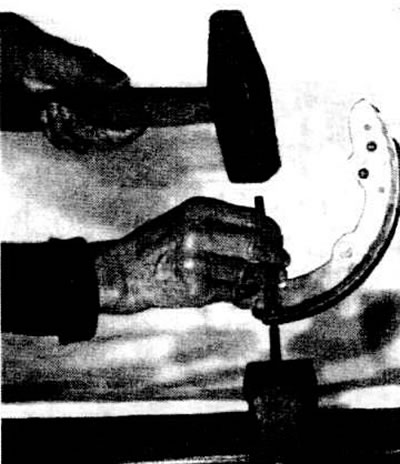
The lower part is clamped in a vice; the upper part is hit with a hammer, due to which the edges of the rivet are flared. The assistant holds the shoe and the lining
Clamp the brake pad in a vise.
Remove the old trim with a chisel and hammer.
Knock out the rest of the rivets. Rivets can also be drilled out separately. Pay attention to that. so that the brake pads are not damaged.
Remove burrs from rivet holes; clean the surface of the brake pad The bearing surface must be level, so brake pads with deep rust scars should no longer be used.
Clamp the lower part of the riveting tool in a vise.
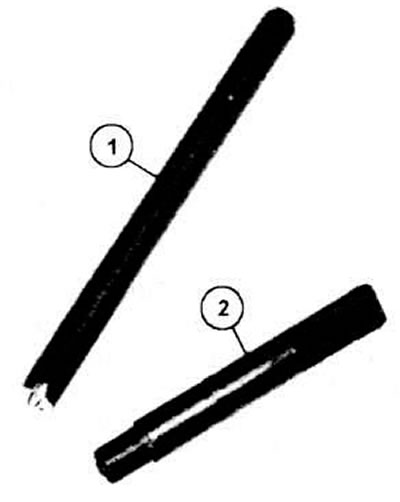
The hand riveting tool consists of a top (1) and lower (2) parts. This is the best tool for riveting rear drum brake linings
First, insert the rivet into one of the middle holes in the lining. Attach the block and insert the rivet.
Now put the block on the rod (lining at the bottom).
An assistant should use a hammer and a riveting tool to flare the edges of the protruding rivet on the inside of the block.
Don't hit too hard or the pad will break!
Insert the rest of the rivets, starting from the middle of the lining.
The brake lever can (contrary to the company's recommendations "Volkswagen") stay at the brake shoe when riveting. If the riveting tool is small, riveting works well.
File round the outer edges of the linings.
Visitor comments