



In a car with a carburetor engine, the vacuum in the intake manifold provides additional force. Since the diesel models described do not provide vacuum in this place, they have a special vacuum pump for this purpose (see picture). The pump is connected to the brake booster by an air hose. When braking, a special valve is triggered and the force of the foot on the pedal is supplemented by the force from the pressure difference (atmosphere and vacuum in the intake manifold) on the amplifier membrane.
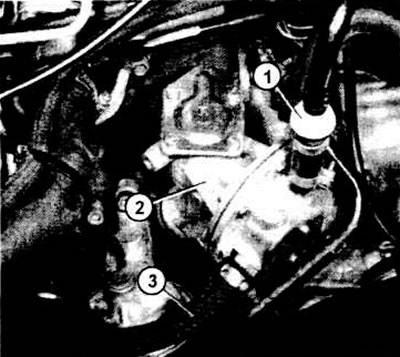
The vacuum pump (2) creates the relative vacuum required for the brake booster to operate. To do this, the pump sucks air from the booster through a hose with a check valve (1) and directs it through a second hose (3) to the engine crankcase. This is done to prevent noise in the pump. The newest pumps do not have this hose.
If the engine is not running, the booster is also unable to provide additional braking force. Therefore, you need to press the pedal harder if, for example, the car is being towed. With the engine not running, you still have some reserve for several short brakings due to the vacuum available; only then do you fully tense your calf muscles.
Visitor comments