



- if the screw is turned out too much, the free play of the fuel supply control lever increases and the residual supply becomes lower than required. This causes interruptions in the engine operation during starting, acceleration and at low speeds, and the engine "shakes";
- if the screw is too tight, the residual feed exceeds the norm. This leads to an increased crankshaft speed at idle, which cannot be reduced to the norm.
To restore the screw position, warm up the engine (oil temperature not less than 60°C) and switch off the current consumers. Remove the plug from the adjusting screw 5 (Fig. 3-40) or 4 (Fig. 3-41) of the residual feed and loosen the screw lock nut.
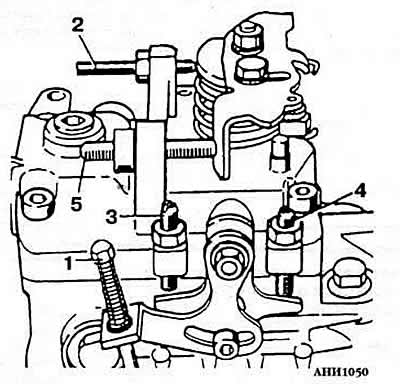
Fig. 3-40. Adjusting screws of fuel injection pumps of engines "1Y", "RA" and "SB":
1 - idle speed adjusting screw;
2 - maximum speed adjustment screw;
3 — minimum idle speed limiting screw;
4 — maximum idle speed limiting screw;
5 — residual fuel supply adjusting screw.
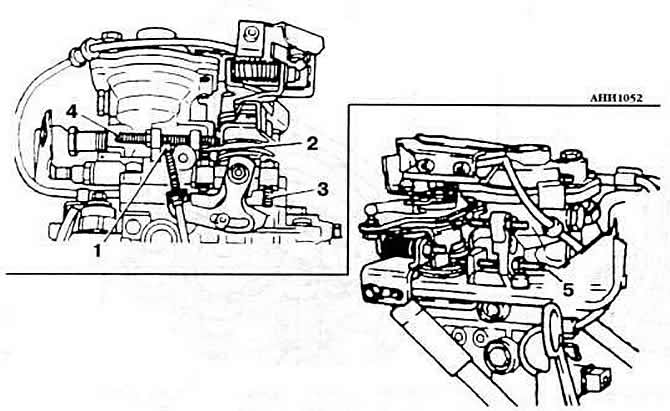
Fig. 3-41. Adjusting screws of the high-pressure fuel pump of the "AAZ" diesel engine:
1 - idle speed adjusting screw;
2 — minimum idle speed limiting screw;
3 - Fast idle speed adjusting screw;
4 — residual fuel supply adjusting screw;
5 — maximum speed adjustment screw.
If the residual flow is below normal, tighten the adjusting screw until the crankshaft speed begins to increase, then loosen the screw by half a turn.
If the residual feed is higher than the norm, turn the adjusting screw out until the crankshaft speed becomes stable, then turn the screw in until the crankshaft speed starts to increase, then turn the screw back half a turn. After adjustment, tighten the adjusting screw lock nut and install a new plug on the screw.
Visitor comments