



Engine 5-cylinder car Volkswagen Passat B2

Design and technical characteristics. General information
The four-stroke, five-cylinder, in-line, liquid-cooled petrol engine is located along the longitudinal axis of the vehicle with an inclination to the right. The engine uses a...
The four-stroke, five-cylinder, in-line, liquid-cooled petrol engine is located along the longitudinal axis of the vehicle with an inclination to the right. The engine uses a...

Technical characteristics of the cylinder block
The cylinder block is sleeveless and made of cast iron. The lower part of the cylinder block has six supports for the crankshaft main bearing shells. The main bearing caps are...
The cylinder block is sleeveless and made of cast iron. The lower part of the cylinder block has six supports for the crankshaft main bearing shells. The main bearing caps are...

Technical characteristics of the crank mechanism
Crankshaft The crankshaft is steel, forged. The shaft has six bearings. There are lubrication grooves in the upper shells of the main bearings. There are ten counterweights on the...
Crankshaft The crankshaft is steel, forged. The shaft has six bearings. There are lubrication grooves in the upper shells of the main bearings. There are ten counterweights on the...

Technical characteristics of the valve timing mechanism
The engine uses a valve timing mechanism with an overhead camshaft, which is driven, like the water pump, by a toothed belt from the crankshaft pulley. The belt tension is...
The engine uses a valve timing mechanism with an overhead camshaft, which is driven, like the water pump, by a toothed belt from the crankshaft pulley. The belt tension is...

Technical characteristics of the lubrication system
All engine models have a pressure lubrication system. Under vacuum, oil is sucked through the mesh filter of the oil receiver from the oil sump and is pumped by an internal gear...
All engine models have a pressure lubrication system. Under vacuum, oil is sucked through the mesh filter of the oil receiver from the oil sump and is pumped by an internal gear...
Technical characteristics of the cooling system
The engine uses a liquid cooling system with forced circulation of liquid. The cooling system includes cooling jackets, a radiator, an expansion tank, a centrifugal water pump, a...
The engine uses a liquid cooling system with forced circulation of liquid. The cooling system includes cooling jackets, a radiator, an expansion tank, a centrifugal water pump, a...

Technical characteristics of the power supply system
The WN model engine is a carburetor, the JS model engine has a fuel injection system. Fuel tank The plastic fuel tank is located in front of the rear axle. Fuel tank capacity, l:...
The WN model engine is a carburetor, the JS model engine has a fuel injection system. Fuel tank The plastic fuel tank is located in front of the rear axle. Fuel tank capacity, l:...

Technical characteristics of the fuel injection system «K-Jetronic» of the engine model JS
Mechanical continuous fuel injection system "K-Jetronic" from Bosch with forced idle system. The principle of operation of the fuel injection system The fuel pump takes fuel from...
Mechanical continuous fuel injection system "K-Jetronic" from Bosch with forced idle system. The principle of operation of the fuel injection system The fuel pump takes fuel from...

Technical characteristics of the ignition system
The ignition system is contactless and includes a distributor sensor with a built-in electronic control pulse sensor, an ignition coil and a switch. Ignition distributor sensor...
The ignition system is contactless and includes a distributor sensor with a built-in electronic control pulse sensor, an ignition coil and a switch. Ignition distributor sensor...
Tightening torques of main threaded connections, kgf.m
Cylinder head mounting bolts: 1st reception: 4.0; 2nd reception: 6.0; step 3: Turn 180°. Crankshaft timing pulley mounting bolt: 35.0. Water pump mounting bolt: 2.0. Camshaft...
Cylinder head mounting bolts: 1st reception: 4.0; 2nd reception: 6.0; step 3: Turn 180°. Crankshaft timing pulley mounting bolt: 35.0. Water pump mounting bolt: 2.0. Camshaft...

Checking and adjusting clearances in the valve drive mechanism
WN engine and JS engine up to 1986 model year Examination Warm up the engine to operating temperature (coolant temperature above +35°C, cylinder head warm). Disconnect the...
WN engine and JS engine up to 1986 model year Examination Warm up the engine to operating temperature (coolant temperature above +35°C, cylinder head warm). Disconnect the...

Construction of hydraulic tappets
The hydraulic pusher consists of two main moving parts: the pusher itself 2 (see picture), serving simultaneously in the process of work of the plunger, and cylinder 4. Under the...
The hydraulic pusher consists of two main moving parts: the pusher itself 2 (see picture), serving simultaneously in the process of work of the plunger, and cylinder 4. Under the...
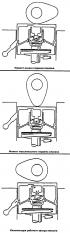
Operating principle of hydraulic tappets
Valve lift start moment At the moment the camshaft cam hits the valve stem, the check valve closes the chamber and the pressure in it increases. The increase in pressure does not...
Valve lift start moment At the moment the camshaft cam hits the valve stem, the check valve closes the chamber and the pressure in it increases. The increase in pressure does not...
Checking the technical condition of hydraulic tappets
The hydraulic tappet design is non-disassemblable and cannot be repaired. Start the engine and leave it running until the electric cooling fan turns on for the first time....
The hydraulic tappet design is non-disassemblable and cannot be repaired. Start the engine and leave it running until the electric cooling fan turns on for the first time....
Fuel pump for WN engine
The fuel pump is secured with two nuts through a heat-insulating spacer and a sealing ring. The pump body and cover are non-separable, i.e. the fuel pump design is...
The fuel pump is secured with two nuts through a heat-insulating spacer and a sealing ring. The pump body and cover are non-separable, i.e. the fuel pump design is...
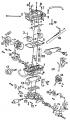
Carburetor Pierburg 2B5
The design features and calibration data of the Pierburg 2B5 carburetor are given in the subsection " Design and technical characteristics ". The principle of operation of the...
The design features and calibration data of the Pierburg 2B5 carburetor are given in the subsection " Design and technical characteristics ". The principle of operation of the...
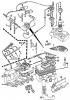
Features of the device and the operating principle of the K-Jetronic system
The fuel pump takes fuel from the fuel tank and delivers it to the fuel distributor through the filter and accumulator. The fuel pump is multi-stage, rotary. It is driven by a...
The fuel pump takes fuel from the fuel tank and delivers it to the fuel distributor through the filter and accumulator. The fuel pump is multi-stage, rotary. It is driven by a...

Checking and adjusting the K-Jetronic system
Adjusting the throttle opening Note: The throttle opening is adjusted at the factory and cannot be changed during operation. However, if the stop screw is accidentally turned, the...
Adjusting the throttle opening Note: The throttle opening is adjusted at the factory and cannot be changed during operation. However, if the stop screw is accidentally turned, the...

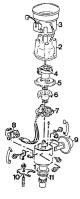
The structure and principle of operation of the electronic ignition system
Device The electronic ignition system includes a distributor ignition sensor with a built-in contactless sensor (pulse generator sensor), commutator and high energy ignition coil....
Device The electronic ignition system includes a distributor ignition sensor with a built-in contactless sensor (pulse generator sensor), commutator and high energy ignition coil....


Removal and installation the ignition distributor sensor
Removal Disconnect the spark plug wires and the high-voltage wire of the ignition coil from the ignition distributor. Release the spring clips and remove the distributor cover....
Removal Disconnect the spark plug wires and the high-voltage wire of the ignition coil from the ignition distributor. Release the spring clips and remove the distributor cover....

Removal and installation the camshaft drive belt
Removal Loosen the generator mounting bolts and, depending on the configuration, the power steering pump mounting bolts. Remove the alternator drive belt and, depending on the...
Removal Loosen the generator mounting bolts and, depending on the configuration, the power steering pump mounting bolts. Remove the alternator drive belt and, depending on the...

Cylinder head
Removal the cylinder head Disconnect the wire from the negative terminal of the battery. Drain the fluid from the cooling system by disconnecting the supply hose from the radiator...
Removal the cylinder head Disconnect the wire from the negative terminal of the battery. Drain the fluid from the cooling system by disconnecting the supply hose from the radiator...

Installing the cylinder head
Clean the removed parts and determine their technical condition by visual inspection. Clean the surfaces of the connectors using appropriate detergents. Do not use abrasive...
Clean the removed parts and determine their technical condition by visual inspection. Clean the surfaces of the connectors using appropriate detergents. Do not use abrasive...

Disassembly and repair of the cylinder head
When disassembling the cylinder head, mark the parts to be removed so that they can be put back in their original places when reassembling. Remove bearing caps No.1 and 3 (the...
When disassembling the cylinder head, mark the parts to be removed so that they can be put back in their original places when reassembling. Remove bearing caps No.1 and 3 (the...

Cylinder head assembly
Install the valve spring retaining washers and insert the valves into the guide bushings. Using the VW 10 204 mandrel, press new oil deflector caps onto the valve guide bushings,...
Install the valve spring retaining washers and insert the valves into the guide bushings. Using the VW 10 204 mandrel, press new oil deflector caps onto the valve guide bushings,...
Removal and installation the engine
Removal Disconnect the wire from the negative terminal of the battery. Remove the hood. Remove the cap from the expansion tank. Disconnect the radiator supply hose from the...
Removal Disconnect the wire from the negative terminal of the battery. Remove the hood. Remove the cap from the expansion tank. Disconnect the radiator supply hose from the...

Disassembling the engine
Note: When disassembling, mark the removed parts that are suitable for further use so that when reassembling, they can be installed in their original locations and positions....
Note: When disassembling, mark the removed parts that are suitable for further use so that when reassembling, they can be installed in their original locations and positions....
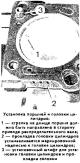
Engine assembly
Checking cylinder diameters Accurately measure the cylinder diameters. Measurements are taken with a bore gauge in three zones both in the transverse direction "A" and in the...
Checking cylinder diameters Accurately measure the cylinder diameters. Measurements are taken with a bore gauge in three zones both in the transverse direction "A" and in the...

Removal and installation the oil pump
Removal Disconnect the wire from the negative terminal of the battery. Loosen the generator mounting bolts and, depending on the configuration, the power steering pump and remove...
Removal Disconnect the wire from the negative terminal of the battery. Loosen the generator mounting bolts and, depending on the configuration, the power steering pump and remove...
Replacing the coolant
There are no holes for draining the coolant from the cooling jacket on the engines. Remove the expansion tank cap. Disconnect the radiator supply hose from the thermostat housing...
There are no holes for draining the coolant from the cooling jacket on the engines. Remove the expansion tank cap. Disconnect the radiator supply hose from the thermostat housing...
Removal and installation the water pump
Removal Drain the coolant from the system. Set the engine crankshaft to the position corresponding to the TDC of the piston of the 1st cylinder. Disconnect the wire from the...
Removal Drain the coolant from the system. Set the engine crankshaft to the position corresponding to the TDC of the piston of the 1st cylinder. Disconnect the wire from the...
This section is available on russian, bulgarian, belarusian, ukrainian, serbian, croatian, romanian, polish, slovak, hungarian
Similar sections from other manuals for VW cars:
Power unit: Engine repair Volkswagen Golf 2 (1984-1993, petrol)
Power unit: Petrol engines 1.4 (V16) Volkswagen Polo 3 (1995-2003)
Power unit: Petrol engine 4.2L Volkswagen Touareg 1 (2002-2006)
Power unit: Petrol engine 1.4 CAVA Volkswagen Tiguan 1 (2007-2015)
Power unit: Engine repair Volkswagen Transporter T4 (1990-2003)
Petrol engines 1.6 l: Engine repair Volkswagen Caddy 3 (2003-2010)
Power unit: Engine repair Volkswagen Golf 2 (1984-1993, petrol)
Power unit: Petrol engines 1.4 (V16) Volkswagen Polo 3 (1995-2003)
Power unit: Petrol engine 4.2L Volkswagen Touareg 1 (2002-2006)
Power unit: Petrol engine 1.4 CAVA Volkswagen Tiguan 1 (2007-2015)
Power unit: Engine repair Volkswagen Transporter T4 (1990-2003)
Petrol engines 1.6 l: Engine repair Volkswagen Caddy 3 (2003-2010)
Passat B6
Passat B5
Passat B4
Passat B3
Passat B2
- General information
- User manual
- Maintenance
- Petrol engine 1.6L
- Engine repair
- Cooling and lubrication system
- Fuel injection system
- Petrol engine 2.0L
- Engine repair
- Lubrication system
- Cooling system
- Fuel and exhaust systems
- Diesel engine 2.0L
- Engine repair
- Cooling and lubrication system
- Fuel and exhaust systems
- Transmission
- Clutch
- Mechanical gearbox
- Automatic gearbox
- Drive shafts
- Chassis
- Wheels and tires
- Car suspension
- Steering
- Brake system
- Body
- Exterior (external elements)
- Electrical equipment
- Power devices
- Lighting and appliances
- Electrical circuits
- General information
- User manual
- Weekly checks
- Maintenance
- Power unit
- Engine repair
- Cooling system
- Fuel system (petrol)
- Fuel system (diesel)
- Engine management
- Exhaust system
- Transmission
- Clutch
- Car gearbox
- Drive shafts
- Chassis
- Car suspension
- Wheels and tires
- Steering
- Brake system
- Body
- Exterior (external elements)
- Interior (internal elements)
- Doors and covers
- Ventilation and heating
- Electrical equipment
- Power devices
- Lighting and appliances
- Electrical circuits
- General information
- User manual
- Maintenance
- Technical data
- 8-valve engine
- Engine repair
- Cooling and lubrication system
- Supply system
- Ignition system
- Fuel injection «Mono-Jetronic»
- Control system «Mono-Motronic»
- Control system «Digifant»
- Control system «Simos»
- 16-valve engine
- Engine repair
- Cooling and lubrication system
- Fuel injection «K-Jetronic»
- Control system «KE-Motronic»
- Control system «Digifant»
- Diesel engine
- Engine repair
- Cooling and lubrication system
- Power and control system
- Turbocharging system
- Digital control system
- Transmission
- Clutch
- Manual gearbox
- Hydromechanical gearbox
- Front wheel drive
- Chassis
- Car suspension
- Steering
- Brake system
- Body
- Body elements
- Electrical equipment
- Power devices
- Lighting and appliances
- Electrical circuits
- General information
- User manual
- Driving Tips
- Maintenance instructions
- Technical data
- Power unit
- Engine repair
- Ignition system
- Lubrication system
- Cooling system
- Supply system
- Petrol injection system
- Diesel engine
- Exhaust system
- Transmission
- Clutch
- Car gearbox
- Chassis
- Suspension
- Steering
- Brake system
- Wheels and tires
- Body
- Exterior
- Interior
- Heating system
- Electrical equipment
- Power devices
- Lighting system
- Equipment and devices
- Wiper system
- Electrical circuits
- General information
- Introduction to instructions
- User manual
- Power unit
- Engines 4-cylinder FZ
- Engines 4-cylinder
- Engines 5-cylinder
- Transmission
- Clutch
- Four-speed gearbox
- Five-speed gearbox
- Hydromechanical gearbox
- Front wheel drive
- Chassis
- Front suspension
- Rear suspension
- Steering
- Brake system
- Body
- Body elements
- Electrical equipment
- Equipment and devices
- Electrical circuits