



Contents: Removal ↓ Installation ↓
The fuel pump is located on the side of the engine cylinder block and is driven by the intermediate shaft.
Caution: If the fuel pump diaphragm is worn, this will cause fuel supply problems. If necessary, check the fuel supply pressure. The prescribed value is 0.35-0.40 bar at 4000 1/min. The fuel return line must be disconnected.
Removal
Warning: No open flame, fire hazard!
Disconnect the ground cable from the battery.
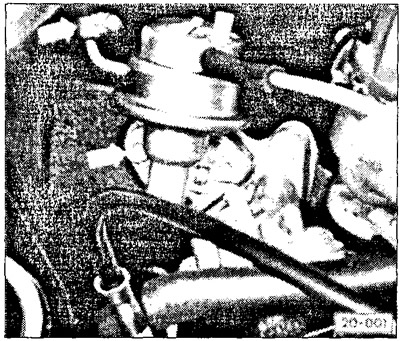
Clamp the suction and discharge hoses. If there are no suitable clamps, after disconnecting the fuel lines, plug their ends with clean bolts of suitable diameter to prevent fuel from spilling.
Loosen the clamps completely and disconnect the fuel hoses from the pump.
Unscrew the 2 Allen bolts and remove the fuel pump together with the insulating flange.
Installation
Check the insulating flange for damage. If necessary, replace the insulating flange with a new one.
Check the ease of movement of the pusher by rocking it in different directions.
Place the fuel pump together with the insulating flange and tighten the fastening to a torque of 20 Nm, having first installed one new sealing gasket between the insulating flange and the engine block, and also between the insulating flange and the fuel pump.
Put on the fuel hoses and secure them with clamps. The hose to the horizontal nipple goes from the fuel tank or from the fuel filter, the hose from the upper nipple goes to the carburetor or vapor bubble separator.
Connect the ground wire to the battery and, with the engine running, check to see if the fuel pump is sealed.
Visitor comments