



Injector defects can also be found by unscrewing the union nuts of the high-pressure fuel lines when the engine is idling at an increased crankshaft speed. If the crankshaft speed does not change after the union nut is loosened, this indicates a defective injector. The injector can be checked using a pressure gauge (workshop work).
The first signs of injector malfunction appear as follows:
- No flashes.
- Knocking in one or more cylinders.
- Engine overheating.
- Engine power loss.
- Excessive black smoke from the exhaust.
- High fuel consumption.
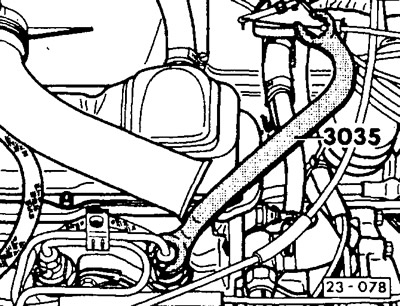
Clean high pressure fuel lines with cleaning agent.
Remove the high-pressure fuel lines as a set by loosening the union nuts with an open-end wrench, such as HAZET4560.
Note: Do not change the shape of the bends.
All engines except turbocharged engines: remove injectors using a socket wrench with a SW 27 replaceable head, e.g. HAZET4555.
Turbocharged diesel engine: Unscrew the injector mounting brackets from the support brackets and remove the injectors.
(View the original article on the resource: VWmanual)
Remove the heat-shielding seal from the nozzle hole.
Installation
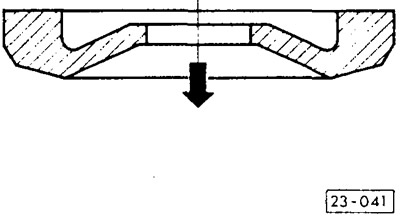
Be sure to install a new heat shield seal. The recess in the seal must be facing upwards, the arrow points towards the cylinder head.
All engines except turbocharged engine: tighten injectors to 70 Nm.
Turbocharged diesel engine: Insert the injectors and tighten the injector mounting brackets to 20 Nm.
Tighten the high-pressure fuel lines to a torque of 25 Nm.
Visitor comments