



General instructions for self-diagnosis
The engine control unit is equipped with a self-diagnosis function. Before repairs, as well as for troubleshooting, the fault memory should be interrogated first. It is also necessary to check the vacuum hoses and connections (air suction through leaks). Fuel hoses may only be secured in the engine compartment using spring clamps. The use of clamps or screw clamps is not permitted. A minimum voltage of 11.5 V is required for the electrical components to operate without failure. Do not use silicone sealant. Silicone particles sucked into the engine do not burn and cause the lambda probes to fail. The vehicle is equipped with a collision fuel shut-off system. Shutting off (via the corresponding relay) fuel pump, it reduces the likelihood of the car catching fire after a collision. In addition, this system allows you to reduce the time required to start the engine, thereby increasing the convenience of using the car. When opening the door, the fuel pump is turned on for 2 seconds, which allows you to create the necessary operating pressure in the fuel system in advance, and comply with safety measures.
Units and parts A through E are not shown in the exploded view in the figure.
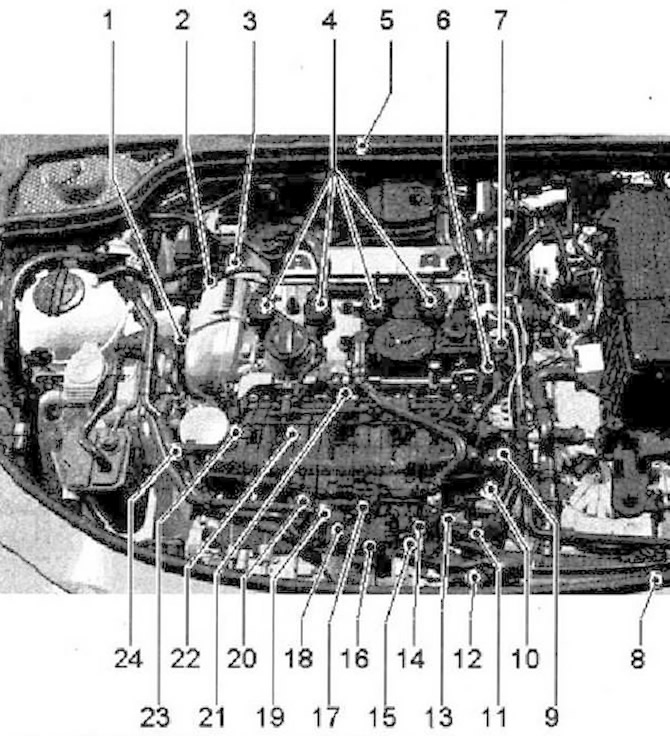
- 1 - Valve 1 of the variable valve timing system "N₂05"
- 2 - Boost pressure limitation solenoid valve "N75", built into the turbocharger
- 3 - Turbocharger bypass valve "N₂49", built into the turbocharger
- 4 - Ignition coils with power output stages. Ignition coil 1 with output stage "N70". Ignition coil 2 with output stage "N127". Ignition coil 3 with output stage "N₂91". Ignition coil 4 with output stage "N₂92". The ignition coils are removed from the cylinder head using the puller "T40039"
- 5 - Engine control unit "J623"
- 6 - Mechanical 1 - piston high pressure pump with fuel pressure regulating valve "N₂76"
- 7 - Fuel pressure regulator "N₂76"
- 8 - Coolant temperature sensor at the radiator outlet "G83", in the coolant hose
- 9 - Vacuum reservoir for charge air regulating flaps
- 10 - Intake manifold flap valve "N316"
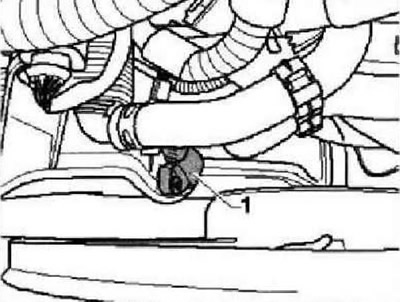
- 11 - Engine speed sensor "G28", installation location - front bottom left
- 12 - Boost pressure sensor "G31"
- 13 - Knock sensor connector 1 "G61", installation location - under the intake manifold. Knock sensor 1 "G61", 20 Nm
- 14 - Electrical connector of the Hall sensor "G40", installation location - under the intake manifold
- 15 - 8-pin connector for injectors, installation location - under the intake manifold
- 16 - Air damper unit "J338" with electric throttle drive "G186", angle sensor 1 of electric throttle drive "G187" and angle sensor 2 of electric throttle drive "G188". After replacing the throttle unit "J338", it must be adapted again to the engine control unit "J623", Tester -VAS 5051B-
- 17 - Solenoid valve 1 activated carbon absorber "N80"
- 18 - Intake air temperature sensor "G42", bolted to the intake manifold
- 19 - Knock sensor 1 "G61", on the cylinder block at the front under the intake manifold, 20 Nm
- 20 - Coolant temperature sensor "G62", in the cooling system pump housing
- 21 - Hall sensor "G40", screwed to the cylinder head casing from the front
- 22 - Fuel pressure sensor "G247", on the fuel rail (Rail)
- 23 - Intake manifold flap potentiometer "G336", in the intake manifold on the right
- 24 - Oil pressure sensor "F1", in the bracket of additional units
- A - Diagnostic connector, in the driver's footwell
- B - Air flow meter "G70" and intake air temperature sensor 2 "G299"
- C - Accelerator pedal position sensor "G79" and accelerator pedal position sensor 2 "G185", on the accelerator pedal (both sensors are installed in a single housing), when replacing the accelerator pedal module or engine control unit in vehicles with automatic transmission, the Kick-down function should be configured
- D - Radiator fan control unit "J293", the radiator fan control unit "J293" is integrated into the radiator fan "V7"
- E - Injectors, in the fuel rail (Rail), injector cylinder 1 "N30", injector cylinder 2 "N31", injector cylinder 3 "N32", injector cylinder 4 "N33"
Technical data
| Engine letter designations | CAWA, CAWB, CCTA, CCTB |
| Idle speed. Idle speed, rpm 1) | 640...800 |
| Speed limit, rpm | approximately 6500 |
1) When the supply voltage of the engine control unit drops below 12 V, the idle speed gradually increases to 990/min. The idle speed is not adjustable.
High pressure pump
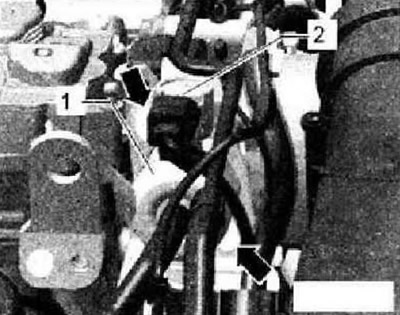
- 1 - High pressure fuel pump (HPFP)
- 2 - Fuel pressure regulator "N₂76"
Intake manifold flap valve -N316-2-
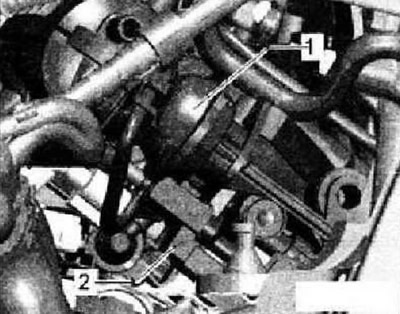
1 - Vacuum reservoir for charge air regulating flaps
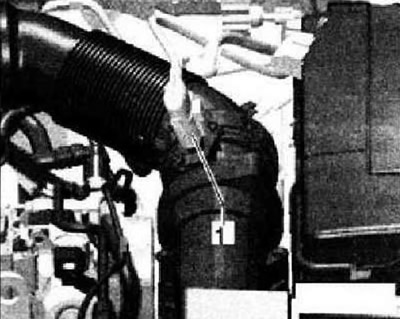
Air flow meter "G70" and intake air temperature sensor 2 -G299-1-
Engine speed sensor -G29-1-
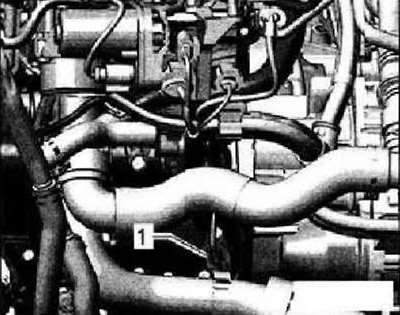
Hall sensor -G40-1-
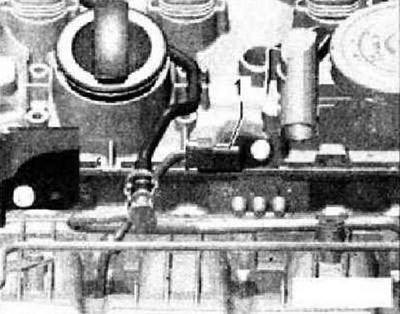
Electrical connectors
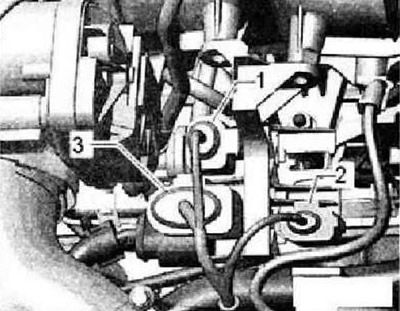
- 1 - Hall sensor "G40"
- 2 - Knock sensor 1-G61-
- 3 - 8-pin connector for injectors
Coolant temperature sensor -G62-1-
Instructions: Under the intake manifold (the collector is missing from the picture).
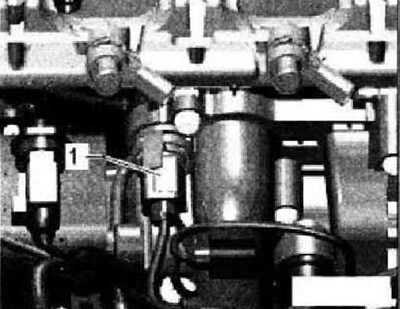
Boost pressure sensor -G31-1-
Turbocharger components
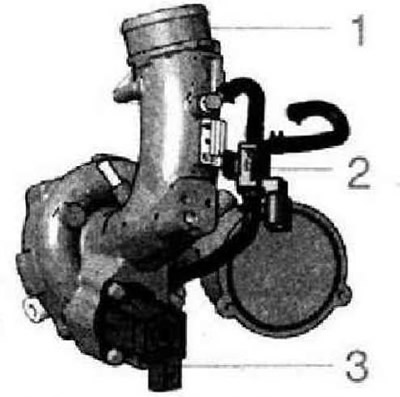
- 1 - Removing and installing the turbocharger
- 2 - Tighten the boost pressure limitation solenoid valve "N75" to 3 Nm
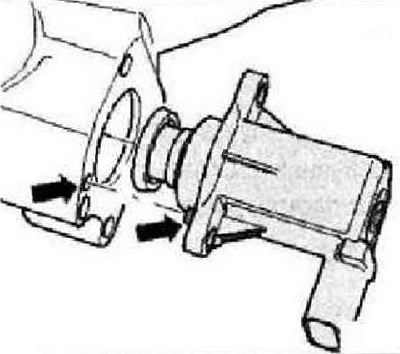
- 3 - Tighten the turbocharger bypass valve "N₂49" to 7 Nm (take into account the installation position, following figure)
Observe the installation position of the turbocharger bypass valve "N₂49"
Visitor comments