



If the pistons, crank mechanism parts or cylinder block have been replaced, then the distance that the pistons protrude above the cylinder head must be re-measured.
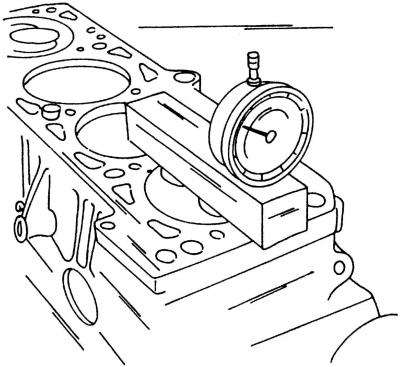
Fig. 409. Measuring the distance the pistons protrude to determine the thickness of the cylinder head gasket
To determine the thickness of the cylinder head gasket, set one of the pistons to the TDC position and use a ruler and indicator to determine how much the piston bottom protrudes above the cylinder block surface (Fig. 409). After measuring this distance and using the data below, determine the thickness of the cylinder head gasket.
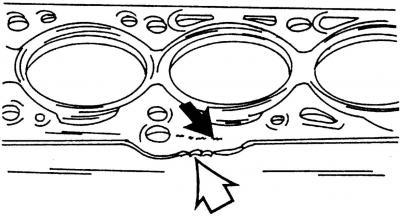
Fig. 408. View of the cylinder head gasket
The cylinder head gasket is marked with numbers 1, 2 or 3 or indicated by holes (Fig. 408). The arrow shows the spare part number on the cylinder head gasket. If the cylinder head gasket is installed correctly, this number can be read by looking at the cylinder head gasket from above.
| Piston protrusion | Number of notches |
| 0.91—1.00 mm | 1 |
| 1.01-1.10 mm | 2 |
| 1.11-1.20 mm | 3 |
As already mentioned, the cylinder head gasket can be marked with punched holes. In this case, you should read "number of holes" rather than "number of notches".
To measure, place the indicator pin on the piston, set the gauge to zero, and then slide the pin onto a thoroughly cleaned surface of the unit. The resulting value is equal to the distance the piston protrudes from the cylinder head. The depth is difficult to measure because it is very small. The gasket number should be determined from the spare parts catalog.
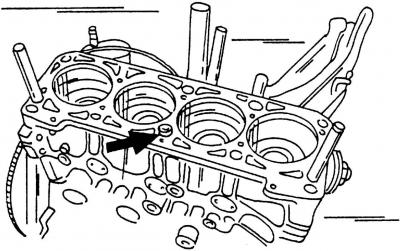
Fig. 410. Two special screws must be screwed into the cylinder block in the places shown (or two hairpins). Guide sleeve (shown by arrow) must be pressed into the side of the cylinders
There are special guide bolts that serve to center the cylinder head when installing it on the cylinder block. If you purchase them, install them in the location shown in Fig. 410, i.e. on the "cold" side of the engine. Otherwise, you should make set screws that should be screwed into the indicated locations in order to correctly align the gasket and the cylinder head. Also shown in the figure is a guide bushing that should be located in the unit.
Thoroughly clean the surfaces of the cylinder head and units.
The gasket should be removed from its packaging immediately prior to installation and handled with extreme care. Place the gasket on the cylinder head and slide the cylinder head onto the cylinder block.
Place the cylinder head on both guide screws (Fig. 410), install the guide bushing and tap it with a plastic or rubber hammer.
Insert the cylinder head mounting bolts and tighten them by hand.
Remove both guide screws from the cylinder block.
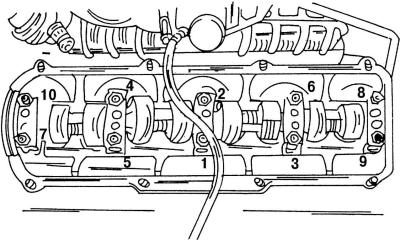
Fig. 411. Cylinder head bolt tightening sequence
Referring to Fig. 411, gradually tighten the cylinder head mounting bolts in the order shown and in accordance with the following recommendations:
(View the original on this portal: www.VWMANUAL.ru)
Caution! Use only a special 12-sided wrench to tighten the cylinder head bolts, otherwise the bolt heads will be damaged.
- tighten all bolts (Fig. 411) in the order shown to a torque of 40 Nm;
- tighten all bolts (Fig. 411) in the specified order to a torque of 60 Nm;
- insert the wrench into each bolt in the order shown, remembering the position of the wrench, and tighten each bolt in one go exactly a quarter turn, without using a torque wrench. After you have done this on all the bolts, tighten them another quarter turn.
Note: If you are familiar with older diesel engines, you may know that the cylinder head bolts were previously tightened with the engine at operating temperature. This is no longer the case - the cylinder head is tightened according to the instructions provided.
All further installation work is carried out in the reverse order relative to the removal process (p. 17.3.1).
Visitor comments