
English Русский
Български
Беларускі
Український
Српски
Hrvatski
Română
Polski
Slovenský
Magyar
  |  Articles  |  Sitemap  |  Contacts  |    |
Car maintenance Ford Car maintenance Hyundai Car maintenance Chevrolet Car maintenance BMW Car maintenance Audi Car maintenance Opel Car maintenance AvtoVAZ
VWmanual.ru


Main   Passat   Golf   Polo   Touareg   Tiguan   Sharan   Transporter   Others  
Passat B2 (1981-1988) Passat B3 (1988-1993) Passat B4 (1988-1996) Passat B5 (1996-2005) Passat B6 (2005-2010)

Automatic transmission selector positions (VW Passat B5)

  • Main
  • Passat
  • Passat B5
  • General information
  • User manual
  • Automatic transmission selector positions
            0


Contents: Forced preemptive gearshift…↓ Recommendations for choosing…↓
Automatic transmission selector positions


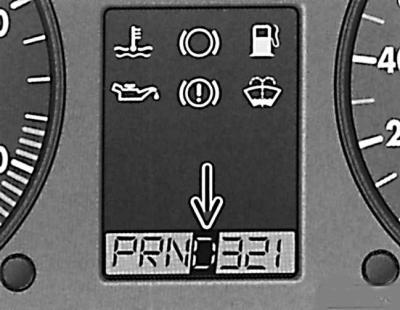
The instrument cluster has a display that shows the position of the selector.

Warning: Never move the selector lever to the "R" or "P" position while driving.


R - Parking lock.

The drive wheels are mechanically locked.

The selector should be moved to this position only when the car is completely stopped. Before engaging and disengaging the "P" position, it is necessary to press the lock button on the selector handle. Before disengaging this position with the ignition on, the brake pedal should be additionally pressed.

R - Reverse.

The reverse position should only be engaged when the vehicle is completely stopped and the engine is idling. Before shifting to the "R" position from the "P" or "N" positions, the brake pedal must be depressed and the lock button in the selector handle must be pressed.

In the "R" position with the ignition on, the reversing lights come on.

N - Neutral position (idle position).

When moving the selector from the "N" position at a speed of up to 5 km/h, as well as when the car is stationary and the ignition is on, you should press the brake pedal and press the lock button on the selector handle. However, it is not necessary to press the lock button when moving the selector from the "N" position to the "D" position.


D - Long-term forward movement.

Four gears shift from low to high and vice versa automatically depending on the engine load and the driving speed.

Under certain driving conditions, it may be advisable to temporarily use one of the following positions.

3 – Position for "hilly" sections of the road.

This selector position is recommended when, under certain driving conditions, with the selector in position "D", frequent shifting from 3rd to 4th gear and vice versa occurs.

To move the selector to this position, press the lock button in the selector handle. The 1st, 2nd or 3rd gears are automatically shifted up and down depending on the engine load and the speed. The 4th gear is locked. This also increases the braking effect of the engine when the fuel supply is cut off.

2 – Position for mountainous road sections.

This position is recommended for long climbs and descents. 1st or 2nd gear is automatically shifted up and down depending on engine load and road speed. 3rd and 4th gears remain locked to avoid unnecessary upshifts. This also increases engine braking efficiency.

1 – Position for mountainous road sections with large slopes.

Selecting this position is recommended when driving on steep ascents and descents. When engaging this position, it is necessary to press the lock button on the selector handle. The car moves only in 1st gear. 2nd, 3rd and 4th gears are locked to avoid unnecessary upshifts. This achieves the maximum possible engine braking effect.

Cruise control cannot be used in position "1" of the selector.


When manually shifting downwards, you can go to positions "3", "2" and "1", but shifting to lower gears occurs automatically only when the maximum permissible engine speed is not exceeded after shifting.

Forced preemptive gearshift ("kick-down") device


This device ensures maximum acceleration of the vehicle under given driving conditions. As soon as the pressure on the accelerator pedal exceeds a certain threshold value, depending on the engine speed and driving speed, a shift to one of the lower gears occurs. The return shift to the next higher gear will only follow when the maximum permissible crankshaft speed is reached.

Warning: Be aware that on slippery roads, the drive wheels may begin to slip when forced to downshift.


Recommendations for choosing positions


Starting the engine

The engine can only be started when the control selector is in the "N" or "P" positions.

Selecting a position for movement

Before moving the selector to one of the driving positions with the vehicle stationary and the engine running, you must always press the brake pedal.

When selecting a position with the vehicle stationary, do not press the accelerator pedal.

If the selector lever is accidentally set to the "N" position while the vehicle is moving, remove your foot from the accelerator pedal and wait until the engine is idling before moving the lever to any forward position.

Warning: When the engine is running, it is necessary to hold the car with the foot brake when the selector is in any of the driving positions, since even when the engine is idling, the transmission of torque to the wheels is not completely interrupted - the car crawls.


Warning: If one of the driving positions is selected when the vehicle is stationary, the accelerator pedal must not be pressed uncontrollably under any circumstances (including increasing the fuel supply by hand from the engine compartment). The car will immediately start moving - and this can happen under certain circumstances even when the parking brake is applied.


Warning: Before performing any operations with the engine running, the selector lever must be in the "P" position and the parking brake must be applied.


Moving off

Select one of the movement positions (R, D, 3, 2, 1). Wait until the transmission engages and the power flow reaches the drive wheels (a slight jerk is felt). Only then press the accelerator pedal.

Stop

When stopping briefly, for example at a traffic light, there is no need to shift to position "N". It is sufficient to hold the car with the brake. The engine, however, should only run at idle speed.

Parking

On a slope, first firmly apply the parking brake and then move the selector to the parking lock position. This order of operations will prevent the locking mechanism from being overloaded and will make it easy to move the selector out of this position later.

This article is available at russian, bulgarian, belarusian, ukrainian, serbian, croatian, romanian, polish, slovak, hungarian
The text has been checked: Tarasov Ivan

Share information:

Previous articles
Automatic transmission
Manual transmission
Parking brake
Luggage compartment shelf (station wagon)
Luggage compartment
Seat armrests
Next articles
Sequential automatic transmission
Sequential automatic transmission selector positions
Adjustable steering column
Ignition switch
Starting the engine
Engine stop


Similar articles from other manuals for VW cars:
Automatic transmission selector positions Golf 4 (1997-2004)
Automatic Transmission: Checking ATF Level Polo 4 (2001-2009)
Automatic transmission Touareg 1 (2002-2006)
Drive shaft with tripod joint type AAR3300I for cars with… Tiguan 1 (2007-2015)
Torque converter drive pulley (for vehicles with automatic… Sharan 1 (1995-2000)
Checking the oil level in an automatic transmission Transporter T4 (1990-2003)
Oil and filter change in the 6-speed dual-clutch transmission 02E Caddy 3 (2003-2010)
Link to this page in different formats


Visitor comments


No comments yet


How much will 48 + 16 =


Passat B6 
  • General information
  • User manual
  • Maintenance
  • Petrol engine 1.6L
  • Engine repair
  • Cooling and lubrication system
  • Fuel injection system
  • Petrol engine 2.0L
  • Engine repair
  • Lubrication system
  • Cooling system
  • Fuel and exhaust systems
  • Diesel engine 2.0L
  • Engine repair
  • Cooling and lubrication system
  • Fuel and exhaust systems
  • Transmission
  • Clutch
  • Mechanical gearbox
  • Automatic gearbox
  • Drive shafts
  • Chassis
  • Wheels and tires
  • Car suspension
  • Steering
  • Brake system
  • Body
  • Exterior (external elements)
  • Electrical equipment
  • Power devices
  • Lighting and appliances
  • Electrical circuits
Passat B5 
  • General information
  • User manual
  • Weekly checks
  • Maintenance
  • Power unit
  • Engine repair
  • Cooling system
  • Fuel system (petrol)
  • Fuel system (diesel)
  • Engine management
  • Exhaust system
  • Transmission
  • Clutch
  • Car gearbox
  • Drive shafts
  • Chassis
  • Car suspension
  • Wheels and tires
  • Steering
  • Brake system
  • Body
  • Exterior (external elements)
  • Interior (internal elements)
  • Doors and covers
  • Ventilation and heating
  • Electrical equipment
  • Power devices
  • Lighting and appliances
  • Electrical circuits
Passat B4 
  • General information
  • User manual
  • Maintenance
  • Technical data
  • 8-valve engine
  • Engine repair
  • Cooling and lubrication system
  • Supply system
  • Ignition system
  • Fuel injection «Mono-Jetronic»
  • Control system «Mono-Motronic»
  • Control system «Digifant»
  • Control system «Simos»
  • 16-valve engine
  • Engine repair
  • Cooling and lubrication system
  • Fuel injection «K-Jetronic»
  • Control system «KE-Motronic»
  • Control system «Digifant»
  • Diesel engine
  • Engine repair
  • Cooling and lubrication system
  • Power and control system
  • Turbocharging system
  • Digital control system
  • Transmission
  • Clutch
  • Manual gearbox
  • Hydromechanical gearbox
  • Front wheel drive
  • Chassis
  • Car suspension
  • Steering
  • Brake system
  • Body
  • Body elements
  • Electrical equipment
  • Power devices
  • Lighting and appliances
  • Electrical circuits
Passat B3 
  • General information
  • User manual
  • Driving Tips
  • Maintenance instructions
  • Technical data
  • Power unit
  • Engine repair
  • Ignition system
  • Lubrication system
  • Cooling system
  • Supply system
  • Petrol injection system
  • Diesel engine
  • Exhaust system
  • Transmission
  • Clutch
  • Car gearbox
  • Chassis
  • Suspension
  • Steering
  • Brake system
  • Wheels and tires
  • Body
  • Exterior
  • Interior
  • Heating system
  • Electrical equipment
  • Power devices
  • Lighting system
  • Equipment and devices
  • Wiper system
  • Electrical circuits
Passat B2 
  • General information
  • Introduction to instructions
  • User manual
  • Power unit
  • Engines 4-cylinder FZ
  • Engines 4-cylinder
  • Engines 5-cylinder
  • Transmission
  • Clutch
  • Four-speed gearbox
  • Five-speed gearbox
  • Hydromechanical gearbox
  • Front wheel drive
  • Chassis
  • Front suspension
  • Rear suspension
  • Steering
  • Brake system
  • Body
  • Body elements
  • Electrical equipment
  • Equipment and devices
  • Electrical circuits
VWmanual.ru © 2016-2026 | Mobile version | News and articles | Sitemap: EN BG BY UA RS HR RO PL SK HU | Write message | Site search
Passat B2 • Passat B3 • Passat B4 • Passat B5 • Passat B6 • Golf 1, diesel • Golf 1, petrol • Golf 2, petrol • Golf 2 • Golf 3 • Golf 4 • Golf 5 • Polo 3 • Polo 4 • Touareg 1 • Tiguan 1 • Sharan 1 • Transporter T3 • Transporter T4 • LT 28 • LT 2D • Beetle • Caddy 3 •
Our website uses cookies to ensure functionality and convenience.