



Contents: Working with a toothed belt ↓ Removal the timing belt cover ↓ Checking the condition of the timing…↓ Timing Belt Tension Control ↓ Tightening the belt ↓ Replacing the timing belt ↓
The timing belt is of great importance for a diesel engine, if the belt breaks or one or more teeth slip on the pulley, then a serious engine failure inevitably occurs. Because the valves (driven by a camshaft) no longer close at the right time. In this case, the upward moving pistons hit the valve plates. The toothed belt drives the following units: camshaft, fuel injection pump, oil pump and vacuum pump for the booster, brakes.
Working with a toothed belt
Adjustment of the camshaft and fuel injection pump is performed on a diesel engine very precisely.
Any change in belt tension or its replacement entails adjustment work. Therefore, maintenance work carried out with the help of simple devices and periodic checking of belt tension is limited. If the belt is tightened or completely removed (to replace it or remove the cylinder head), then the valve timing and the injection start of the high-pressure fuel pump must be checked or adjusted. Both of these jobs require special knowledge and, above all, special tools. You can buy the tools needed to adjust the valve timing in special stores. The measuring clock needed to adjust the injection timing (hour indicator) with a special adapter is also not easy to install. Here you need to resort to the help of a Volkswagen or Bosch service station.
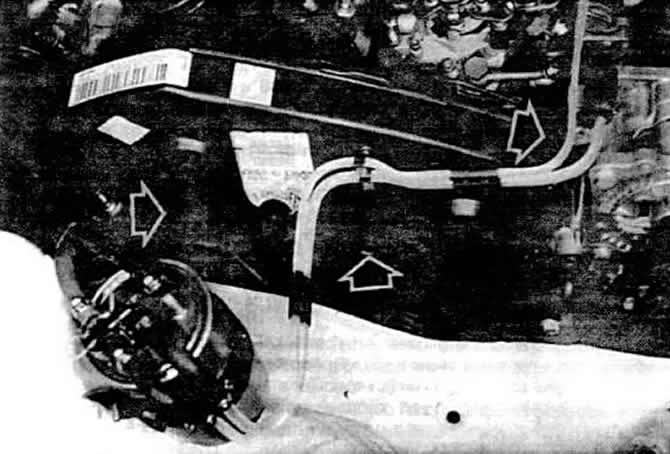
Our suggestion for brave drivers: install the timing belt and adjust the headlights and gas distribution yourself. Then take the car to the workshop and adjust the injection timing there.
Removal the timing belt cover
Loosen the expansion clamp bolt on the end face of the cover.
Release the two spring clips and remove the top of the cover.
The lower part of the cover can only be removed after removing the crankshaft pulley and unscrewing the two fixing bolts.
Checking the condition of the timing belt
Remove the top part of the timing belt cover.
The toothed belt must not be oily or cracked.
The edges of the teeth must be intact and show no signs of wear.
To view the belt along its entire length, you need to turn the engine.
A damaged belt must be replaced!
Timing Belt Tension Control
This check should be carried out together with the belt condition check. A special tool VW210 is used. This device checks the belt tension, stretched over a certain length. The measurement is carried out between the toothed wheels of the camshaft and injection pump drives.
Remove the timing belt cover.
Press the belt firmly with your hand at the measurement point, while the full deflection is at the measurement point.
Place the device and note its readings.
Turn the crankshaft. Turn only by the crankshaft pulley, not by the camshaft pulley!
Repeat the measurement.
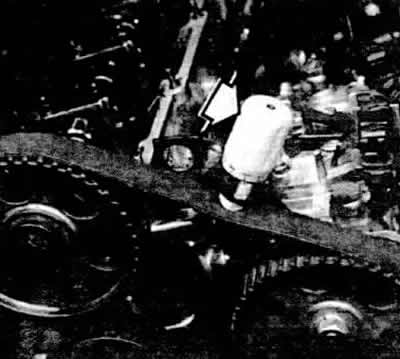
Get the average value of two measurements.
If the measured value reaches 12-13, then everything is OK. Otherwise, tighten the belt.
Tightening the belt
In workshops, the MATRA V 159 impact wrench is used to turn the adjusting eccentric. Here we will describe how to perform the adjustment without an impact wrench.
Remove the timing belt cover and measure the belt tension.
Slightly loosen the clamping nut on the tension roller. The roller should not yet move back and forth on the eccentric under the action of the hand.
Insert a screwdriver into one of the holes on the camshaft toothed pulley.
Use a screwdriver to turn the camshaft pulley slightly to the left so that the belt is released on the tension roller side.
Now, using a small hammer, carefully hit the left side of the tension roller, which will slide slightly to the right on the eccentric and thus tighten the belt. The camshaft gear must, of course, be held further.
Tighten the pressure nut on the tension roller.
Check the belt tension again.
It is necessary to check the start of injection of the high-pressure fuel pump.
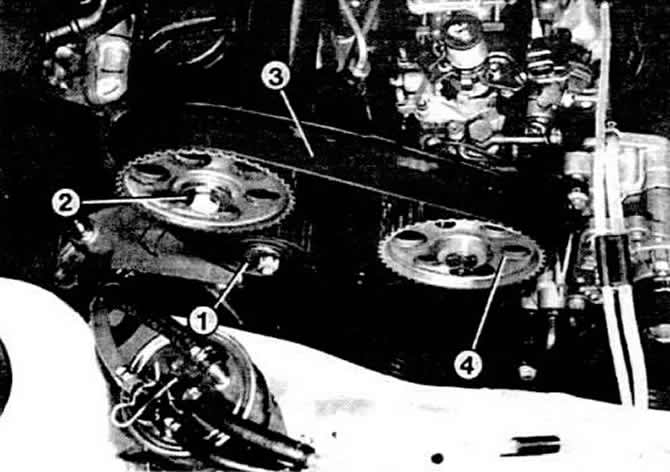
Position of the timing belt with the cover removed
1 - tension roller
2-camshaft gear wheel
3 - toothed belt
4 - fuel injection pump gear
Replacing the timing belt
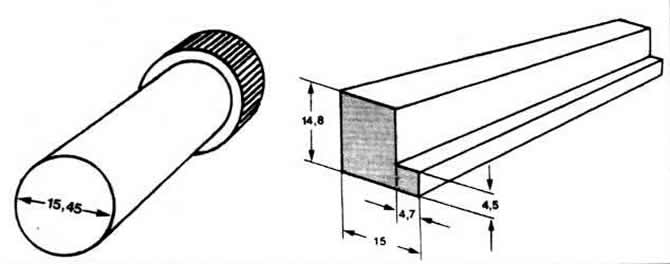
Two sets of calibration gauges are used, the VW 2065 or 2065A adjustment ruler and the 2064 marking rod.
Removal
Remove the belt cover and valve cover.
Install the first cylinder in the MTB.
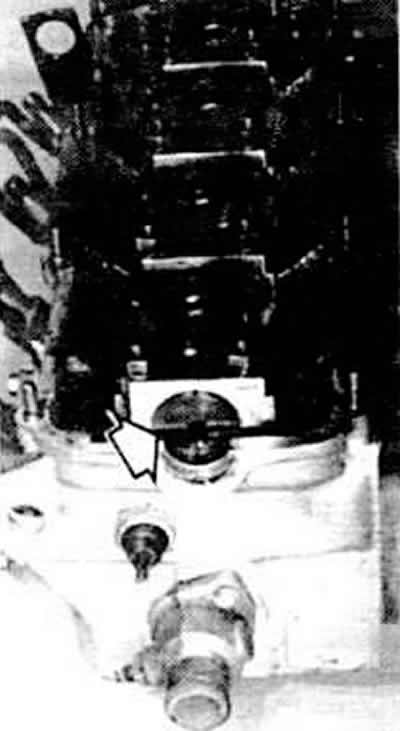
Insert the adjusting ruler into the transverse slot of the camshaft on the left end of the shaft (in the direction of movement).
Now, between the cylinder head and the adjusting ruler, one feeler gauge of the same thickness (on average) is inserted at both ends of the ruler, see the figure. This eliminates the gap between the ruler and the cylinder head - the camshaft can no longer turn back and forth.
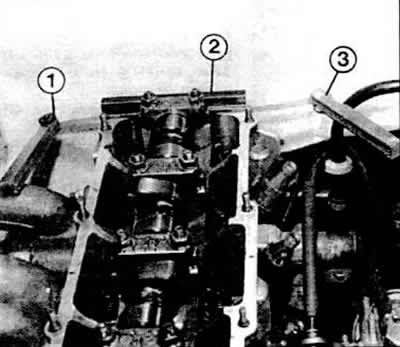
Lock the injection pump. To do this, insert the marking rod 2064 (2) into the small hole on the injection pump gear and the opposite hole on the injection pump console.
Loosen the tension roller clamping nut of the toothed belt. Turn the tension roller on the eccentric to the left; this will loosen the belt.
Remove the V-belt.
Remove the pulley and part of the cover.
Remove the timing belt.
Installation
Before installing a new timing belt, loosen the camshaft timing belt mounting bolt by ½ turn.
Release the camshaft wheel by lightly striking the hammer through the rod from the conical end of the camshaft (there is a hole for this on the back cover of the timing belt).
Now the wheel can rotate relative to the camshaft.
Check again whether the crankshaft is at TDC and whether the camshaft and fuel injection pump are locked correctly.
Put on the toothed belt and tighten it. Do not turn the crankshaft.
Tighten the gear locking bolt to 45 Nm.
Tighten the timing belt again. The crankshaft can no longer turn.
It is necessary to check the injection timing of the high-pressure fuel pump.
Put the lid on.
Put on the V-belt.
Visitor comments