



Contents: Low pressure ↓ Troubleshooting ↓ Cranking the engine ↓ Setting the first cylinder to the…↓
Low pressure
A consistently low compression pressure is certainly not a warning sign; the reason may be the difference in measurements of different devices. It is doubtful when the difference between the four measurements for the cylinders is more than 5 bar.
It means:
- Wear of pistons and piston rings.
- Piston rings that are tightly seated due to deposits.
- The cylinders are not round as a result of the pistons being pinched.
- Deposits on valve stems or valve seats due to the presence of residual combustion products or engine oil.
- Broken valves.
Troubleshooting
In order to be able to localize the malfunction at low compression pressure, the following technique is used: a little oil is poured into the nozzle hole and the pressure is measured again.
If the compression reading remains bad again, the valves are to blame.
If the pressure value increases, the cause is in the piston rings and, perhaps, in the cylinders. A typical sign of this malfunction is a slow increase in pressure when turning the engine. The filled oil briefly seals the gap between the piston and the cylinder wall, and compressed gases cannot escape through this gap.
Cranking the engine
For some jobs, the crankshaft needs to be turned by hand. This is the easiest way to do it:
Raise the car with a jack, block it in front, engage fifth gear and turn the raised wheel, which will also cause the engine to turn.
If there is a sufficiently level place, push the car forward with the fifth gear engaged.
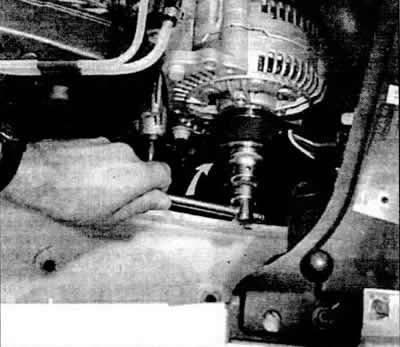
Or use a 22 mm bent open-end wrench to turn the central nut of the generator pulley - the engine will turn under the action of the belt.
Never turn the engine by the camshaft gear retaining bolt with the timing belt cover removed! The belt may skip teeth and damage the engine.
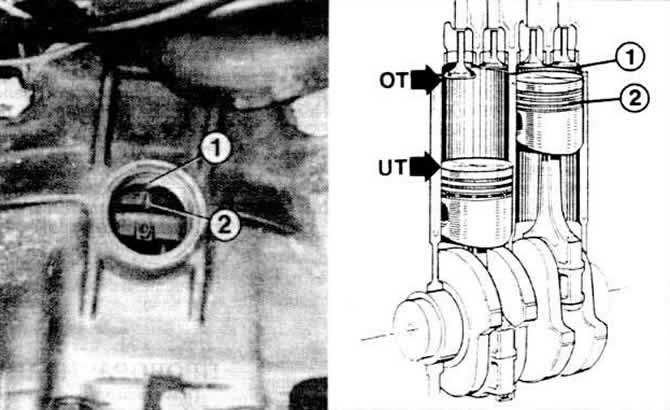
For various engine and fuel injection pump works, it is necessary to set the piston of the first cylinder to the top dead center (TDC) position, i.e. it should be at the upper edge of the cylinder surface. For four-stroke engines (which includes diesel) during the working cycle, the piston is at TDC twice: once when the sucked-in air is compressed, and once when the exhaust gases are released. The "ignition" position after the compression stroke is usually used.
Setting the first cylinder to the "ignition" position
Remove the valve cover.
Turn the engine by hand until both right camshaft lobes, visible in the direction of travel, point upward at the same time.
In this case, for greater accuracy, now turn the crankshaft so that the "OT" mark on the flywheel is located opposite the arrow in the inspection hole of the clutch housing.
TDC position reached.
Visitor comments