



Valve guides
The valve guides are located in the head. If the valve stem clearance is too large, the guides can be replaced.
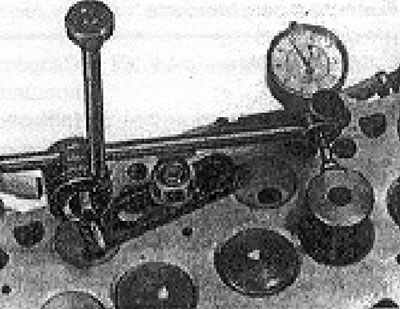
Figure 2.13. Checking the valve clearance in the guides. The method used by Folskoagen is based on measuring the valve movement (max 1.3 mm) at the moment when its end is aligned with the edge of the guides.
Knock out worn valve guides from the lower surface of the head joint. During this operation, the head must be on the press table with the surface of the connection with the head cover facing down.
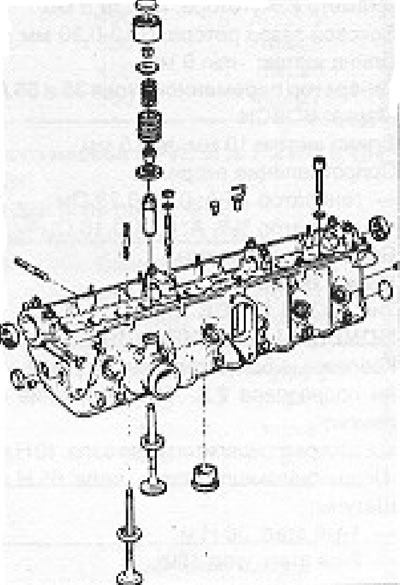
Figure 2.14. Head.
Before installing new guides (the guides are the same for both intake and exhaust valves) clean their saddles in the head.
Lightly lubricate the new guides with oil and install them into the head from the camshaft side.
Attention:
- Valve seats and guides should be installed after the head has been heated.
- The valve guides are installed in the head using a flange. During installation, ensure that the press pressure does not exceed 1 ton, otherwise the guide may be damaged when the flange touches the golsak.
After installing the guides, drill their holes.
Valves
The exhaust valves in a Volkswagen engine do not necessarily need to be ground, they can only be lapped. Depending on the year of production of the Volkswagen engine, there are two types of valves. Older engines have valves with a single slot on the stem and an upper box without faceting. The engines currently in production have three-slot valves machined into the stem and upper box, which are copper-colored and faceted.
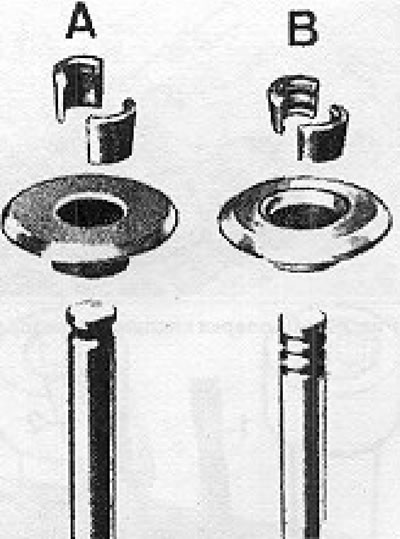
Figure 2.15. Differences in valves: A - Old type; B - New type.
Please note! The valves of the DV 1 G and DW 1 S engines comply with European noise standards and differ in size from the valves of other engines.
- Check that the bearing surfaces are not too worn. Then the intake valves can be reground, provided that the corresponding immersion is maintained after processing.
- Determine the deflection of the rod. If lateral deviation or valve immersion of approximately 1.5 mm is detected, the valve seats must be replaced.
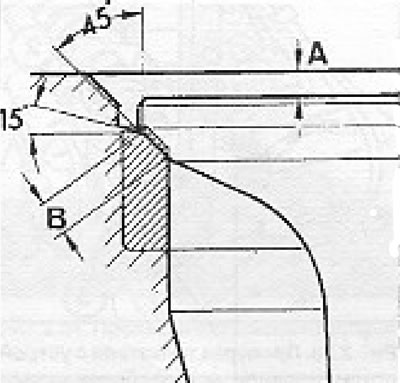
Figure 2.16. Main dimensions of seats and valves: A - Valve plate immersion. max 1.5 mm; B - Width of bearing surface: intake valves, max. 2.0 mm, exhaust 2.4 mm.
Valve springs
The valves are pushed back to their seats by two springs. The same pairs of springs are used for both the intake and exhaust valves.
Attention! The springs of the DV 1 G and DW 1 S engines are different from those of other engines.
- Check the elasticity of each spring. If the parameters specified in subsection 2.1. "Technical specifications" are not met, replace the springs.
- Check the position of the outer and inner springs relative to their axis. If the protective varnish peels off, it is recommended to replace the spring, as it may break.
It is not recommended to wash springs with gasoline or trichloroethylene, as these liquids can dissolve the varnish.
Visitor comments