



Contents: Durability of tires ↓ Tire wear indicators ↓ Replacement of tires and rims ↓ Wheel reinstallation ↓
Depending on the design features and tread pattern of the tires, the tread depth of new tires varies among individual tire models and manufacturers.
Note: New tires must first be run in as they do not yet provide sufficient grip on the road surface; the first 500 km should be driven at moderate speed and with special care - during this period the tires are rolling in. Successful implementation of this process contributes to an increase in the service life of the tires.
Check your tires regularly for damage (punctures, cuts, tears and bulges). Remove foreign objects from the tire tread.
To avoid damage to tires and rims, drive slowly and, if possible, at right angles over curbs and other similar obstacles.
Often, tires and wheels have hidden damage. The appearance of unusual vibration or the car pulling to the side may indicate tire damage. If you suspect that a tire is damaged, you should immediately reduce speed! Check the tires for damage (cracks, swelling, etc.). If no external damage is found, drive slowly and carefully to the nearest Volkswagen service center for a thorough inspection of the tire condition.
Avoid contact of tires with oils, greases and fuels.
Lost dust caps must be replaced with new caps immediately.
Before removing the wheels, it is necessary to make appropriate marks on them so that when reinstalling them, the previous direction of rotation of the tires can be maintained.
Removed wheels and tires should be stored clean and dry, in a cool, dark place if possible.
Tires not mounted on rims should be stored in an upright position.
Durability of tires
The service life of tires depends mainly on the following factors.
Air pressure in tires.
The nominal air pressure values for summer tires are indicated on the sticker on the inside of the fuel filler cap; winter tyres have a nominal air pressure that is 0.2 bar higher than summer tyres.
Maintaining the recommended air pressure in your tires is especially important when driving at high speeds. Therefore, you should check the air pressure in your tires at least once a month and before each long trip.
At the same time, do not forget to measure the air pressure in the spare tire:
The spare tire should always be maintained at the rated pressure for a fully loaded vehicle.
The nominal air pressure value in the emergency wheel ("spare tire") is indicated on the sidewall of the tire.
The air pressure in the tires should always be checked when the tires are cold. If the air pressure in the hot tires is too high, do not deflate the tire. If the load changes significantly, the air pressure in the tires should be changed accordingly.
You can attach the pressure gauge directly to the dust cap without unscrewing it.
Too low or too high air pressure in tires reduces the service life of tires and impairs the driving performance of the vehicle.
Tire wear indicators

Fig. 1.83. Tire wear indicators
The grooves of the tread pattern of those tires that were installed on the car at the manufacturer's factory have "tire wear indicators" 1.6 mm high, located at right angles to the direction of the tire's forward movement (Fig. 1.83). These indicators, in quantity from six to eight (depending on the manufacturer) are placed at equal distances around the circumference of the tire. Markers on the sidewall of the tire (for example, the letters "TWI" or a pictogram in the form of a triangle) show the location of the tire wear indicators.
Caution: Tyres must be replaced at the latest when their treads are worn down to the wear indicators.
Warning: Worn tires do not provide, especially when driving at high speed on wet roads, the necessary grip on the road surface. In addition, with worn tires, aquaplaning occurs much more quickly (loss of grip on wet road surfaces).
Replacement of tires and rims
Tires and Wheels (on disc wheels) are important elements of the car design. Therefore, you should use the tires and wheels purchased from us. They will fully match your car, which in turn will ensure good stability of the car and driving safety.
Volkswagen service centers provide detailed information on which tires and wheels to buy. Many Volkswagen service centers have a wide selection of tires and wheels.
Mounting and repairing tires requires special tools and professional skills. These jobs should only be performed by professionals.
For reasons of road safety, tires should be replaced not individually, but at least on the axles. The least worn tires should always be installed on the front wheels.
All four wheels should have only radial tires of the same design and size (with the same circumference) and, if possible, the same design of the tire profile.
If the spare tire is designed (for example, a winter tire or a wide-profile tire) different from the other tires of the vehicle, such a spare tire should only be used for a short time in the event of failure of one of the tires of the vehicle and with corresponding increased caution when driving the vehicle. Instead of such a tire, a normal tire should be installed again as soon as possible.
Never install a used tire on your vehicle unless you know where and how it has previously worked.
Wheel reinstallation
If the front wheels are noticeably worn, it is recommended to swap the front and rear wheels according to the diagram. This will ensure that all tires have approximately the same service life.
For certain types of tire tread wear, it may be advisable to swap tires crosswise.
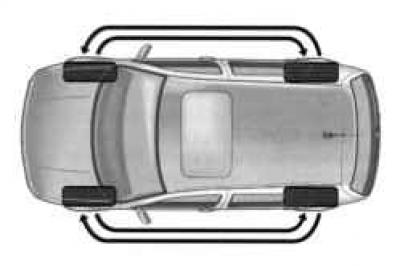
Fig. 1.84. Wheel reinstallation diagram.
Visitor comments