



General instructions
The towing rope must be flexible to avoid damaging both vehicles. Only ropes made of synthetic fibers or similar flexible materials should be used. However, it is safer to use a rigid towing rope.
It is necessary to constantly monitor that there is no unacceptably high traction, and at the same time there are no jerks when towing. When towing a car along the edge of an improved dirt road, there is always a risk that the shoulder will be overloaded and collapse.
Before attempting to tow start the engine, use another vehicle's battery as a booster battery to start the engine if possible - see previous pages.
Both drivers must be aware of the specifics of driving a vehicle when towing. Inexperienced drivers should not be behind the wheel of either vehicle.
When using a towing rope, the driver of the towing vehicle must release the clutch pedal especially smoothly when starting off and changing gears.
The driver of the towed vehicle must ensure that the towing rope is kept taut at all times.
Both vehicles must have the appropriate lighting equipment on and other towing requirements must be met in accordance with the current "Road Traffic Regulations".
The ignition must be on so that the steering is not locked and the direction indicators, horn, windscreen wipers and washers can be used if necessary.
The vacuum booster of the service brake system performs its function only when the engine is running, therefore, when braking with the engine off, it is necessary to press the brake pedal much harder.
Since the power steering does not function when the engine is not running, more force must be applied to the steering wheel when turning.
If there is no oil in the manual transmission or special fluid in the automatic transmission, the vehicle must be towed only with the drive wheels raised.
When towing a vehicle over a distance of more than 50 km, the front wheels of the vehicle must be raised.
The towing rope or rigid towbar must only be attached to the towing eyes specifically provided.
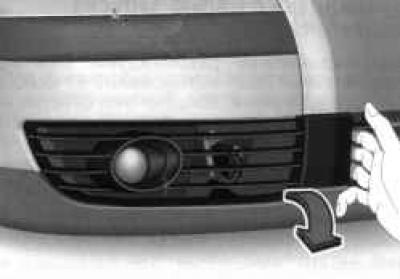
Fig. 1.95. Front towing eye
To access the front towing eye, first remove the cover (Fig. 1.95).
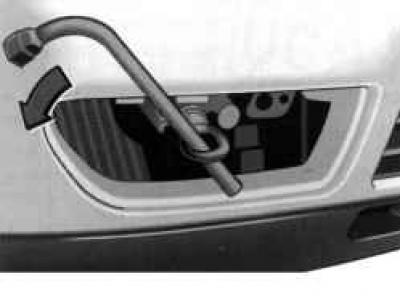
Fig. 1.96. Vehicles with a removable towing eye
The towing eye has a left-hand thread. Screw the towing eye in until it stops and tighten it securely with a wheel wrench (Fig. 1.96).
After towing, unscrew the towing eye and store it together with the on-board tool. Always carry the towing eye with you. Replace the cover.
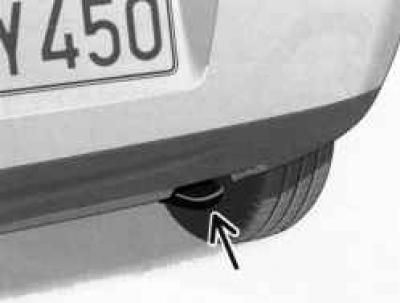
Fig. 1.97. Rear towing eye
The rear towing eye is located at the rear right under the bumper (Fig. 1.97).
Towing for the purpose of starting the engine
Towing for the purpose of starting the engine is not recommended for the following reasons:
- when towing in this manner, there is a high probability of hitting the towing vehicle;
- when towing a vehicle with a gasoline engine, unburned fuel can enter the catalytic converter and cause damage to it.
If it is necessary to tow a vehicle to start the engine, the driver of the towed vehicle must adhere to the rules below.
Before starting towing, engage 2nd or 3rd gear, depress the clutch pedal and keep it depressed.
Turn on the ignition.
Once both vehicles are moving, release the clutch pedal.
Once the engine starts, depress the clutch pedal and shift out of gear to avoid hitting the towing vehicle.
Starting the engine of a car with an automatic transmission by towing is not possible due to design features.
Visitor comments