
English Русский
Български
Беларускі
Український
Српски
Hrvatski
Română
Polski
Slovenský
Magyar
  |  Articles  |  Sitemap  |  Contacts  |    |
Car maintenance Ford Car maintenance Hyundai Car maintenance Chevrolet Car maintenance BMW Car maintenance Audi Car maintenance Opel Car maintenance AvtoVAZ
VWmanual.ru


Main   Passat   Golf   Polo   Touareg   Tiguan   Sharan   Transporter   Others  
Passat B2 (1981-1988) Passat B3 (1988-1993) Passat B4 (1988-1996) Passat B5 (1996-2005) Passat B6 (2005-2010)

Rechargeable battery (VW Passat B6)

  • Main
  • Passat
  • Passat B6
  • General information
  • Maintenance
  • Rechargeable battery
            0


Contents: Location ↓ Removal the battery cover ↓ Checking the electrolyte level ↓ Battery with inspection eye ↓ Battery without inspection glass ↓ Battery charge ↓ Replacing the battery ↓

Location


The battery is located in the engine compartment or in the rear of the vehicle.

The battery is in the rear of the car.
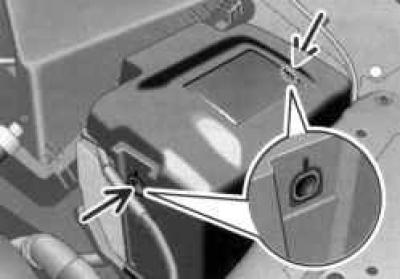
Fig. 1.80. Battery

Fig. 1.80. Battery


The battery is located under the false floor of the luggage compartment in a plastic container (Fig. 1.80).

To remove the container lid, press the side latches and pull the lid upwards.

Make sure that the ventilation hose is always connected to the hole on the side of the battery. Otherwise, electrolyte may leak.

Removal the battery cover
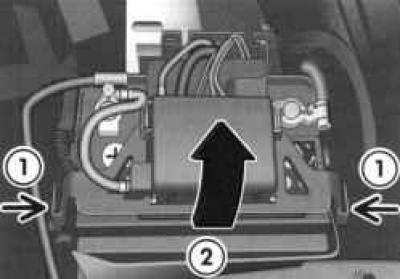


Fig. 1.81. Removing the battery

Fig. 1.81. Removing the battery


Press the side buttons on the lid (see arrows in figure 1.81) and lift the lid up.

Press the side buttons (arrows 1) and fold the holder down in the direction of arrow 2.

Checking the electrolyte level


The electrolyte level should be checked regularly under the following operating conditions:
  • with high mileage of the car;
  • in countries with hot climates;
  • if you have a battery with a long service life.

The original article is available at www.VWMANUAL.ru

Under normal conditions, the battery does not require maintenance.

Warning: Never open the battery - there is a risk of chemical burns and even explosion. Damaged and leaky batteries should not be installed in the vehicle; such batteries must be disposed of in accordance with all appropriate regulations.


Battery with inspection eye
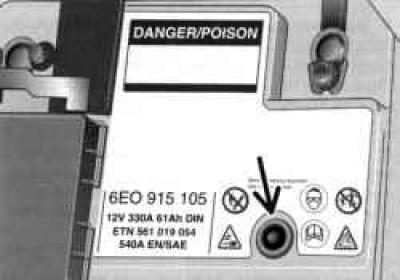


Fig. 1.82. Electrolyte level inspection glass

Fig. 1.82. Electrolyte level inspection glass


On the top side of the battery there is a round control eye (Fig. 1.82). The eye changes color depending on the degree of discharge of the battery and the level of electrolyte in it.

If air bubbles interfere with determining the color of the eye, tap the eye lightly.

If the eye is colorless or light yellow, it means that the electrolyte level is too low. You should add distilled water. After 5 years of operation, we recommend replacing the battery.


Battery without inspection glass


The electrolyte level in the battery should always be between the "Min" and "Max" marks on the longitudinal sides of the battery. In no case should the electrolyte level be brought above the "Max" mark; at the same time, the level should not be allowed to fall below the "Min" mark.

Battery charge


Before charging the battery, turn off the ignition and all current consumers.

When charging with a small current (for example, using a low-power charger) there is generally no need to disconnect the connecting wires of the on-board electrical system. In any case, it is necessary to follow the instructions of the charger manufacturer.

Before boost charging, which means charging with a high current, both connecting wires to the on-board electrical system should be disconnected.

Please follow the instructions below.

Caution: Keep children away from the battery, electrolyte and charger.


Warning: Charge the battery only in a well-ventilated room. Do not smoke nearby and keep open flames and sparking devices away, as when charging the battery you release an explosive gas mixture of hydrogen and oxygen.


Caution: Protect your eyes and face. Do not lean close to the battery.


Caution: If electrolyte gets into your eyes or on your skin, rinse them with clean water for several minutes and then seek medical attention immediately.


Replacing the battery


Install only genuine Volkswagen batteries of the same size in your vehicle.

Our batteries are designed for a specific installation location and are safe to operate.

Genuine Volkswagen batteries meet all performance and safety requirements for automotive batteries.

This article is available at russian, bulgarian, belarusian, ukrainian, serbian, croatian, romanian, polish, slovak, hungarian
The text has been checked: Orlov Dmitry

Share information:

Previous articles
Replacing brake fluid
Replacing windshield wipers
Adjusting the position of the windshield washer nozzles
Filling the windshield washer reservoir with liquid
Checking the coolant level
Diesel fuel
Next articles
Car wheels and tires
Wheel replacement
Using an auxiliary battery when starting the engine
Towing a car
Filter replacement intervals
Timing Belt Replacement Intervals


Similar articles from other manuals for VW cars:
Rechargeable battery Golf 3 (1991-1997)
Starting the engine from an auxiliary battery Polo 3 (1995-2003)
Checking the battery Touareg 1 (2002-2006)
Disconnecting and connecting the battery Tiguan 1 (2007-2015)
Battery — General Information Sharan 1 (1995-2000)
Checking the battery Transporter T4 (1990-2003)
Remote control battery health indicator Caddy 3 (2003-2010)
Link to this page in different formats


Visitor comments


No comments yet


How much will 29 + 15 =


Passat B6 
  • General information
  • User manual
  • Maintenance
  • Petrol engine 1.6L
  • Engine repair
  • Cooling and lubrication system
  • Fuel injection system
  • Petrol engine 2.0L
  • Engine repair
  • Lubrication system
  • Cooling system
  • Fuel and exhaust systems
  • Diesel engine 2.0L
  • Engine repair
  • Cooling and lubrication system
  • Fuel and exhaust systems
  • Transmission
  • Clutch
  • Mechanical gearbox
  • Automatic gearbox
  • Drive shafts
  • Chassis
  • Wheels and tires
  • Car suspension
  • Steering
  • Brake system
  • Body
  • Exterior (external elements)
  • Electrical equipment
  • Power devices
  • Lighting and appliances
  • Electrical circuits
Passat B5 
  • General information
  • User manual
  • Weekly checks
  • Maintenance
  • Power unit
  • Engine repair
  • Cooling system
  • Fuel system (petrol)
  • Fuel system (diesel)
  • Engine management
  • Exhaust system
  • Transmission
  • Clutch
  • Car gearbox
  • Drive shafts
  • Chassis
  • Car suspension
  • Wheels and tires
  • Steering
  • Brake system
  • Body
  • Exterior (external elements)
  • Interior (internal elements)
  • Doors and covers
  • Ventilation and heating
  • Electrical equipment
  • Power devices
  • Lighting and appliances
  • Electrical circuits
Passat B4 
  • General information
  • User manual
  • Maintenance
  • Technical data
  • 8-valve engine
  • Engine repair
  • Cooling and lubrication system
  • Supply system
  • Ignition system
  • Fuel injection «Mono-Jetronic»
  • Control system «Mono-Motronic»
  • Control system «Digifant»
  • Control system «Simos»
  • 16-valve engine
  • Engine repair
  • Cooling and lubrication system
  • Fuel injection «K-Jetronic»
  • Control system «KE-Motronic»
  • Control system «Digifant»
  • Diesel engine
  • Engine repair
  • Cooling and lubrication system
  • Power and control system
  • Turbocharging system
  • Digital control system
  • Transmission
  • Clutch
  • Manual gearbox
  • Hydromechanical gearbox
  • Front wheel drive
  • Chassis
  • Car suspension
  • Steering
  • Brake system
  • Body
  • Body elements
  • Electrical equipment
  • Power devices
  • Lighting and appliances
  • Electrical circuits
Passat B3 
  • General information
  • User manual
  • Driving Tips
  • Maintenance instructions
  • Technical data
  • Power unit
  • Engine repair
  • Ignition system
  • Lubrication system
  • Cooling system
  • Supply system
  • Petrol injection system
  • Diesel engine
  • Exhaust system
  • Transmission
  • Clutch
  • Car gearbox
  • Chassis
  • Suspension
  • Steering
  • Brake system
  • Wheels and tires
  • Body
  • Exterior
  • Interior
  • Heating system
  • Electrical equipment
  • Power devices
  • Lighting system
  • Equipment and devices
  • Wiper system
  • Electrical circuits
Passat B2 
  • General information
  • Introduction to instructions
  • User manual
  • Power unit
  • Engines 4-cylinder FZ
  • Engines 4-cylinder
  • Engines 5-cylinder
  • Transmission
  • Clutch
  • Four-speed gearbox
  • Five-speed gearbox
  • Hydromechanical gearbox
  • Front wheel drive
  • Chassis
  • Front suspension
  • Rear suspension
  • Steering
  • Brake system
  • Body
  • Body elements
  • Electrical equipment
  • Equipment and devices
  • Electrical circuits
VWmanual.ru © 2016-2026 | Mobile version | News and articles | Sitemap: EN BG BY UA RS HR RO PL SK HU | Write message | Site search
Passat B2 • Passat B3 • Passat B4 • Passat B5 • Passat B6 • Golf 1, diesel • Golf 1, petrol • Golf 2, petrol • Golf 2 • Golf 3 • Golf 4 • Golf 5 • Polo 3 • Polo 4 • Touareg 1 • Tiguan 1 • Sharan 1 • Transporter T3 • Transporter T4 • LT 28 • LT 2D • Beetle • Caddy 3 •
Our website uses cookies to ensure functionality and convenience.