



Engine oil consumption
The rate of oil consumption depends on oil quality and viscosity, engine speed, climatic and road conditions along with the degree of dilution and oxidation of the lubricating oil.
As such, there are no standards for oil consumption, but drivers should be aware that oil consumption increases when the vehicle is driven at high speeds or when a new engine is fitted to the vehicle.
- The performance of your engine depends on the quality and quantity of oil to lubricate and cool all of its moving parts. Therefore, it is necessary to regularly check the oil level in the engine.
- Get in the habit of checking the engine oil level every time you fill up your car with fuel.
- A leak (consumption) oil in significant quantities can lead to engine failure.
- The oil pressure warning light does not serve as an indicator of the engine oil level.
Be sure to follow all precautions.
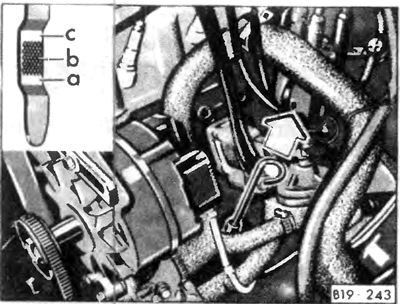
Checking the engine oil level
The best time to check the engine oil level is when the oil is warm. For a relatively accurate test, place the vehicle on a level surface.
- After turning off the engine, wait a few minutes to allow the oil to drain into the engine sump.
- Remove dipstick (shown by arrow) and wipe it dry with a rag.
- Reinstall the dipstick: push it all the way in.
- Remove the dipstick again and read the engine oil level.
a - You must fill the engine with oil. Upon completion of refueling, check the oil level again - it should be within the scale "b".
b - You can top up the engine with oil. The oil level can reach the scale "With",
c - You must not fill the engine with oil.
- Make sure the probe is fully inserted.
Note:If there are no marks on your dipstick - scale designations, then in this case the upper and lower marks will serve as the MAX and MIN oil levels. The oil level must be within the area limited by these marks. If the oil level approaches the MIN·mark, it must be topped up. The oil level must not exceed the MAX mark.
Refueling the engine with oil
- Turn off the engine.
- Remove the cap from the cylinder head cover.
- Add oil in batches. The volume of one serving is half a liter.
- At the end of filling each portion of oil, check its level with a dipstick.
The engine oil level must not be above the scale "With". Otherwise, excess oil may enter the exhaust system through the engine breather, causing damage due to combustion in the catalytic converter. It is mandatory to refuel the engine with high-quality oil that meets the necessary technical requirements.
- Replace the cap and screw it on by hand until it stops.
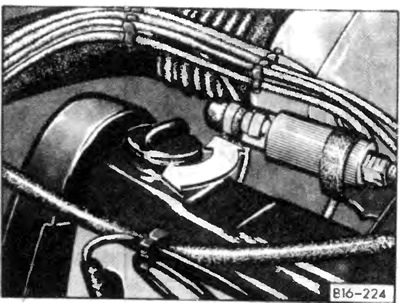
Caution: The oil filler cap must be screwed on properly to prevent oil from escaping.
Engine oil change
Change the engine oil regularly, but at least twice a year. This is very important because the lubricating properties of the oil gradually decrease during normal vehicle operation. When driving primarily for short distances, in dusty areas, in heavy traffic, or in climates where the ambient temperature is below freezing, the engine oil needs to be changed more frequently. Due to the addition of detergent additives to fresh oil, it darkens after a short engine operation. This is normal and is not a signal to change the oil more frequently than recommended by the manufacturer.
Attention: Drain the used oil into a container designed for this purpose.
Wear protective goggles.
To avoid burns with hot oil, cool the engine first.
When removing the oil drain plug, try to stand as far away from it as possible. Keep your forearm parallel to the ground at all times to avoid hot oil running down your arm.
Motor oil is poisonous. Keep it out of the reach of children. Prolonged contact with used engine oil is not safe for your skin, so wash your hands thoroughly with soap and water after handling engine oil.
Before you start changing the oil, first of all, take care of where you will drain the used oil. Do not dump it on the ground in parks, wooded areas, open water or wastewater.
Due to the great difficulties associated with the recycling of used oil (the need for special tools and high-quality expertise) It is recommended to have the oil changed in a specialized workshop.
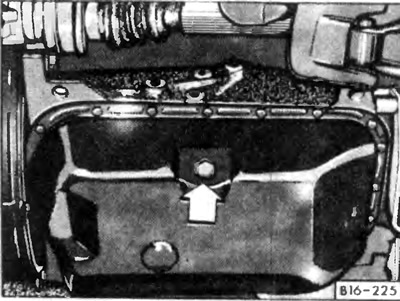
- Turn off the engine.
- While the engine is still warm, remove the oil drain plug (arrow) and drain the oil.
- When reinstalling the plug, be sure to replace the gasket.
- Do not overtighten the plug.
- Fill the engine with oil. Avoid overdose. Without fail, use a dipstick to check the oil level in the engine.
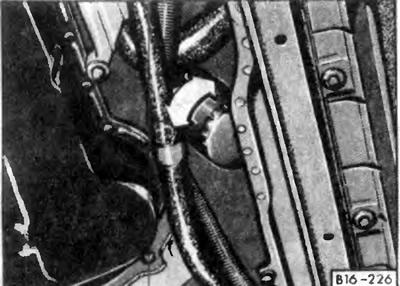
Visitor comments