



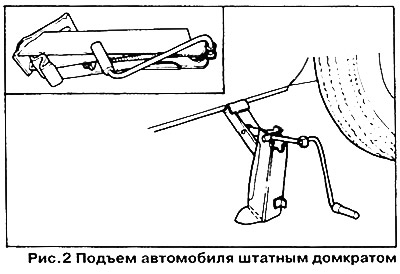
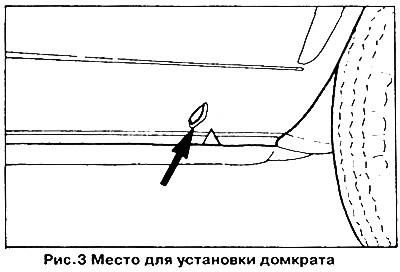
Before lifting the vehicle, make sure that the jack is on a firm, level surface and that the wheel diagonally opposite the one being replaced is securely chocked (bricks, wooden blocks, etc.), placed in front and behind the wheel. Insert the lower edge of the threshold into the groove of the jack head, then lightly support the car with the jack, loosen the wheel nuts, check the position of the jack and carefully raise the car. Raise the car only to the height necessary for changing the wheel - do not raise it too high (figure 2).
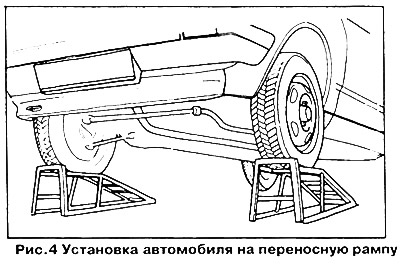
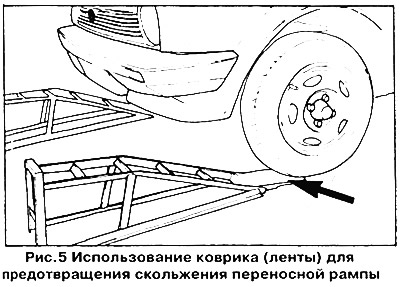
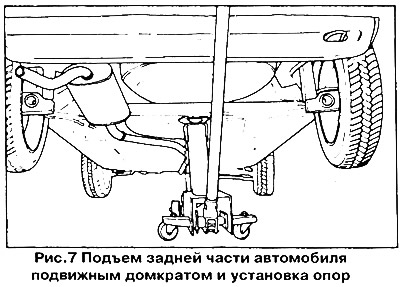
To carry out repair work under a car, it is most convenient to use an inspection pit, overpass or portable ramp (figure 4 and 5). If you need to lift the car off the ground, use a screw or hydraulic jack with a large lifting capacity. A mobile jack is very convenient, providing the greatest lifting height (figure 7). The jack should be installed under the platforms for the standard jack. To avoid deforming the body threshold when installing the hydraulic jack, use wooden spacers cut to the shape of the threshold.
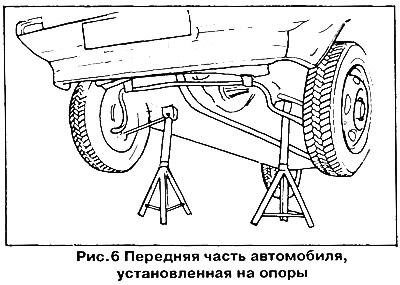
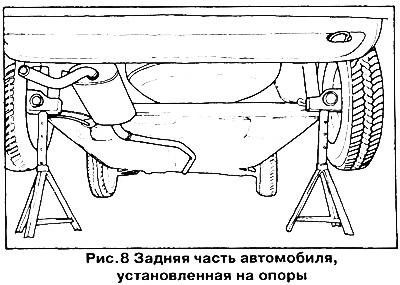
After the car has been jacked up, it should be placed on reliable supports. It is recommended to install supports under the platforms for the standard jack or under the lower arms of the front suspension in front and under the lower mounting points of the suspension struts (shock absorbers) behind (figure 6, 7 and 8). Never use vertical wooden blocks or bricks as supports - the blocks are unstable and the bricks may collapse under the weight of the car.
Once the jack stands are in place, rock the vehicle to ensure it is secure.
Visitor comments