



2. Every 8000 km, the spark plugs should be removed, cleaned and, if necessary, replaced. A thorough inspection of spark plugs can tell you a lot about the condition of your engine.
3. If the spark plug's heat cone is clean and white, without any dark deposits, this is a sign of a too-lean mixture or a spark plug that is too hot (a hot spark plug transfers heat from the electrode slowly, while a cold spark plug does so quickly).
4. If the thermal cone and central electrode of the spark plug are covered with a thick black coating, this indicates that the mixture is too rich. The presence of a black oily coating indicates both general engine wear and an excessively rich mixture.
5. If the heat cone is covered with a coating from light brown to gray-brown in color, this means that the mixture has the correct composition, and the engine is most likely in good condition.
The information is presented on the website: VWManual
6. If there are oblong brown spots on the outer surface of the white spark plug insulator, the spark plug must be replaced, as these spots indicate a defect in the connection between the spark plug body and the insulator.
7. Cleaning of spark plugs is done using sandblasting. This also allows you to check the condition of the spark plugs under high compression conditions. A spark plug that does not spark at the specified pressure must be replaced.
8. The size of the spark gap is of greater importance. If it is too big or too small, the spark plug's performance will be significantly reduced. For the correct spark gap value see. in the Specifications at the beginning of this chapter.
9. The gap size is adjusted by bending the side electrode. Do not attempt to bend the central electrode under any circumstances, as this may damage the insulator.
10. When connecting the ignition wires, make sure that they are connected in the correct cylinder firing order.
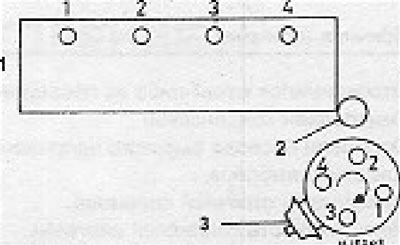
Figure 4.6. Ignition wire connection procedure: 1 - Timing belt; 2 - capacitor; 3 - Vacuum diaphragm.
11. Ignition wires do not require routine maintenance. It is enough to keep them clean and wipe them regularly.
12 Every 8,000 km, each wire should be removed in turn and its ends should be cleaned of the white coating formed as a result of corrosion.
13. It is recommended to replace spark plugs every 16,000 km to ensure the engine operates at optimal conditions.
14. All engines use carbon core spark plug wires to provide the necessary radio interference suppression. When disconnecting them from the spark plugs, you should grasp the rubber cap and under no circumstances the wire. Do not twist such wires into a tight knot or squeeze them too hard.
Visitor comments