



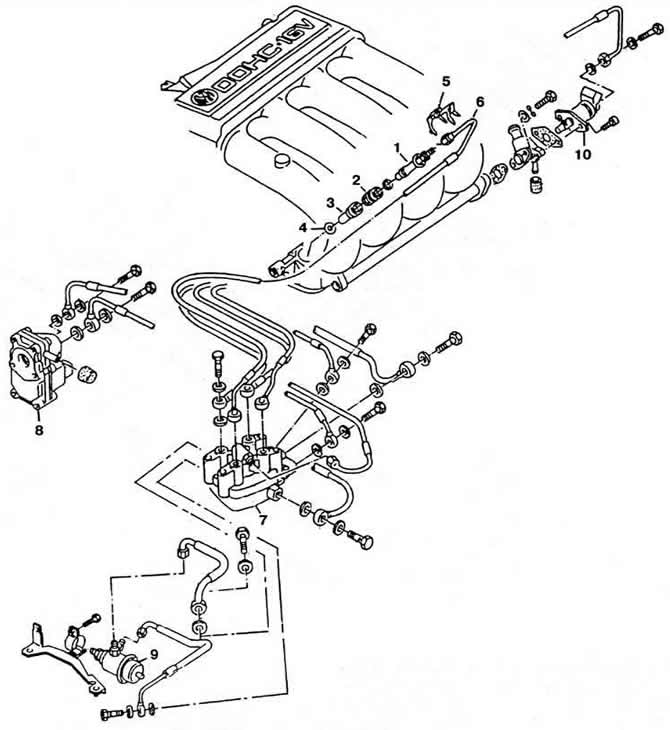
Fig. 2-156. Details of the fuel supply system of the "KR" engine:
1 — nozzle;
2 — fuel injector body;
3 — bushing;
4 - sealing ring;
5 - clamp;
6 — fuel supply line to the injector;
7 — fuel dispenser;
8 — control pressure regulator;
9 — fuel pressure regulator;
10 — starting nozzle.
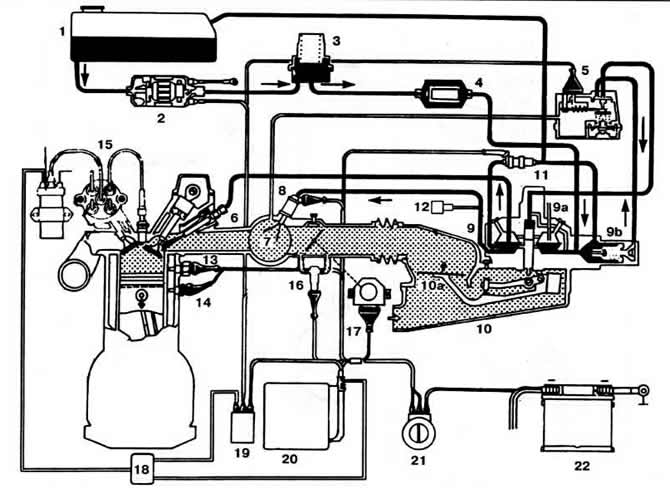
Fig. 2-157. Structural diagram of the fuel injection system "K-Jetronlc" "KR" engine:
1 - fuel tank;
2 - fuel pump;
3 - pressure accumulator;
4 - fuel filter;
5 — control pressure regulator;
6 — fuel injector;
7 — inlet manifold;
8 - electromagnetic starting nozzle;
9 — mixture regulator;
9a - fuel distributor;
9b—fuel pressure regulator;
10 - air flow meter;
10a - pressure disc;
11 — electromagnetic valve of forced idle speed;
12 - vacuum switch;
13 - thermal time relay;
14 - coolant temperature sensor;
15 — ignition distributor;
16 — electromagnetic valve for idle speed stabilization;
17 — throttle position sensor;
18 — electronic ignition timing control unit;
19 — fuel pump relay;
20 — electronic unit for stabilizing idle speed and controlling forced idle speed;
21 - ignition switch;
22 — battery.
The fuel pump takes fuel from the fuel tank and delivers it to the hydraulic accumulator. Then the fuel is delivered under pressure through the filter to the fuel dispenser-distributor.
The pressure disk of the air flow meter, which is fixed on a movable lever and installed between the air filter and the throttle valve, deflects depending on the vacuum of air in the engine. The displacement of the pressure disk of the air flow meter is transmitted to the distribution plunger of the fuel metering unit-distributor, thereby determining the amount of fuel supplied. The fuel quantity distributor, depending on the position of the pressure disk of the air flow meter, supplies the required amount of fuel to the engine cylinders through the injectors, ensuring the optimal composition of the fuel-air mixture. The fuel metering unit-distributor and the air flow meter form a mixture regulator. The control pressure regulator reduces the pressure on the distribution plunger during engine warm-up. A decrease in the control pressure with the same air flow leads to an increase in the fuel supply and, consequently, to an enrichment of the combustible mixture.
On commands from a special electronic control unit (ECU), the electromagnetic idle stabilization valve, installed in the air channel parallel to the throttle valve, supplies additional air to the engine during cold starting and warming up, which leads to an increase in the engine crankshaft speed at idle, and also ensures that the idle speed is maintained within specified limits. Fuel supply at forced idle is interrupted by an electronically controlled electromagnetic valve.
To facilitate starting a cold engine, an electromagnetic starting nozzle is provided, the duration of which is changed depending on the temperature of the coolant by a thermal time relay. The plastic fuel tank is installed under the body floor in front of the rear axle. The fuel tank capacity is 70 l. The air filter is of the brand and type Mann C31 152 with a replaceable dry filter element.
The fuel filter is installed at the rear of the vehicle.
Brand and part number: Factory fitted filter: Bosch 0 450 905 144; filter supplied as spare parts: Bosch 0 450 905 143.
Replacement frequency: every 20,000 km of vehicle mileage. The electric fuel pump is installed in the housing at the rear of the vehicle on the right.
Brand and part number: Factory installed pump: Bosch 0 580 254 012; pump supplied as spare parts: Bosch 0 580 254 011.
The electric fuel pump is installed in the fuel tank. Performance at terminal voltage of 12 V, cm³/30 s: 300. The fuel metering device-distributor, installed on the air flow meter, ensures uniform fuel supply to the injection nozzles depending on the position of the air flow meter pressure disk.
Brand and catalog number: Bosch 0 438 100 140. The pressure accumulator, installed in the fuel supply line after the fuel pump, ensures that residual fuel pressure is maintained in the system after the engine has stopped and eliminates fluctuations in fuel supply.
Brand and part number: Factory fitted battery: Bosch 0 438 170 028; battery supplied as spare parts: Bosch 0 438 170 027.
The fuel pressure regulator, installed in the fuel dispenser-distributor, serves to maintain the fuel pressure within specified limits.
The regulator regulates the control pressure depending on the temperature.
Brand and part number: Factory fitted regulator: Bosch 0 438 140 141; regulator supplied as spare parts: Bosch 0 438 140 140.
The injector valves open under the influence of fuel pressure.
Brand and part number: factory-fitted injectors: Bosch 0 437 502 042; injectors supplied as spare parts: Bosch 0 437 502 041.
The starting injector serves to enrich the mixture when starting a cold engine based on signals from the thermal time relay.
Brand and part number: Factory fitted nozzle: Bosch 0 280 170 407; injector supplied as spare parts: Bosch 0 280 170 406.
Thermal time relay. Brand and catalog number: relay installed at the factory: Bosch 0 280 130 213; relay supplied as spare parts: Bosch 0 280 130 214. Air flow meter.
Brand and part number: Factory installed gauge. Bosch 0 438 120 196; measuring instrument supplied as spare parts: Bosch 0 438 120 195.
The electromagnetic valve of idle stabilization of the rotary type is installed in the air channel, made parallel to the throttle valve. On commands of a special control unit it provides enrichment of the combustible mixture when starting a cold engine, and also serves to maintain the rotation speed of the engine crankshaft within the specified limits.
Brand and catalog number: Bosch 0 438 040 140. Control current, mA: 415-445.
The coolant temperature sensor is a resistor with a negative temperature coefficient, i.e. its resistance decreases as the temperature increases.
The sensor is installed on the end of the cylinder head on the ignition distributor side. The signal from the sensor goes to the electronic unit for stabilizing idle speed and controlling forced idle speed.
The vacuum switch installed on the air flow meter serves to enrich the mixture through the starting injector when the engine load increases significantly. Its contacts are open in normal mode and close when the vacuum changes abruptly. The position sensor of the throttle valve is installed on the throttle. The signal from the sensor serves to determine the engine operating mode (idle or full throttle).
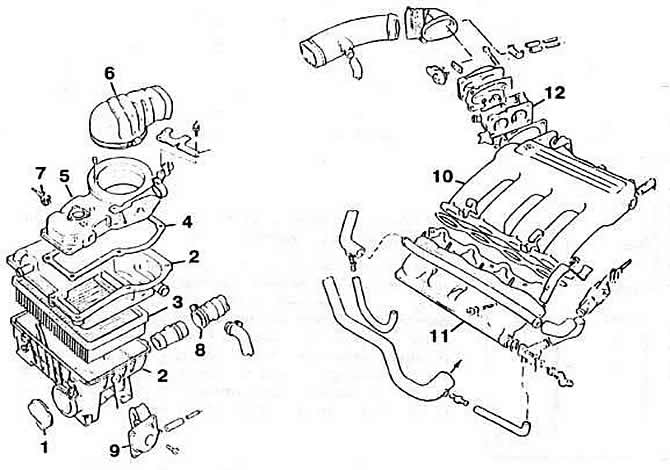
Fig. 2-158. Details of the air tract of the "KR" engine:
1 — outside air intake pipe;
2 — air filter housing;
3 - filter element;
4 - sealing gasket;
5 - air flow meter;
6 - air supply cap;
7 — electrical connector;
8 — heated air supply hose;
9 — thermostat;
10 - upper part of the intake manifold;
11 - lower part of the intake manifold;
12 — throttle body.
Visitor comments