



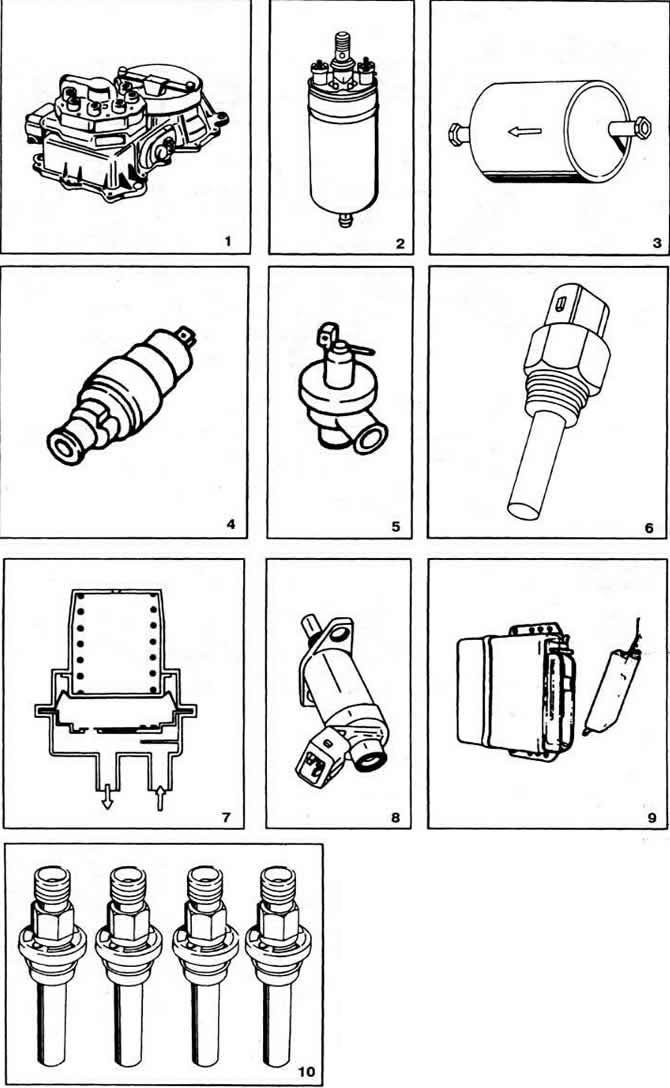
Fig. 2-159. Components of the K-Jetronlc fuel injection system of the KR engine:
1 - mixture regulator (a unit formed by a fuel dispenser and an air flow meter);
2 - fuel electric pump;
3 - fuel filter;
4 — electromagnetic valve for idle speed stabilization;
5 — adsorber shut-off valve;
6 - thermal time relay;
7 — pressure accumulator;
8 - starting nozzle;
9 — electronic unit for stabilizing idle speed and controlling forced idle speed;
10 — fuel injectors.
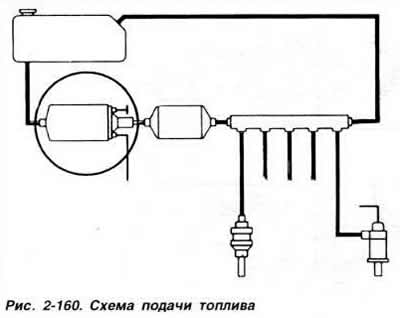
The fuel pump takes fuel from the fuel tank and delivers it to the fuel distributor through the filter and accumulator (fig. 2-160).
Fuel pump (fig. 2-161) roller. It is driven by a constant-excitation electric motor. The circumference of the eccentric rotor mounted on the electric motor shaft is provided with roller seats. Under the action of centrifugal force, the rollers are pressed against the pump body, which ensures the pump is hermetically sealed. Fuel sucked in through the gaps between the rollers enters the discharge line. The pump is explosion-proof, since a flammable mixture never forms in its body. In all engine operating modes, the pump pumps an excess amount of fuel compared to the maximum amount of fuel required to maintain constant pressure in the fuel supply system.
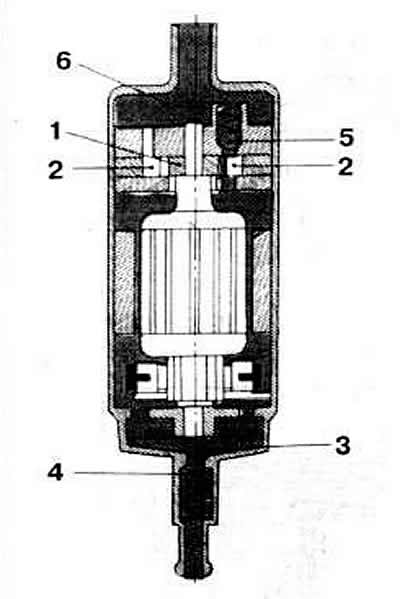
Fig. 2-161. Sectional view of the fuel electric pump:
1 — rotor;
2 - rollers;
3 - discharge channel;
4 - check valve;
5 - excess pressure valve;
6 — inlet chamber.
The pump is switched on by means of a relay. If the engine does not start or starts with difficulty, runs unstably at idle, stalls regardless of the operating mode, and does not develop full power, then the cause may be a malfunction of the fuel pump.
The amount of air sucked into the intake manifold is measured by an air flow meter.
The air flow meter is installed before the throttle valve. It is a guide device with a pressure disk fixed on a movable lever, which deflects depending on the air flow (fig. 2-162). The displacement of the air flow meter pressure disc is transmitted via the lever to the distributor plunger, which determines the amount of fuel in the system.
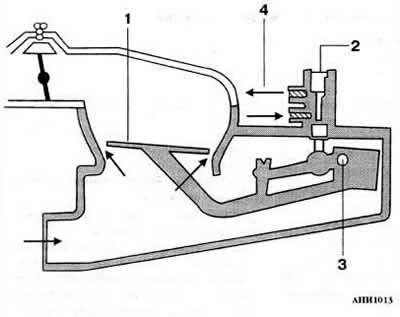
Fig. 2-162. Operating principle of the air flow meter:
1 - pressure disc;
2 - distribution plunger;
3 — lever axis;
4 - to the intake valves.
The fuel quantity distributor, in addition to the distribution plunger, includes a fuel pressure regulator, differential pressure valves, a supply line and four injection nozzles in accordance with the number of engine cylinders (fig. 2-163). When the air flow meter pressure disk is raised, the fuel quantity distributor distribution plunger moves accordingly, opening its control edges for fuel to enter the upper chamber of the differential pressure valve, separated from the lower chamber by a diaphragm. The fuel pressure and the force of the spring acting on the upper surface of the diaphragm are greater than the pressure on the lower surface of the diaphragm. As a result, the diaphragm moves downwards and opens the fuel supply channels to the injectors (fig. 2-165). Difficulty starting, failure to start the engine, and unstable idling indicate a possible malfunction of the injectors. The fuel pressure regulator maintains the fuel pressure in the system at a certain level and ensures the supply of excess fuel to the drain line (fig. 2-166).
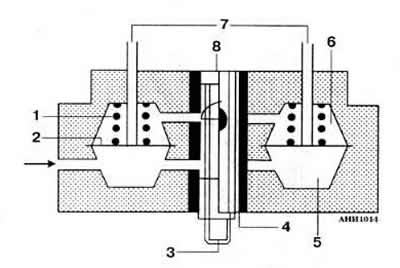
Fig. 2-163. Operating principle of the fuel dispenser:
1 - valve spring;
2 - diaphragm;
3 - distribution plunger;
4 — slotted sleeve of the distribution plunger;
5 - lower chamber;
6 - upper chamber;
7 — fuel supply to injectors;
8 — control edge of the distribution plunger.
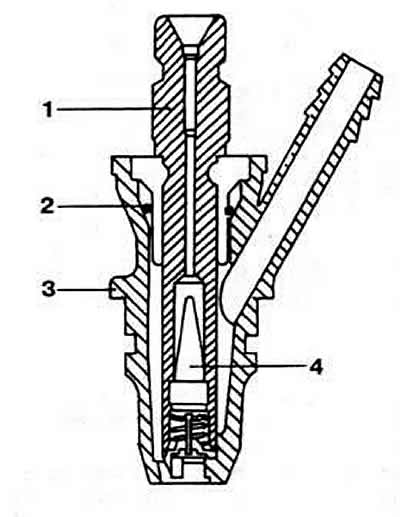
Fig. 2-165. Sectional view of injection nozzle:
1 - sprayer body;
2 - sealing ring;
3 - nozzle body;
4 - conical filter.
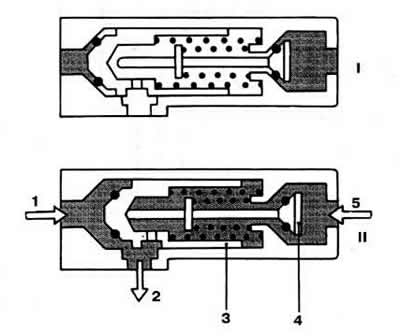
Fig. 2-166. Operating principle of the fuel pressure regulator:
I — non-working position;
II — working position.
1 - fuel supply under supply pressure;
2 - fuel drainage to the fuel tank;
3 — plunger of the supply pressure regulator;
4 - isolation valve;
5 - from the control pressure regulator.
The fuel filter is designed to clean the fuel circulating in the system. The arrow on the filter body shows the direction of fuel flow in the system.
The pressure accumulator is mounted behind the fuel pump (fig. 2-167). It has a damper and storage chambers, which are separated by a diaphragm. In front of the diaphragm there is an additional partition with a disc valve, which ensures the supply of fuel to the system. The partition has a throttling hole for draining the fuel.
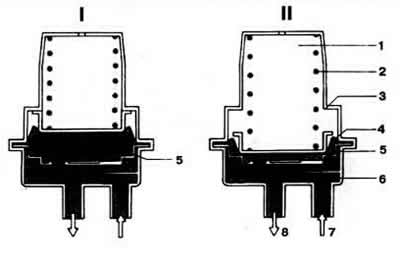
Fig. 2-167. Operating principle of the pressure accumulator:
I - with the engine running;
II - with the engine stopped.
1 — sleeve;
2 - spring;
3 - emphasis;
4 — diaphragm;
5 - accumulation chamber;
6 - reflector;
7 — fuel supply;
8 — fuel outlet.
After the fuel pump is turned on, the storage chamber is filled with fuel and the spring diaphragm is stretched to the stop. After the engine is stopped, due to the tension of the diaphragm, the fuel remains under pressure and the formation of fuel vapor is not allowed, which facilitates the start of a hot engine.
The engine is started and warmed up by an electromagnetic starting nozzle, an additional air supply valve and a control pressure regulator. Electromagnetic starting nozzle (fig. 2-168) is designed to inject additional fuel into the intake manifold when starting a cold engine. It works in conjunction with a thermal time relay (fig. 2-169), which closes and opens its electrical circuit depending on the engine temperature and the duration of its start-up (fig. 2-170).
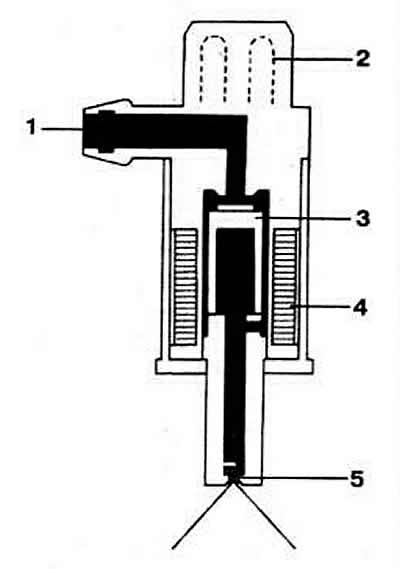
Fig. 2-168. Section of the starting nozzle:
1 — fuel supply pipe;
2 — shoe;
3 - magnetic core;
4 - winding;
5 - swirl atomizer.
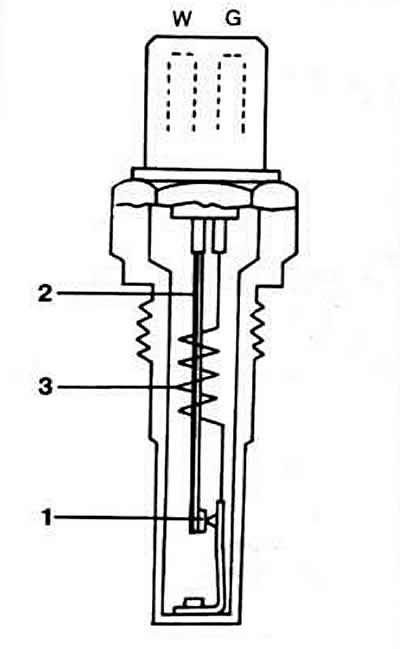
Fig. 2-169. Sectional view of thermal time relay:
1 - contact;
2 - bimetallic spring;
3 — thermal winding.
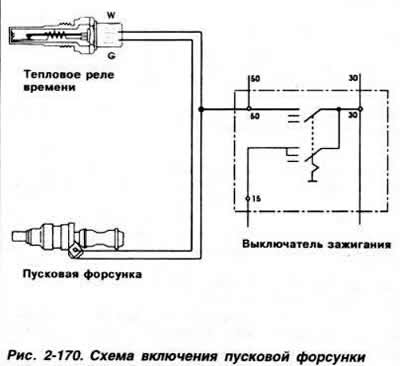
Difficulty starting or failure to start the engine, as well as increased fuel consumption, may be caused by a faulty starting injector. If the engine does not start or idles unstably, the cause may be a faulty thermal time relay.
The sensor mounted on the throttle shaft has two switching contacts for both end positions of the throttle valve. On the throttle shaft 3 (fig. 2-171) the sensor has a movable contact 2, which, in accordance with the position of the throttle valve, closes and opens contact 4 of idle speed or contact 1 of full load. When closed, (idling) or fully open throttle (full load) the corresponding signals are sent to the idle speed stabilization and forced idle speed control unit, which, based on them, generates commands for the idle speed stabilization and forced idle speed electromagnetic valves. The idle speed stabilization electromagnetic valve serves to increase the crankshaft speed during engine warm-up and also maintains the idle speed within specified limits. The valve is installed in the air duct, which is made parallel to the throttle valve. The degree of its opening, i.e. the amount of additional air entering the engine intake tract, is determined by the idle speed stabilization and forced idle speed control electronic unit.
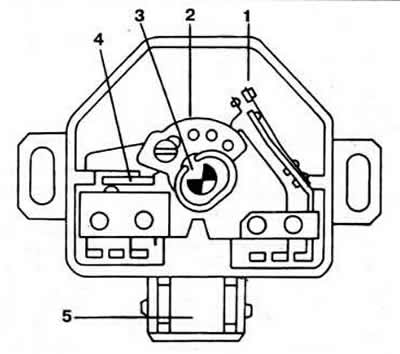
Fig. 2-171. Throttle position sensor:
1 - full load contact;
2 - movable contact;
3 - throttle shaft;
4 - idle contact;
5 — shoe.
In addition, the supply of additional air is measured by the pressure disc of the air quantity meter (fig. 2-172), the movement of which leads to a corresponding rise of the distribution plunger, which also contributes to an increase in the crankshaft speed (with the throttle valve closed). The control pressure regulator enriches the working mixture entering the combustion chambers when the engine warms up (fig. 2-166). When the engine is cold, the bimetallic spring compresses the diaphragm valve spring, opening the fuel drain channel, which reduces the counteraction on the distributor plunger. A decrease in control pressure with constant air flow causes an increase in the stroke of the pressure disk. As a result, the distributor plunger is additionally lifted, increasing the amount of fuel supplied to the injectors.
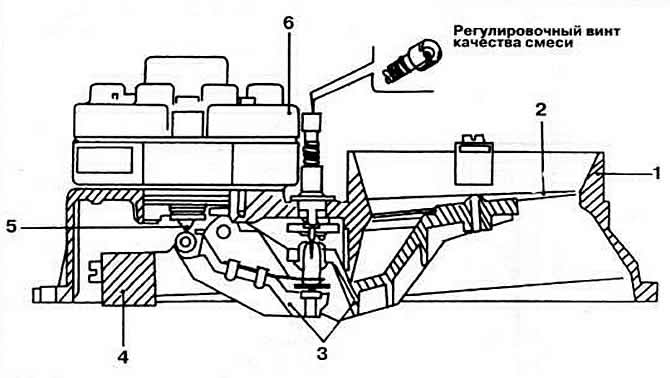
Fig. 2-172. Sectional view of the mixture regulator:
1 - air flow meter diffuser;
2 - pressure disc;
3 - lever system;
4 - counterweight;
5 - distribution plunger;
6 — fuel dispenser.
As the bimetallic spring heats up, the pressure on the spring of the diaphragm valve of the control pressure regulator decreases and the drain channel slowly closes. The control pressure reaches the normal value and enrichment of the combustible mixture stops.
During engine warm-up, the idle speed stabilization and forced idle control unit ensures enrichment of the combustible mixture based on an electrical signal received from the coolant temperature sensor installed in the cylinder head.
Sensor (fig. 2-173) is a resistor with a negative temperature coefficient, i.e. the resistance decreases as the temperature increases (see graph, fig. 2-174). If the engine does not start or starts with difficulty, stalls after starting, and also with increased fuel consumption and abnormal CO content in the exhaust gases, it is necessary to check the serviceability of the coolant temperature sensor.
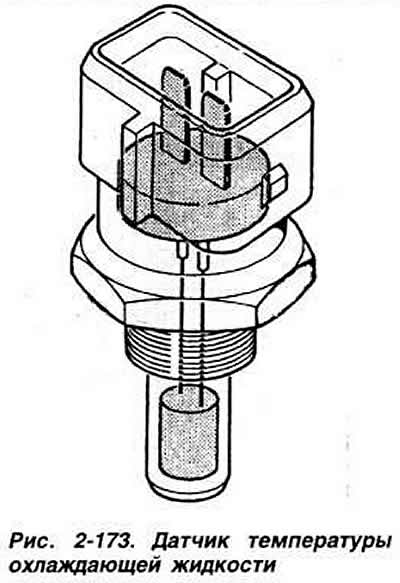
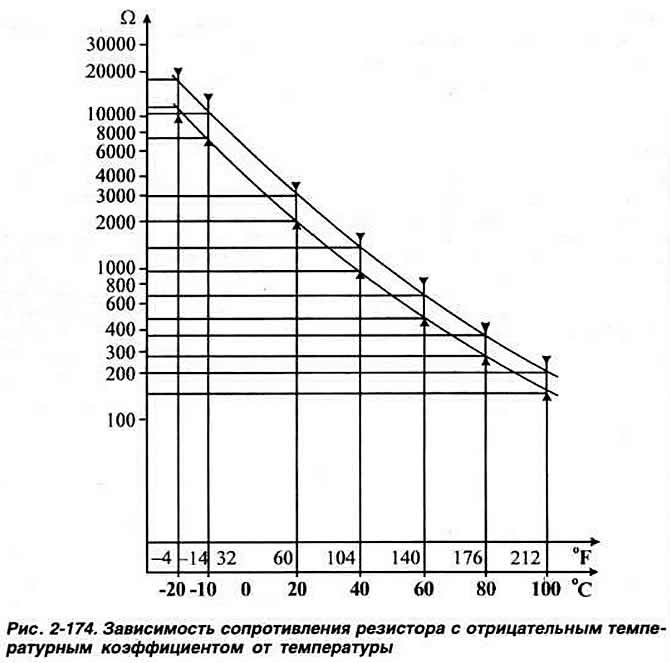
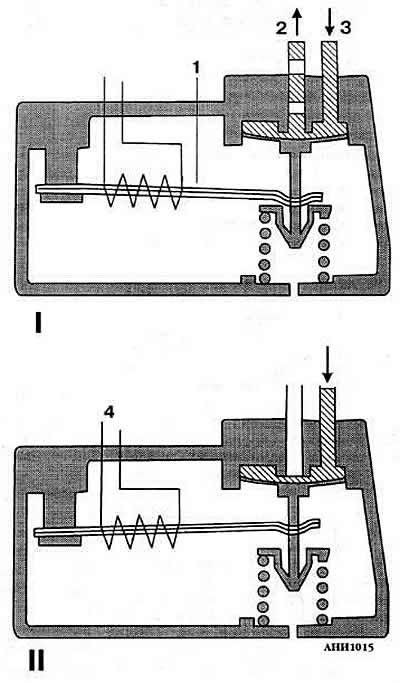
Fig. 2-164. Operating principle of the control pressure regulator:
I - on a cold engine;
II - on a hot engine.
1 - bimetallic spring;
2 - drain fuel;
3 — control pressure supply;
4 — thermal winding of bimetallic spring.
Visitor comments