



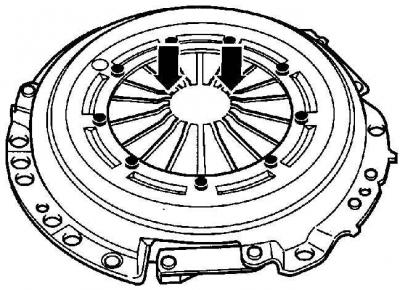
1. Check the condition of the clutch pressure plate (the test locations are indicated by arrows). Traces of wear on the ends of the pressure spring should be no more than 0.3 mm.
2. Check the reliability of the spring connection between the pressure plate and the housing of the leading part of the clutch. No scratches or missing or damaged rivets are allowed.
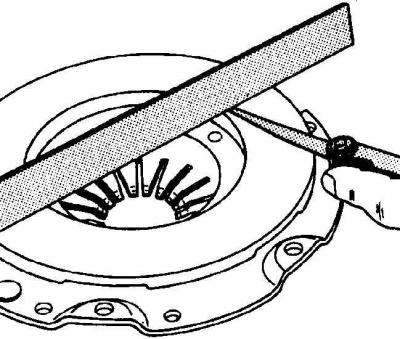
3. Check the pressure plate for cracks, burns and surface wear. Using a steel ruler and a feeler blade, check the non-flatness of the working surface of the pressure plate. The non-flatness of the pressure plate should not exceed 0.2 mm.
4. Check the condition of the flywheel friction surface for cracks, burns and surface wear.
5. Check the condition of the clutch disc friction linings and if there are traces of oil or mechanical damage, replace the clutch disc.
6. Measure the thickness of the clutch disc linings. If their thickness is less than the permissible value or if the rivet heads are close to the working surface, replace them or the clutch disc.
7. Check the end runout of the clutch disc, which at a distance of 2.5 mm from the outer diameter should be no more than 0.8 mm.
8. Check the condition of the release bearing, which should rotate easily, evenly and quietly, and there should be no play in it.
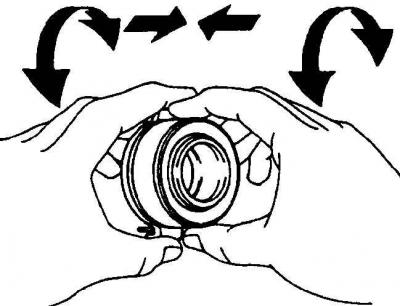
9. The working surface of the bearing acting on the pressure spring must be smooth, without cracks, local corrosion or wear (the arrows indicate the directions in which the condition of the release bearing should be checked).
10. A faulty release bearing can be identified without removing it from the car, for which it is necessary to press the clutch pedal with the engine running. If additional noise appears when pressing the clutch pedal, then the release bearing is faulty and must be replaced.
Visitor comments