



Contents: Removal ↓ Installation ↓
Oil pan and oil pump of diesel engine
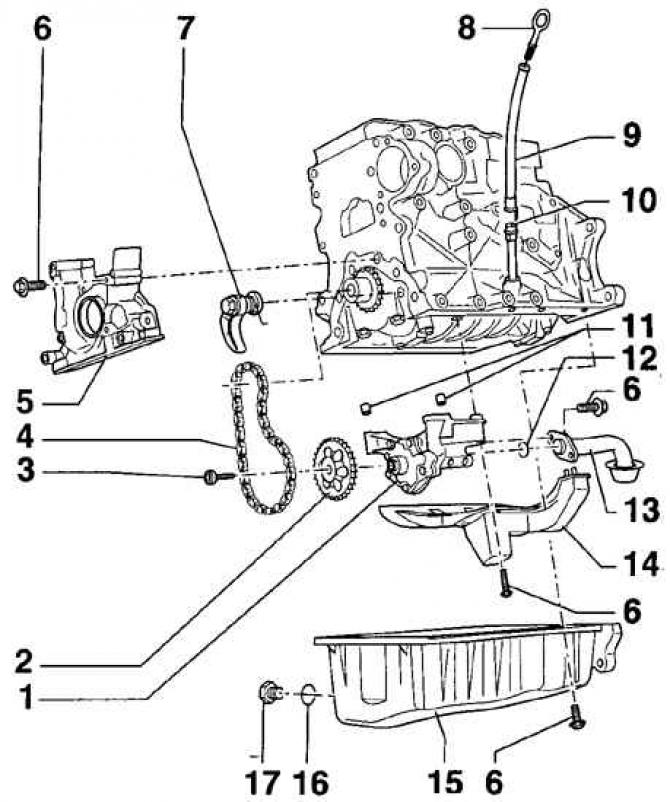
- 1 - oil pump;
- 2 - oil pump sprocket;
- 3 - bolt, 25 Nm;
- 4 - chain;
- 5 - front cover with sealing ring. The cover is installed on the sealant VW-D 176404A2. The front crankshaft sealing ring is installed in the cover;
- 6 - bolt, 15 Nm;
- 7 - chain tensioner, 15 Nm;
- 8 - dipstick for measuring engine oil level;
- 9 - inlet pipe;
- 10 - guide pipe;
- 11 - oil pump guide bushings;
- 12 - O-ring round section;
- 13 - oil intake pipe;
- 14 - oil deflector;
- 15 - oil pan. The oil pan is installed using VW-D 176404A2 sealant;
- 16 - O-ring. A new O-ring must be used when installing;
- 17 - oil drain plug, 30 Nm
Diesel engine oil filter
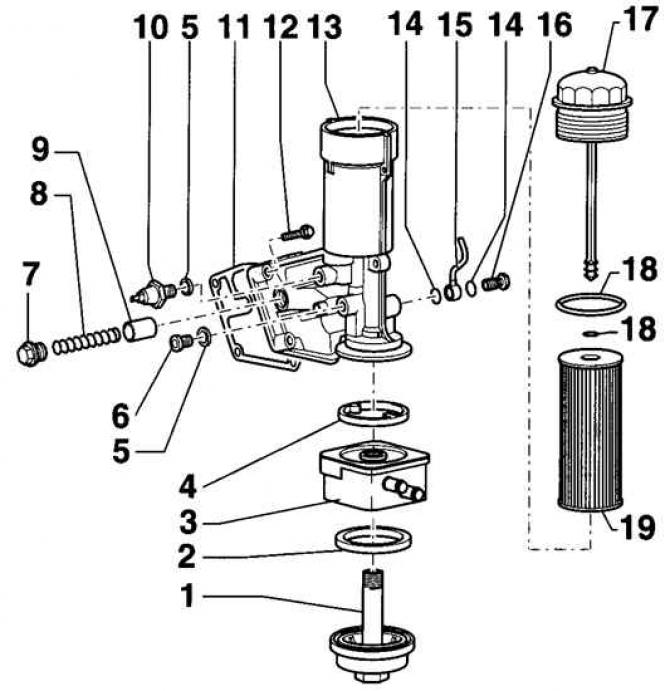
- 1 - threaded plug, 25 Nm;
- 2 - seal;
- 3 - oil heat exchanger. If there is a large amount of shavings in the engine oil, this indicates scoring in the engine and the need to replace the oil heat exchanger;
- 4 - seal. The seal is installed in the groove of the heat exchanger;
- 5 - sealing ring. If there are any defects, a new sealing ring must be used;
- 6 - threaded plug, 10 Nm;
- 7 - screw plug;
- 8 - 5 bar pressure reducing valve spring;
- 9 - plunger of the pressure reducing valve for 5 bar;
- 10 - oil pressure sensor, 25 Nm (gray color);
- 11 - seal;
- 12 - bolt, 15 Nm + tighten by 90°. A new bolt must be used during installation. First, the upper left and lower bolts are screwed in, after which all four bolts are tightened to the required torque;
- 13 - Oil filter holder;
- 14 - sealing ring;
- 15 - Oil supply line to turbocharger (TDI);
- 16 - hollow screw, 20 Nm;
- 17 - cover, 25 Nm;
- 18 - O-ring round section;
- 19 - oil filter element
Removal
1. Remove the lower engine splash shield.
2. Drain the engine oil by loosening the oil drain plug about half a turn. Place a container to drain the oil under the drain plug and unscrew the plug completely. If necessary, apply pressure to the plug as you unscrew it to prevent the oil from leaking prematurely.
3. When the oil has completely drained, screw the oil drain plug back in and tighten it to a torque of 30 Nm.
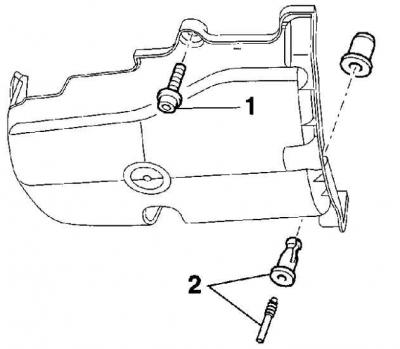
4. If present, remove the additional noise-insulating casing of the oil pan and engine. To do this, unscrew the bolt (1) and remove the expansion pistons (2) from the rubber sockets.
5. Remove two or three bolts securing the oil pan to the gearbox housing.
6. Unscrew the bolts with a wrench (for example HAZET 2528-10) and remove the oil pan from the cylinder block.
Installation
1. Using a plastic or wooden scraper, scrape the old gasket off the surface of the cylinder block that mated with the oil pan.
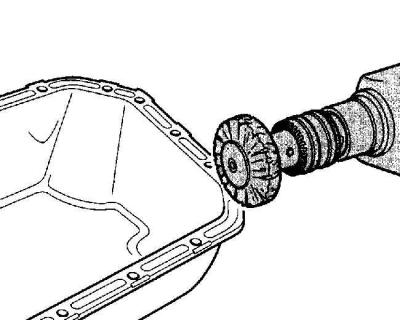
2. Using a rotating wire brush attached to a power drill, clean the sealant from the oil pan.
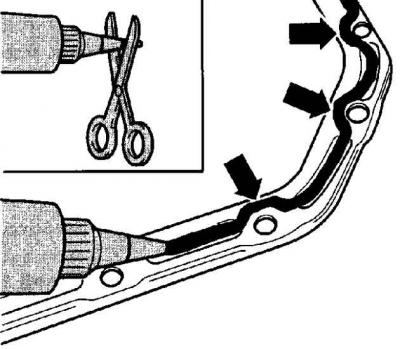
3. Apply a 3mm bead of VW-D 176 404 A2 sealant to the mating surface of the oil pan (the places where the sealant should be applied are indicated by arrows).
Warning: After applying a layer of sealant to the oil pan, the oil pan must be installed within 5 minutes. The drying time of the sealant is 30 minutes, and only then can engine oil be poured into the engine.
Warning: The sealant layer should only be 3mm in diameter, as if the sealant layer is too thick, excess sealant will get into the oil and may block the mesh filter.
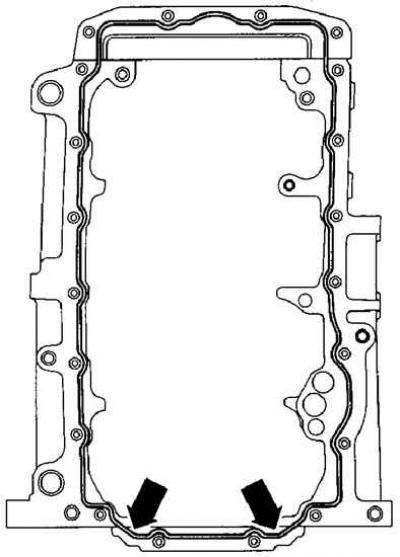
4. You can also apply a layer of sealant to the mating surface of the cylinder block (the places where the sealant should be applied are indicated by arrows)
5. Install the oil pan onto the engine block and secure it with bolts, tightening them by hand.
[The text is copied from this portal: www.VWmanual.ru]
6. Screw in the oil pan mounting bolts to the gearbox housing and tighten them to a torque of 40 Nm.
7. Tighten the oil pan mounting bolts crosswise to 10 Nm, then tighten all bolts in the same sequence to 15 Nm.
8. Install the additional soundproofing cover of the oil pan and engine and secure it with the bolt and expansion pins.
9. Fill the engine with motor oil.
10. Install the lower engine compartment splash shield.
Visitor comments