



2. Visually inspect the ball joint dust boots and rack and pinion steering gear boots for cracks, wear, and aging. Any wear on these boots will result in loss of lubricant and entry of water and dirt, which will cause rapid wear of the ball joints or steering gear.
3. Check the power steering hoses for wear or deterioration, and the pipes and hose connections for leaks. Also pressure test the steering gear rubber boots for signs of leakage, which would indicate a damaged steering seal.
4. Raise the car with a jack, grab the wheel with your hands at the 6 and 12 o'clock positions and try to rock it in a vertical plane. Very slight play in the wheel is acceptable, but if the play is large enough, further inspection is necessary to determine the cause.
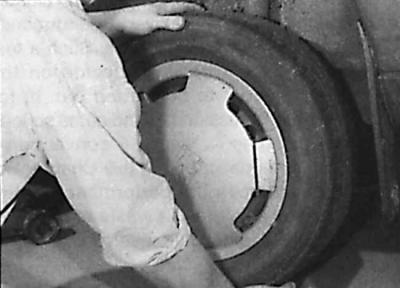
5. Continue pumping the wheel while the assistant applies the foot brake. If the play is eliminated or significantly reduced, the hub bearings are likely damaged. If the play is still significant with the brake applied, there is wear in the suspension joint and mount.
6. Now take the wheel at the 9 and 3 o'clock positions and try to rock it horizontally. The presence of play in the horizontal plane can be caused by wear of the hub bearing or the ball joints of the steering rod. If the outer or inner ball joint is worn, the play will be obvious.
Visitor comments