



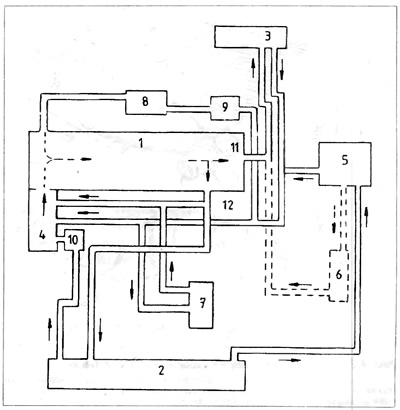
Figure 2.1. Cooling system diagram
1 - engine, 2 - radiator; 3 - stove; 4 - water pump: 5 - equalizing tank; 6 - Automatic transmission oil cooler; 7 - engine oil cooler; 8 - turbocharger; 9 - coolant pump; 10 - thermostat; 11 - outlet nipple; 12 - outlet nipple
Two outlet fittings are screwed to the head. Hot coolant enters the heater through fitting 11 screwed above the flywheel (the heater valve is open). Liquid flows out of the stove through pipe 15 (figure 2.5) into water pump 4.
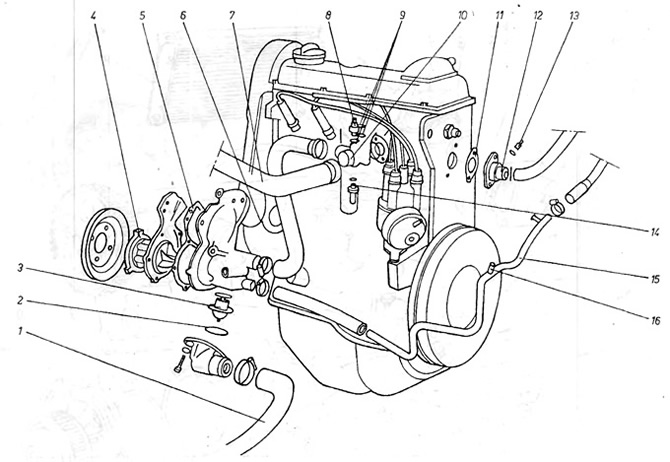
Figure 2.5. Cooling system - 1.6 and 1.8 l engines
1 - radiator/water pump hose; 2 - thermostat cover washer; 3 - thermostat; 4 - front cover with blades; 5 - gasket; 6 - input channel into the engine housing; 7 - head/radiator pipe; 8 - thermal switch; 9 - gasket; 10 - outlet fitting on the radiator; 11 - gasket: 12 - outlet fitting from the head; 13 - temperature sensor; 14 - thermal switch; 15 - return pipe from the heater; 16 - connection point of the pipe from the expansion tank
Through the nipple 12, screwed to the head on the spark plug side, the coolant flows directly into the water pump (when the heater valve is closed).
In the cooling system, there are two liquid circulation circles - a small and a large circle. In the small circle, the liquid circulates as follows: water pump - housing cat. - head channels - nipple 12 - water pump. If the heater valve is open, the small circle increases by a parallel-connected heater circuit.
The original article is available on the website VWMANUAL
The large circle is switched on when the coolant heats up to a temperature of 37-102°C. Then the thermostat opens and the water starts to circulate as follows: water pump-housing and head channels-spark plug side nipple-upper rubber hose-radiator-lower rubber hose-thermostat-water pump (see fig 2.1).
The air passing through the radiator takes away the heat of the coolant, and the cooled liquid flows to the bottom of the radiator. If necessary, cooling is enhanced by an electric fan.
When the cooled liquid drains to the bottom of the radiator, it then flows into the water pump and a new cooling cycle begins.
The operation of the electric fan is controlled by a thermal switch 14 (figure 2.3), located on the left side of the radiator.
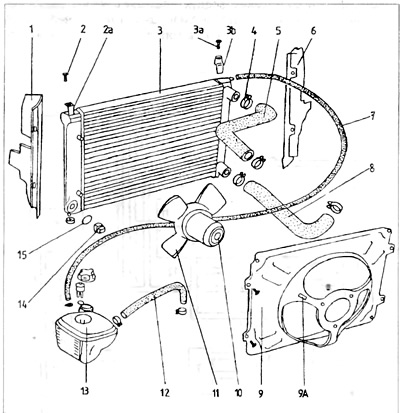
Figure 2.3. Cooling system - 1.6 and 1.8 l engines
1 - left cover; 2 - bolt securing the radiator; 2a - permanent mounting bracket; 3 - radiator, For - fastening bolt; 3b - removable bracket; 4 - pressure belt; 5 - head/radiator pipe; 6 - right cover; 7 - expansion tank/radiator pipe; 8 - Lower radiator/water pump hose; 9 - Fan cover; 9a - fastenings of wires supplying the radiator; 10 - fan motor; 11 - fan blades; 12 - expansion tank pipe/heater pipe; 13 - equalizing tank; 14 - radiator thermal switch; 15 - sealing ring (o-ring)
In carburetor engines, the drive manifold is heated to increase fuel evaporation.
Pipe 14 (Fig. 2.4) allows coolant to flow from fitting F to the drive manifold.
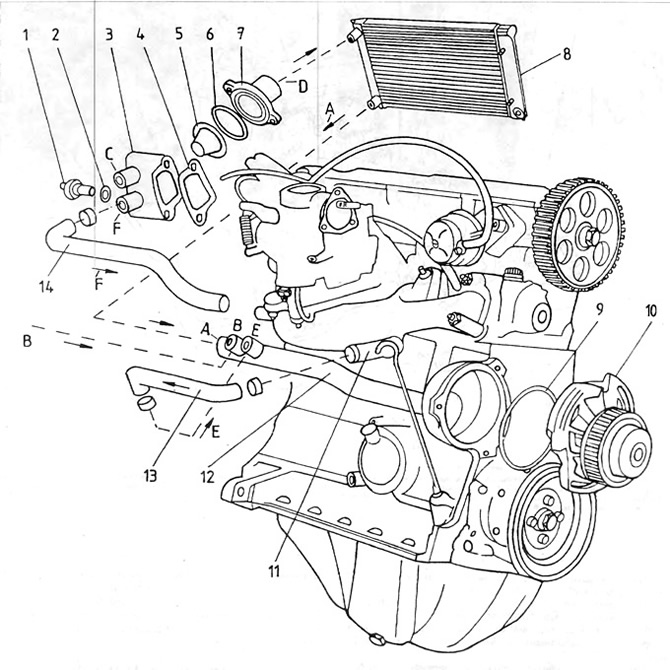
Figure 2.4. Cooling system - 1.1 and 1.3 l engines
1 - thermal switch 2 - gasket; 3 - thermostat housing; 4 - gasket; 5 - thermostat; 6 - cover gasket; 7 - thermostat cover; 8 - radiator; 9 - water pump gasket; 10 - water pump; 11 - manifold outlet fitting; 12 - metal tube; 13 - elastic hose; 14 thermostat housing/head pipe; A - entrance to the metal tube from the lower radiator pipe; B - entrance to the metal tube from the stove; C - output from the thermostat housing; D - output from thermostat to radiator; E - input into the metal tube from the drive manifold; F - output from the thermostat housing to the drive manifold
After releasing heat in it, the coolant flows through pipe 13 into fitting E and then through pipe 12 into water pump 10.
In 1.6 diesel engines, the drive manifold is not heated to increase cylinder filling.
There is less oxygen per unit volume in heated air than in cold air. The less oxygen, the less fuel is burned, and the less power is developed by the engine.
Visitor comments