



Coolant level
The coolant level should be checked at least once a week and before long trips. Check when the engine is cold.
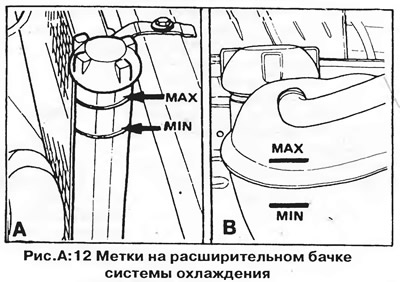
The fluid level should be between the "MIN" and "MAX" marks (figure A:12) on the translucent wall of the expansion tank or inside the filler neck of the radiator.
To add coolant, unscrew the expansion tank/radiator cap. When adding coolant, use a mixture of the same composition as that in the cooling system. The proportions of the water-antifreeze mixture are listed below.
NOTE: If you frequently need to add coolant, carefully inspect the system for leaks. The coolant should be replaced every two years.
Antifreeze
Since antifreeze has a lower freezing point and a higher boiling point than water, it is recommended to use it constantly to protect the engine from freezing and overheating. In addition, automotive antifreezes contain corrosion inhibitors that prevent internal corrosion of the cooling system parts.
During the cold season, it is necessary to add antifreeze to the system. The proportions for mixing antifreeze with water are specified in the section "Technical data" and depend on climatic conditions and the antifreeze manufacturer's recommendations. The total amount of antifreeze in the mixture should not be less than 30% of the volume.
The original article is available at (VWManual.ru)
Before filling the system with antifreeze, carefully check the condition of the hoses, clamps and connections of the system. After filling the liquid, warm up the engine to operating temperature and make sure there are no leaks. It is recommended to attach a plate with the date of filling the system to the front panel.
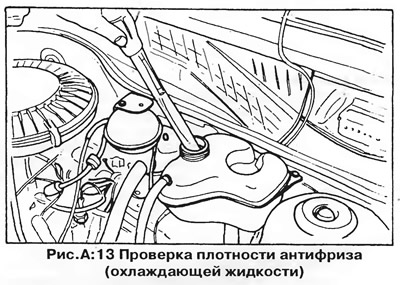
Measure the concentration of antifreeze with a special hydrometer (figure A:13). At a concentration of 50% antifreeze, its density is 1.073.
The coolant should be replaced and the system flushed every two years, since the effectiveness of anti-corrosion additives decreases with prolonged use.
NOTE: When using sealing compounds in the cooling system, the density of the antifreeze may change.
Checking the condition of the hoses
Periodically (especially before the onset of winter and filling the system with antifreeze) inspect the cooling system hoses and connections to detect any fluid leaks in a timely manner.
When inspecting hoses and connections, pay attention to the presence of cracks, abrasions, delamination of hoses, ruptures or softening of rubber. Replace damaged hoses.
Check the condition of the clamps holding the hoses. Tighten and replace the clamps if necessary.
Visitor comments