



Contents: Replacing brake pads ↓ Removal and installation brake drums ↓ Removal and installation wheel…↓
Replacing brake pads
Brake pads should only be replaced in pairs on both wheels at the same time using pads of the specified brand.
For removal (fig. 7-14 and 7-15) raise the rear of the vehicle, place it on stands and remove the rear wheels. Remove the brake drum as shown below. Use pliers to remove the lock washers with the guide springs.
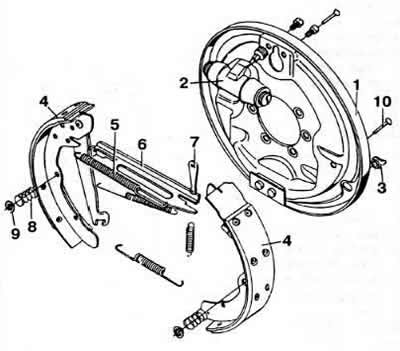
Fig. 7-14. Rear wheel drum brake mechanism parts:
1 - brake shield;
2 - wheel cylinder;
3 - inspection hole plug;
4 - brake shoe;
5 - tension spring;
6 - expansion bar;
7 — automatic clearance adjustment mechanism bar between the pads and the drum;
8 - guide spring;
9 - lock washer;
10 - support finger.
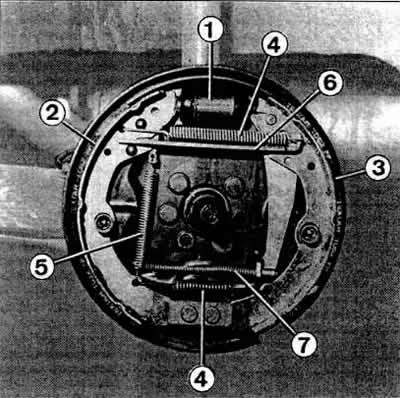
Fig. 7-15. Rear wheel drum brake mechanism:
1 - wheel cylinder;
2 - brake shoe;
3 - brake shoe release;
4 - tension spring;
5 — spring of the mechanism for automatic adjustment of the gap between the pads and the drum;
6 - expansion bar;
7 — parking brake drive cable.
Remove the brake shoes from the lower support by hand. Remove the lower tension spring. Disconnect the parking brake cable from the lever.
Using pliers, disconnect the tension spring from the automatic clearance adjustment mechanism bar between the shoes and the drum and the tension spring. Remove the shoes from the drum. Clamp the expansion bar with the brake shoes in a vice and disconnect the pressure spring.
When removing the pads, hold the wheel cylinder pistons in place with special pliers or wire. To install, attach the pressure spring and place the brake shoe on the expansion bar. Install the bar of the automatic clearance adjustment mechanism between the pads and the drum with the protrusion towards the brake shield. Install the brake shoe with the parking brake actuator lever on the expansion bar. Attach the upper tension spring. Attach the parking brake actuator cable to the lever. Install the ends of the brake shoes on the wheel cylinder pistons. Attach the lower tension spring. Install the brake shoes in the lower support. Attach the spring to the automatic clearance adjustment bar. Install the guide springs with lock washers. Install the brake drum and adjust the clearance in the hub bearings as specified in the section "Rear suspension" Press the brake pedal once fully to set the brake pads to the working position.
Removal and installation brake drums
Replace brake drums in pairs only. Raise the rear of the vehicle, place it on stands and remove the rear wheels. Using a screwdriver inserted through the hole for the wheel mounting bolt, press the automatic clearance adjustment bar upwards. Remove the hub cap. Remove the cotter pin and the hub nut toothed lock. Unscrew the hub nut and remove the washer. Remove the inner race of the hub bearing. Remove the brake drum. Install the brake drum in the reverse order of removal, taking into account the following:
- before installing the drum, apply universal grease to the hub:
- adjust the clearance as specified in the "Rear Suspension" section and install a new hub nut cotter pin.
Removal and installation wheel cylinders
Raise the rear of the vehicle, place it on stands and remove the wheels. Remove the brake drum as described above. Remove the brake shoes as described above. Disconnect the brake hose and plug its hole. Loosen the wheel cylinder mounting bolts and remove the cylinder. Clean the parts and check their condition. Replace damaged or worn parts.
Install the wheel cylinder in place. Screw in and tighten the cylinder mounting bolts. Connect the brake hose. Install the brake shoes and drum.
Remove air from the brake hydraulic system as follows: indicated below.
Visitor comments