



- Checking the brake fluid level.
- Checking the thickness of the brake pads on the front and rear wheels.
- Checking the condition and tightness of pipelines and hoses.
- Replacing brake fluid.
- Check your tires, including the spare tire. Check the tread depth and tire pressure, tire wear and damage.
- Tire repair kit. If available, check the expiration date and replace with a new one if necessary.
- Tire condition monitoring unit (if available). Perform the setup.
Checking the brake fluid level
No special devices or tools are required.
Materials needed: FMVSS 116 DOT 4 specification brake fluid.
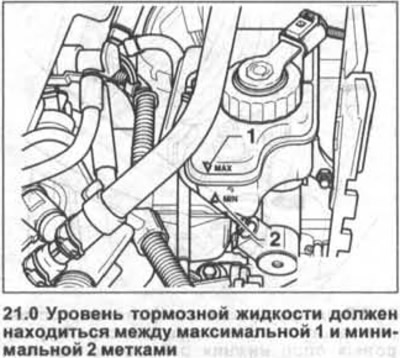
The brake fluid reservoir is located in the engine compartment.
The tank is transparent, so the fluid level can be checked visually at any time.
In addition, too low a brake fluid level is indicated by a light on the instrument panel.
However, it is still recommended to regularly check the fluid level in the tank visually, each time you check the engine oil level.
The brake fluid level should be between the maximum I and minimum 2 marks (see illustration 21.0). Fill only with new brake fluid meeting FMVSS 116 DOT 4 specification.
Attention! Due to wear of the brake pads of disc brakes, a slight decrease in the brake fluid level occurs. This is normal and does not require refilling the fluid in the reservoir. For example, the brake fluid level in the reservoir may drop almost to the minimum mark if the brake pad linings have reached the minimum permissible thickness. In this case, refilling the brake fluid in the reservoir is also not required.
If the brake fluid level in the reservoir drops over a short period of time or the level falls below the MIN mark, this indicates fluid loss.
In this case, it is necessary to immediately find the leak location. For safety reasons, it is better to have the brake system checked in a specialized workshop.
Visitor comments