



Contents: Removal ↓ Installation ↓
Removal
Install the brake pads to their original position.
Remove the brake drum.
Using pliers, compress the pressure spring and turn the pin so that it can be removed.
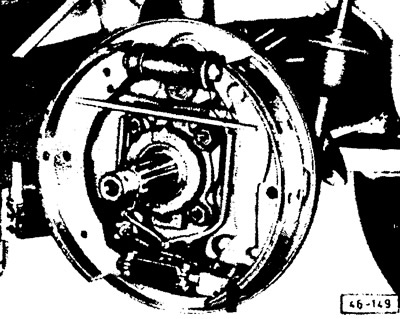
Remove the brake pads manually and unhook the parking brake cable.
Installation
Run the threads of the adjusting nuts and bolts, lightly lubricate them.
Please note: Brake pads come in different thicknesses. The nominal thickness of the brake pads used in the vehicles described is 3.8-4.0 mm. If the brake drum has been rebored, thicker pads are required (4.3-4.5 mm).
Attention! Brake pads are usually replaced on all suspensions (front or back). For safety reasons, only brake pads of the same type should be used.
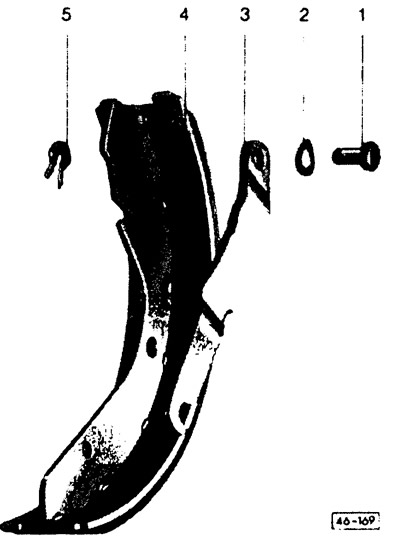
1 - mounting pin; 2 - wave washer; 3 - parking brake lever; 4 - brake shoe; 5 - stopper
When replacing brake pads, secure the parking brake lever (see photo) with a new installation pin.
Install both brake shoes with the pressure plate, upper return spring and clamp into the piston grooves. The double cutout of the pressure plate must be directed towards the shoe. Connect the parking brake cable.
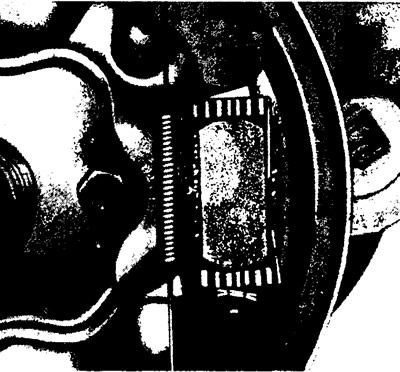
When installing the brake pads into the piston grooves, ensure that the pistons are positioned correctly. The grooves should be directed upwards.
Using pliers, install the lower return spring. Install the pressure spring with pin and plate. At the same time, hold the pin from behind and install the spring plate using pliers.
Reinstall the brake pads completely.
Clean and install the brake drum. Caution! If the wheel brake cylinder was removed, bleed the brake system (see section "Bleeding the brake system").
Adjust the service and parking brakes.
Visitor comments