



Air is removed from the brake system by bleeding the system using the brake pedal. An assistant is required to perform the bleeding procedure.
When handling brake fluid, keep the following in mind:
- brake fluid is poisonous and caustic. It should not come into contact with the car body;
- brake fluid is hygroscopic, meaning it absorbs moisture from the air. Therefore, the liquid should only be stored in an airtight container;
- brake fluid that has already been used in the brake system cannot be refilled. When bleeding the brake system, you should also use only fresh fluid;
- brake fluid should be replaced every 2 years.
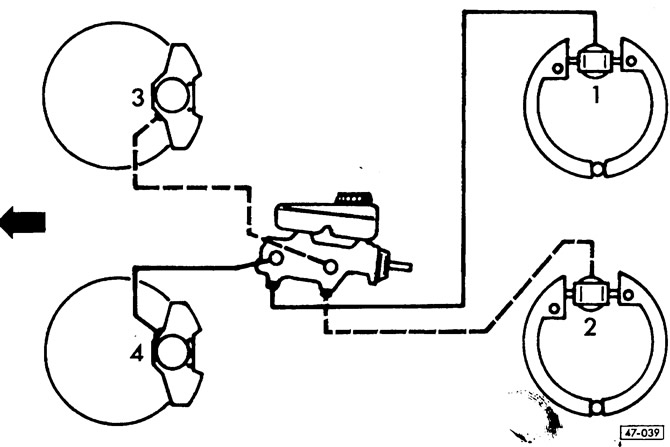
If air needs to be removed from the entire brake system, then it is necessary to bleed each wheel brake cylinder separately. If only one brake cylinder is being repaired or replaced, then it is sufficient to remove air from it only.
The pumping sequence is as follows:
- rear right wheel brake cylinder;
- rear left wheel brake cylinder;
- front right wheel brake cylinder;
- front left wheel brake cylinder.
Pumping
Remove the dust cap from the brake cylinder bleed valve, connect a clean transparent tube to the valve, and insert the other end into a bottle half-filled with brake fluid so that the end of the tube is below the fluid level.
Have your assistant press the brake pedal until you feel strong resistance. After this, press the pedal all the way down and hold it with your foot without releasing it.
Using a wrench, loosen the air bleed valve on the brake cylinder approximately half a turn. Make sure the end of the tube in the bottle remains below the fluid level at all times.
As soon as the fluid pressure drops, immediately tighten the valve.
Repeat the bleeding process until no more air bubbles appear in the brake fluid flowing into the bottle.
After bleeding, disconnect the tube from the air bleed valve and put the dust cap on the valve.
Bleed the remaining wheel brake cylinders.
Caution! While bleeding the brake fluid, monitor the brake fluid level in the expansion tank. The level should not drop too low, otherwise air may enter the system through the tank. If the level has dropped significantly, add fresh brake fluid.
After removing air from the brake system, fill the expansion tank with brake fluid to the "max" level.
Visitor comments