
English Русский
Български
Беларускі
Український
Српски
Hrvatski
Română
Polski
Slovenský
Magyar
  |  Articles  |  Sitemap  |  Contacts  |    |
Car maintenance Ford Car maintenance Hyundai Car maintenance Chevrolet Car maintenance BMW Car maintenance Audi Car maintenance Opel Car maintenance AvtoVAZ
VWmanual.ru


Main   Passat   Golf   Polo   Touareg   Tiguan   Sharan   Transporter   Others  
Passat B2 (1981-1988) Passat B3 (1988-1993) Passat B4 (1988-1996) Passat B5 (1996-2005) Passat B6 (2005-2010)

Checking the engine oil level (VW Passat B6)

  • Main
  • Passat
  • Passat B6
  • General information
  • Maintenance
  • Checking the engine oil level
            0


Consumption of engine oil is normal. Oil consumption can be up to 1 liter per 1000 km of vehicle mileage. Therefore, it is necessary to check the oil level in the engine crankcase regularly, preferably at each refueling and before long trips.

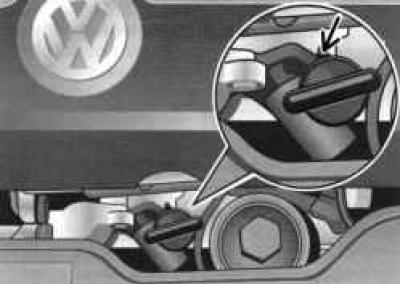
Fig. 1.70. Location of the oil dipstick cover

Fig. 1.70. Location of the oil dipstick cover


The location of the dipstick for checking the engine oil level is shown in Figure 1.70.

When measuring the oil level, the car should be level. After stopping the engine, wait a couple of minutes to allow the oil to drain into the oil pan.

Then remove the dipstick, wipe it with a clean cloth and reinsert the dipstick until it stops.
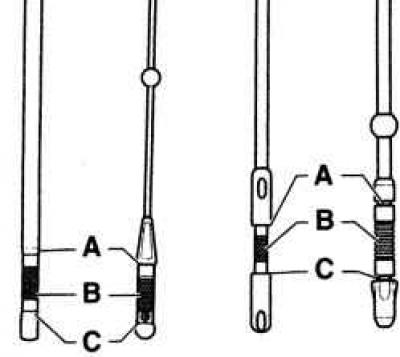
Fig. 1.71. Checking the oil level

Fig. 1.71. Checking the oil level


If the dipstick has a nose (Fig. 1.71), make sure that this nose coincides with the nose of the guide tube. Otherwise, the measurement results will be incorrect - there is a risk of engine failure.


Finally, remove the dipstick again and see what level the oil is at:

A – If the oil level is in zone A, oil should not be added.

B – If the oil level is in zone B, you can add oil. There is enough oil in the engine if its level after topping up is in zone A.

C – If the oil level is in zone C or even lower, oil must be added. It is quite acceptable for the oil level to be in the zone of mark B after topping up.

The oil level must never be higher than zone A.

Under special engine operating conditions, for example, when driving the vehicle for a long time (for 10–12 hours), the oil level should be kept within the A mark, if possible, but not higher.

Topping up engine oil


Fig. 1.72. Oil filler cap

Fig. 1.72. Oil filler cap


Unscrew the filler cap (Fig. 1.72).

Add a small amount of oil.

Wait a few minutes and check the oil level. Normally, if the oil level is in zone B, do not add more oil, otherwise you may overfill.

The oil level must under no circumstances be higher than zone A.

Otherwise, the oil will enter the engine crankcase ventilation system and be released into the atmosphere with the exhaust gases. On vehicles equipped with a catalytic converter, the oil may burn in the catalytic converter and damage it.


Close the filler cap securely and insert the dipstick all the way in. Otherwise, oil may be ejected when the engine is running.

[The article is published on this resource vwmanual]

This article is available at russian, bulgarian, belarusian, ukrainian, serbian, croatian, romanian, polish, slovak, hungarian
The text has been checked: Orlov Dmitry

Share information:

Previous articles
Motor oil
Next articles
Fuel for the car
Diesel fuel
Checking the coolant level
Filling the windshield washer reservoir with liquid
Adjusting the position of the windshield washer nozzles
Replacing windshield wipers


Similar articles from other manuals for VW cars:
Checking the engine oil level Golf 1 (1974-1984, diesel)
Checking the oil level in the manual transmission Polo 3 (1995-2003)
Checking the engine oil level (diesel engine) Touareg 1 (2002-2006)
Checking the oil level in the transfer case Tiguan 1 (2007-2015)
Checking the engine oil level and replacing it Sharan 1 (1995-2000)
Checking the engine oil level Transporter T4 (1990-2003)
Checking the engine oil level Caddy 3 (2003-2010)
Link to this page in different formats


Visitor comments


No comments yet


How much will 22 + 44 =


Passat B6 
  • General information
  • User manual
  • Maintenance
  • Petrol engine 1.6L
  • Engine repair
  • Cooling and lubrication system
  • Fuel injection system
  • Petrol engine 2.0L
  • Engine repair
  • Lubrication system
  • Cooling system
  • Fuel and exhaust systems
  • Diesel engine 2.0L
  • Engine repair
  • Cooling and lubrication system
  • Fuel and exhaust systems
  • Transmission
  • Clutch
  • Mechanical gearbox
  • Automatic gearbox
  • Drive shafts
  • Chassis
  • Wheels and tires
  • Car suspension
  • Steering
  • Brake system
  • Body
  • Exterior (external elements)
  • Electrical equipment
  • Power devices
  • Lighting and appliances
  • Electrical circuits
Passat B5 
  • General information
  • User manual
  • Weekly checks
  • Maintenance
  • Power unit
  • Engine repair
  • Cooling system
  • Fuel system (petrol)
  • Fuel system (diesel)
  • Engine management
  • Exhaust system
  • Transmission
  • Clutch
  • Car gearbox
  • Drive shafts
  • Chassis
  • Car suspension
  • Wheels and tires
  • Steering
  • Brake system
  • Body
  • Exterior (external elements)
  • Interior (internal elements)
  • Doors and covers
  • Ventilation and heating
  • Electrical equipment
  • Power devices
  • Lighting and appliances
  • Electrical circuits
Passat B4 
  • General information
  • User manual
  • Maintenance
  • Technical data
  • 8-valve engine
  • Engine repair
  • Cooling and lubrication system
  • Supply system
  • Ignition system
  • Fuel injection «Mono-Jetronic»
  • Control system «Mono-Motronic»
  • Control system «Digifant»
  • Control system «Simos»
  • 16-valve engine
  • Engine repair
  • Cooling and lubrication system
  • Fuel injection «K-Jetronic»
  • Control system «KE-Motronic»
  • Control system «Digifant»
  • Diesel engine
  • Engine repair
  • Cooling and lubrication system
  • Power and control system
  • Turbocharging system
  • Digital control system
  • Transmission
  • Clutch
  • Manual gearbox
  • Hydromechanical gearbox
  • Front wheel drive
  • Chassis
  • Car suspension
  • Steering
  • Brake system
  • Body
  • Body elements
  • Electrical equipment
  • Power devices
  • Lighting and appliances
  • Electrical circuits
Passat B3 
  • General information
  • User manual
  • Driving Tips
  • Maintenance instructions
  • Technical data
  • Power unit
  • Engine repair
  • Ignition system
  • Lubrication system
  • Cooling system
  • Supply system
  • Petrol injection system
  • Diesel engine
  • Exhaust system
  • Transmission
  • Clutch
  • Car gearbox
  • Chassis
  • Suspension
  • Steering
  • Brake system
  • Wheels and tires
  • Body
  • Exterior
  • Interior
  • Heating system
  • Electrical equipment
  • Power devices
  • Lighting system
  • Equipment and devices
  • Wiper system
  • Electrical circuits
Passat B2 
  • General information
  • Introduction to instructions
  • User manual
  • Power unit
  • Engines 4-cylinder FZ
  • Engines 4-cylinder
  • Engines 5-cylinder
  • Transmission
  • Clutch
  • Four-speed gearbox
  • Five-speed gearbox
  • Hydromechanical gearbox
  • Front wheel drive
  • Chassis
  • Front suspension
  • Rear suspension
  • Steering
  • Brake system
  • Body
  • Body elements
  • Electrical equipment
  • Equipment and devices
  • Electrical circuits
VWmanual.ru © 2016-2026 | Mobile version | News and articles | Sitemap: EN BG BY UA RS HR RO PL SK HU | Write message | Site search
Passat B2 • Passat B3 • Passat B4 • Passat B5 • Passat B6 • Golf 1, diesel • Golf 1, petrol • Golf 2, petrol • Golf 2 • Golf 3 • Golf 4 • Golf 5 • Polo 3 • Polo 4 • Touareg 1 • Tiguan 1 • Sharan 1 • Transporter T3 • Transporter T4 • LT 28 • LT 2D • Beetle • Caddy 3 •
Our website uses cookies to ensure functionality and convenience.