



Contents: Examination (figure P:22) ↓ Replacement ↓
Examination (figure P:22)
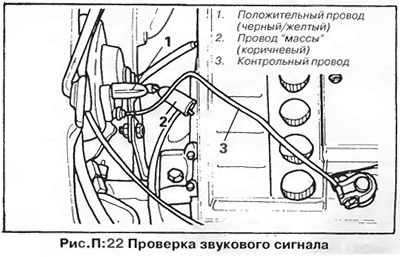
If the horn stops working, first check the fuse. The easiest way to do this is to engage reverse gear with the ignition on - if the reversing lights come on, the fuse is OK. Do not replace a blown fuse until the cause of the malfunction has been identified and corrected.
If the horn starts to sound constantly or turns on when you turn the steering wheel, disconnect the wire from the battery and remove the corresponding fuse.
Troubleshooting is carried out in the following order:
1. Disconnect the ground wire from the battery.
2. Press the horn button off the steering wheel and disconnect the wires from the button. Remove the three screws that secure the horn switch to the button and test the switch. If the switch is OK, install it on the button and the button on the steering wheel.
3. Check the gap between the lower edge of the steering wheel hub and the upper edge of the steering column switch - the gap should be 2-4 mm. Insert a new fuse (if it was removed) and check the signal operation.
4. If the signal does not work, check the signal connection to the ground - to do this, disconnect the brown wire and connect the released contact to the ground with a control wire (figure P:22). If the signal does not work, then the signal is faulty or there is no voltage supplied to the signal.
5. Check the voltage supply to the horn by connecting a test lamp between the black/yellow wire and the ground - if the lamp lights when the horn button is pressed, the horn itself is faulty. If the lamp does not light, the wire connecting the horn to contact A11 of the relay and fuse board is broken - find and fix the break.
Replacement
To remove the horn, disconnect the wire from the battery, then disconnect the wires from the horn (remember the color and order of the wire connections), unscrew the mounting bolts and remove the horn.
When installing the horn, make sure that its body does not touch the car body after tightening the bolts.
Visitor comments