



Fuses (figure P:6)
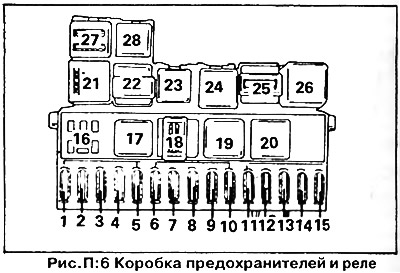
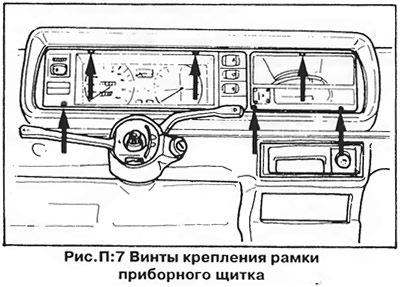
The fuses are located on the left side of the instrument panel. To access the fuses, remove the three screws securing the shelf to the instrument panel and remove the shelf. The fuses are numbered 1 through 15, starting from the left (see section "Technical data"). A blown fuse can be identified by a break in the metal strip. Before replacing a fuse, disconnect all circuits it protects. Remove the fuse box cover and carefully remove the defective fuse, insert a new one (necessarily of the same denomination) and check the operation of the relevant electrical circuit. If the fuse immediately blows again, find out and eliminate the cause of the malfunction. Do not install a fuse rated for a higher current or repair a blown fuse with wire or foil - this may lead to overheating of the wires and a fire.
Relay
Some electrical circuits are switched on using relays. Relays are located at the top of the fuse box behind the instrument panel and are plugged into individual sockets (figure P.6). To replace a relay, simply pull the relay out of its socket and insert a new one in its place - relays cannot be repaired or disassembled. To test a relay, replace it with a known good one (for the purpose of the relay, see the section "Technical data").
Direction indicator flasher
The combined turn signal/hazard warning flasher relay is also located on the fuse box (figure P:7). If necessary, replace the breaker by removing it from the holder and inserting a new one.
Visitor comments