



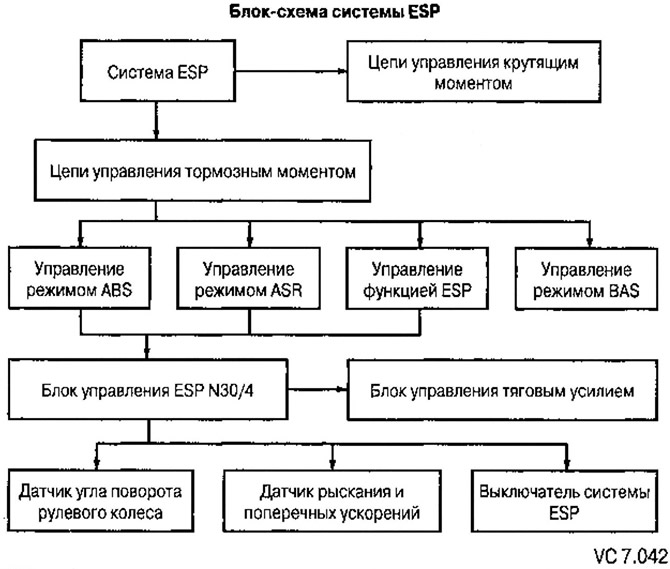
The ESP system is based on the sensitive elements (sensors) and actuators of a conventional anti-lock braking system (ABS), as well as on elements of the engine management system.
The main functions of the general stability control system are as follows.
- The Electronic Stability Program (ESP) function has the highest priority in terms of its impact on the vehicle compared to other functions of the overall system. The ESP system ensures vehicle stabilization on the trajectory of movement when cornering and stabilization of the vehicle's straight-line movement in the presence of deviations from the course.
- function of a conventional ABS automatic braking system (Antitock Brake System), which is designed to prevent the wheels from locking during vehicle braking. In this case, when braking, the speed sensors of all wheels measure and compare the intensity of deceleration of wheel rotation. The system reduces the braking force in the branch of the hydraulic brake system that corresponds to the wheel experiencing the most intense deceleration.
- ASR anti-slip function (Acceleration Slip Regulation) controls the drive wheels. If there is accelerated rotation of one of the drive wheels during acceleration, the system brakes this wheel by applying precisely calculated pressure to the brake cylinder,
- ETS traction control function (Electronic Traction System).
- Forced idle speed control function (engine braking) on the slippery road MSR (Engine Braking Regulation). Regulation is carried out by means of the engine management system (CDI) by reducing the braking torque transmitted from the engine to the drive wheels. This subsystem prevents the drive wheels from slipping when the accelerator pedal is released.
- Electronic brake force distribution function EBV (Electronic brake force distribution). By performing this function, the system distributes the braking force between the front and rear wheels. The system operates similarly to ABS. However, in EBV mode, the system reacts to changes in wheel speed earlier than in ABS mode. This feature is necessary because the deceleration rate of the front and rear wheels varies when the vehicle is underloaded.
- Function to increase the braking force during emergency braking BAS (Brake Assist system). When the brake pedal is pressed hard (sharply), which the system evaluates as the driver's desire to brake as quickly as possible, BAS increases the pressure in the brake cylinders (while simultaneously controlling the braking process with the ABS system).
How the ESP system works
Example A
The car understeers when turning left.
In this case, the front wheels are carried beyond the required trajectory to the outside of the turn.
(The original information is posted on the resource: «www.VWManual.ru»)
Trajectory correction is achieved by precisely calculated braking of the rear left wheel.
Example B
The car oversteers on a left turn.
The rear wheels are pulled to the outside of the turn.
Trajectory correction is achieved by precisely calculated braking of the front right wheel.
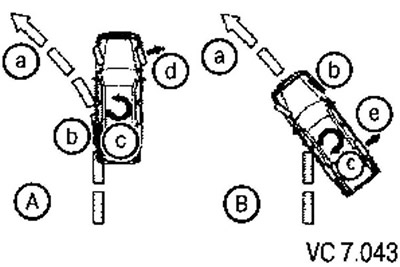
Scheme of correction of the car's trajectory when passing a turn:
a. Desired direction of movement
b. The wheel to which the corrective braking force is applied
c. Torque applied to the vehicle as a result of corrective braking
d. Front wheel slippage due to centrifugal force
e. Rear wheel skidding due to centrifugal force
Interaction of systems
The ESP function is the highest priority function among those listed due to the fact that its action is the most universal. This is expressed in the fact that in order to stabilize the car on the trajectory of movement, the system in ESP mode uses sensors and actuators of all the listed systems (ABS, ASR, MSR and EBV).
Visitor comments