



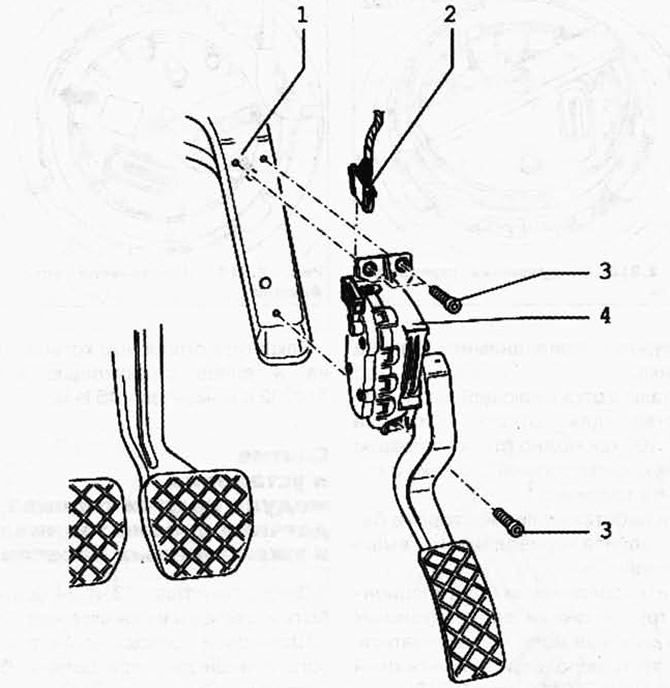
Fig. 2.319. Accelerator pedal components:
1 - support bracket; 2- plug; 3 - bolt 10 Nm; 4 - accelerator pedal position sensor G79 with accelerator pedal position sensor 2 G185.
Operating principle of the electronic accelerator drive
The accelerator pedal position is transmitted to the engine control unit via two accelerator pedal position sensors (variable resistors; installed in one housing), which are connected to the accelerator pedal.
Accelerator pedal position (depends on the driver's actions) is the main input value for the engine control unit.
The throttle valve is driven by an electric motor (throttle servo) in the throttle control module, namely across the entire speed and load range.
The throttle valve is actuated by a servo drive using signals from the engine control unit.
With the engine off and the ignition on, the engine control unit controls the throttle servo exactly in accordance with the data from the accelerator pedal position sensor. This means that when the accelerator pedal is pressed halfway, the servo opens the throttle valve equally; in this case, the throttle valve will also be open approximately halfway.
With the engine running (under load) the engine control unit can open and close the throttle valve independently of the accelerator pedal position sensor.
For example, the throttle valve may already be fully open, although the accelerator pedal is only half-depressed. The advantage of this scheme is that throttle losses are prevented at the throttle valve.
In addition, under certain loads, significantly better performance is observed in terms of harmful emissions and fuel consumption.
The engine control unit analyzes the amount of torque required for various components (e.g. air conditioning, automatic transmission, ABS/ESP...), calculates the optimal throttle opening angle for a given situation.
Visitor comments