



Contents: Checking the grounding serviceability ↓ Checks for breakage ↓ Localization of the break point ↓ Wires, Fuses and Relays ↓ Fusible links ↓ Circuit breakers (thermal relays) ↓ Replacing fuses ↓ Relay ↓
One method of finding a short circuit is to remove the fuse and connect a test lamp or voltmeter in its place. There should be no voltage in the circuit. Pull the wiring while watching the test lamp. If the lamp starts to flicker, there is a short to ground somewhere in the wiring harness, possibly caused by the insulation of the wires being rubbed off. A similar check can be made for each component of the electrical circuit by turning on the appropriate switches.
Checking the grounding serviceability
This test is performed to determine the reliability of the grounding of a circuit element. Disconnect the battery and connect one of the wires of the self-powered test lamp to a known good ground point. Connect the other wire of the lamp to the wiring harness being tested or to the terminal of the electrical connector. If the lamp lights, the grounding is OK (and vice versa).
Checks for breakage
The test is performed to detect breaks in the electrical circuit. After disconnecting the power supply to the circuit, test it using a test lamp equipped with an independent power source. Connect the test lamp wires to both ends of the circuit; if the test lamp lights up, there is no break in the circuit. If the lamp does not light up, this indicates that there is a break in the circuit. In the same way, you can check the serviceability of the switch by connecting the test lamp to its terminals. When you move the switch to the "On" position, the test lamp should light up.
(The original article is available on the website www.vwmanual.ru)
Localization of the break point
When diagnosing a suspected open section of an electrical circuit, it is quite difficult to visually detect the cause of the malfunction, since inspecting the terminals for corrosion or damage to the quality of their contacts is difficult due to limited access to them (usually the terminals are covered by the housing of the electrical connector). A sharp jerk of the connector housing on the sensor or its wire harness in many cases leads to the restoration of contact. Do not forget about this when trying to localize the cause of failure of a suspected open circuit. Unstable failures may be caused by oxidation of the terminals or poor quality of contacts.
Diagnosing faults in electrical circuits is not a difficult task, provided that there is a clear understanding that electrical current is supplied to all consumers (lamp, electric motor, etc.) from the battery via wires through switches, relays, fuses, fuse links, and then returns to the battery through the car body ground. Any problems associated with electrical equipment failure can only be caused by the cessation of the supply of electric current to them from the battery or its return to it.
Wires, Fuses and Relays
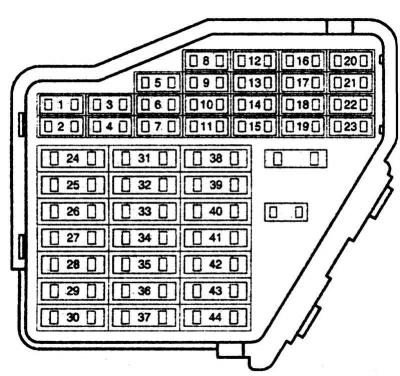
Fig. 7.1. Passat passenger compartment fuse box
Protection of the car's electrical circuits from short circuits is provided by a combination of fuses, circuit breakers and fusible links. A burnt-out fuse can be easily distinguished from a serviceable one by examining its transparent plastic housing. Carefully inspect the fuse to determine if it has burned out. If the fuse looks normal on the outside, but you still suspect that it is faulty, check the conductivity between the blade terminals protruding from its housing.
When replacing fuses, make sure that the rating of the new fuse matches the rating of the old one. Fuses rated for different amperages may look the same, so pay special attention to the markings. Replacing a blown fuse with one rated for a lower – and especially higher – amperage is undesirable. Each electrical circuit requires a different degree of protection. Make sure that the markings on the fuse body correspond to the amperage for which the corresponding circuit is rated. If the replaced fuse immediately blows, it is not wise to continue replacing it. First of all, you should identify and eliminate the cause of its blown fuse. In most cases, this is a short circuit in the electrical circuit caused by a break or damage to the wire insulation.
Fusible links
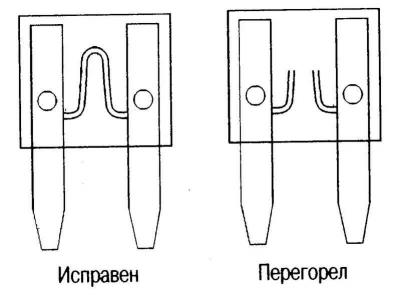
Fig. 7.2. A working and burnt-out fuse link
Some electrical circuits are protected by the inclusion of fuse links. Links are usually used to protect circuits that are not equipped with fuses, such as the ignition circuit.
Fusible links are similar to fuses in that they fail (melting) easily determined visually.
To replace the fuse link, disconnect the negative cable from the battery. Remove the burnt link and install a new one in its place. Before replacing the link, be sure to try to determine the cause of the overload that caused the link to fail.
Circuit breakers (thermal relays)
Thermal relays are used to protect components such as electric window lifters, door locks and headlight adjustments (electrocorrectors). Some circuit breakers are installed in the mounting block. The return of thermal relays to the initial state on some models is carried out automatically, i.e. when an overload occurs in the circuit, the thermal relay immediately opens, then, after cooling, returns to the initial state. If the circuit does not return to the operating position, it should be checked immediately. Normal operation of the thermal relay confirms the serviceability of the circuit. Some of the breakers are equipped with buttons for manual forced return to the initial state.
Replacing fuses
To prevent short circuits and overloads of electrical energy consumers, individual circuits are protected by fuses. Hyundai vehicles use fuses that meet the latest technical achievements, these fuses have blade contacts.
Before replacing a fuse, be sure to first disconnect the corresponding consumer.
Use a narrow screwdriver to pry the fuse box cover off.
A blown fuse is identified by a melted metal strip. The location of the fuses is shown on the inside of the fuse box cover.
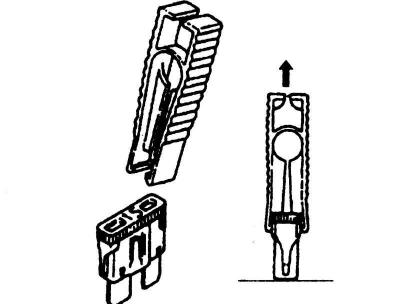
Fig. 7.3. Tweezers for replacing fuses
Remove the faulty fuse using the plastic tweezers located in the fuse box cover (Fig. 7.3).
Insert a new fuse of the same rating (amperage).
If a newly inserted fuse blows after a short time, the corresponding electrical circuit should be checked.
Never replace a fuse with wire or similar auxiliary means, as this may cause serious damage to the vehicle's electrical system.
It is recommended to always have a set of spare fuses of different ratings in the car. There is a special place for storing them in the fuse box.
The fuse rating is printed on the back of the fuse housing. In addition, the housing has a corresponding color, by which the nominal current can be determined.
Relay
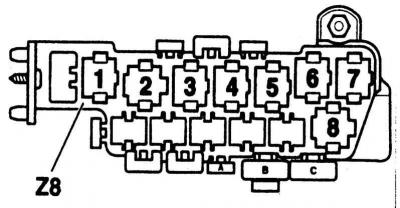
Fig. 7.4. Relay
Relays are used to supply electric current to some elements of the car's electrical equipment. A malfunction of the relay leads to the failure of the element it serves. If there is a suspicion of a malfunction of any of the relays, it must be removed and tested at a service station or in a specialized auto repair shop. A failed relay is replaced as an assembly.
Visitor comments