



Removal
Remove the crankshaft (see section "Removal, disassembly, assembly and installation of the crankshaft").
Loosen the connecting rod nuts and remove the connecting rod cover, mark the bearings.
Examination
Check the connecting rods for external damage.
The connecting rod bolts must not show any signs of impact or compression. If the bolts are damaged, replace the entire connecting rod.
When replacing one or more connecting rods, measure the weight of the old and new connecting rods, as the difference in weight between the connecting rods should not exceed 10 g. The connecting rods should be weighed without bearings.
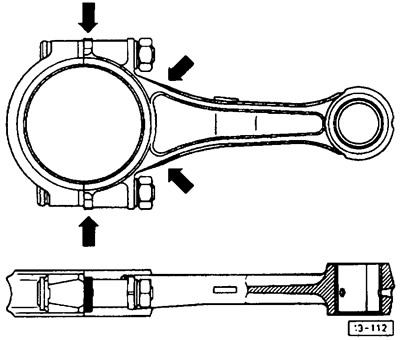
If new connecting rods have excess weight, they must be processed in strictly defined places, which are shown in the figure. By removing the "excess" metal, it is possible to achieve a weight reduction of 8 g.
Check the bushings in the upper connecting rod heads. The piston pin is inserted into the new bushing in an unheated state with light pressure from the finger.
If necessary, align the connecting rods (the work is done in the workshop).
Installation
Wash all parts in kerosene and lubricate with oil.
Install the bearings according to the marks.
Install the connecting rods.
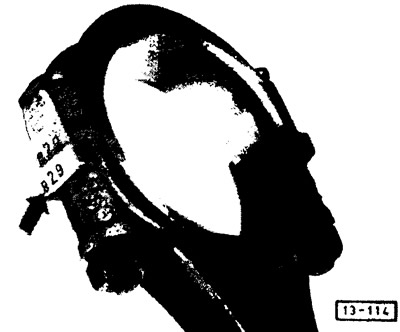
The marking numbers at the junction of the head and the connecting rod must be located on the same side.
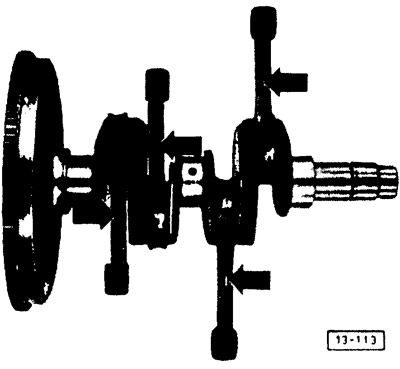
The marking on the connecting rod must be located at the top during installation (see arrows).
Secure the connecting rod caps with new nuts. Before doing this, clean the nuts from grease.
Please note: New connecting rod bolts must be used on Kafer 1200 vehicles.
Lubricate the contact surfaces of the nuts with oil and tighten the nuts to a torque of 35 Nm (3.5 kgfm).
After installation, the cranks should slide down under their own weight.
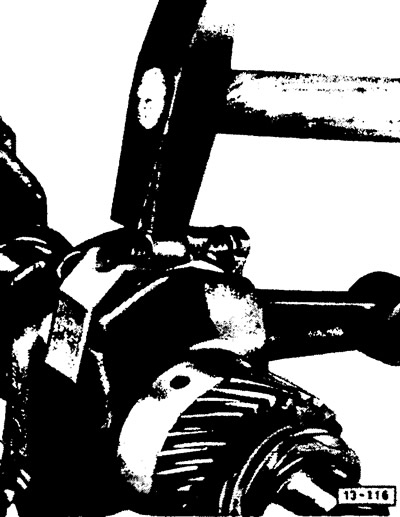
Any slight stress that may develop between the bearing halves when tightening the bolts is relieved by lightly tapping both sides of the connecting rod with a hammer.
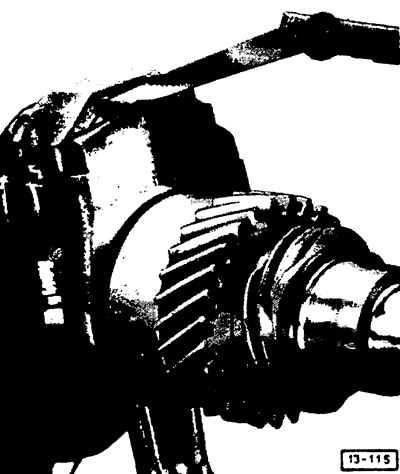
Check the connecting rod axial play using a feeler gauge. The wear limit is 0.7 mm.
Visitor comments