



Contents: Checking the level ↓ Replacing brake fluid ↓
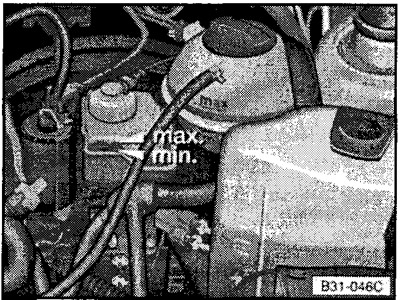
The brake fluid reservoir is located in the engine compartment on the left.
Note: On right-hand drive vehicles, the brake fluid reservoir is located on the opposite (right) side of the engine compartment.
Checking the level
The brake fluid level should be between the minimum and maximum marks on the translucent wall of the tank. A gradual, slight decrease in the level during operation due to wear of the brake pads is normal.
[The information is available on the website: vwmanual]
If the brake fluid level drops significantly in a short time or drops below the minimum mark, this indicates a leak in the brake system and a brake fluid leak. When the brake fluid level is too low, the warning light comes on. In case of a brake fluid leak, immediately contact a service station to check and repair the brake system.
Replacing brake fluid
Brake fluid is hygroscopic, i.e. it absorbs moisture from the surrounding air over time. Too much water in the brake fluid can cause damage to brake system parts from corrosion. In addition, the boiling point of the brake fluid is significantly reduced. Therefore, the brake fluid must be changed every two years!
Caution: Due to the lower boiling point of old brake fluid, under heavy load on the brakes, vapor locks may form in the hydraulic system; at the same time, braking efficiency is sharply and unexpectedly reduced.
You should use brake fluid recommended by Volkswagen (fMVSS 116 DOT 4 specification), which must be new and packaged in a hermetically sealed container.
Warning: Brake fluid is poisonous! Keep it in a tightly closed container and keep it away from children. Also, remember that brake fluid corrodes the paintwork of your car.
Replacing brake fluid requires special tools and skills, so it is best to do it at a service station.
It is recommended to replace the brake fluid as part of periodic maintenance (service work).
Visitor comments