



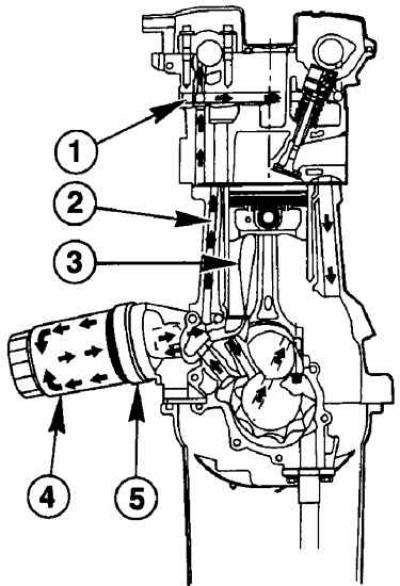
- 1 - oil supply channel in the cylinder head;
- 2 - main oil line;
- 3 - spraying oil for cooling pistons;
- 4 - oil flow in the oil filter;
- 5 – oil heat exchanger
The engine is lubricated under pressure. The oil pump takes oil from the oil pan through a mesh filter and delivers it under pressure through a fine oil filter. The oil pump has a bypass valve that maintains the pressure at one level in the engine lubrication system. If the pressure in the engine lubrication system rises above a certain level, the bypass valve opens and some of the oil flows back into the oil pan.
After passing through the oil filter, the purified oil enters the main oil line. The oil line contains an oil pressure sensor, which lights up the control lamp on the instrument cluster to indicate low oil pressure. The oil filter contains a valve that, if the oil filter is heavily contaminated, releases unpurified oil directly into the oil line.
From the main line, oil is supplied under pressure through channels to lubricate the main bearings of the crankshaft and then through channels in the crankshaft to the connecting rod bearings. To cool the pistons, oil is sprayed through nozzles onto the lower part of the pistons.
The oil is supplied through the channels to the cylinder head to lubricate the camshaft bearings and to the hydraulic tappets.
[View the original on the website: VWmanual]
Oil consumption
Oil consumption is the amount of oil required to ensure the combustion process of the fuel-air mixture. Oil consumption does not include oil losses due to leaks in the engine lubrication system. Oil consumption is also determined by high temperatures and pressures present during engine operation. Oil consumption is also affected by vehicle operating conditions and driving style. Maximum oil consumption is 1 liter per 1000 km of vehicle mileage.
Warning: Do not fill engine oil above the max mark on the dipstick, otherwise unburned oil may enter the exhaust system and damage the catalytic converter.
Visitor comments