



NOTE: If there is no fluid in the reservoir, the entire steering system should be checked for leaks. If there is a leak in the area of the pipe connections, first check the pipes and their connections for leaks, tighten them if necessary and wipe dry. The pumps supplied to the factory by the manufacturer are not filled with oil. Therefore, before installation, be sure to fill the pump with hydraulic oil 6 002 000 and turn it by hand, otherwise there may be noise during movement or damage to the pump.
Checking the pressure of the impeller pump
Remove the engine soundproofing screen.
Clamp the suction hose 1 using hose clamp 3094 (Fig. 5.17).
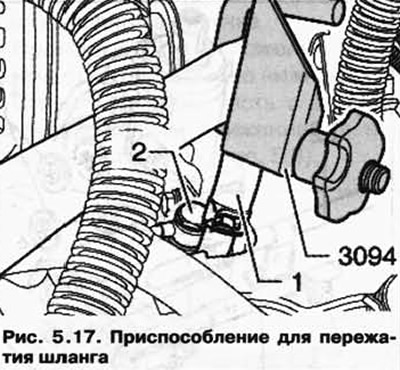
Unscrew the pressure pipe from pump 2.
Install the adapters as shown in Figure 5.18.
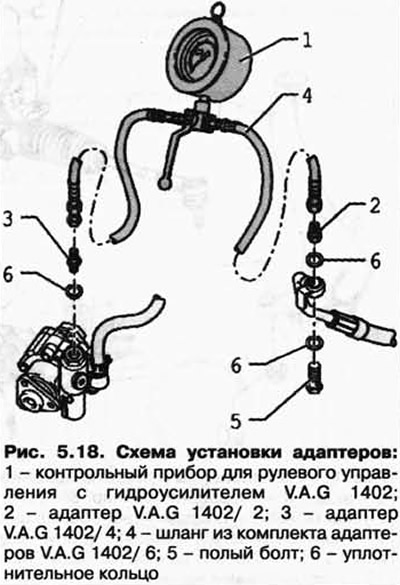
Remove hose clamp 3094 from the suction line. Make sure that the lever on the pressure gauge is in position 2 (Fig. 5.19).
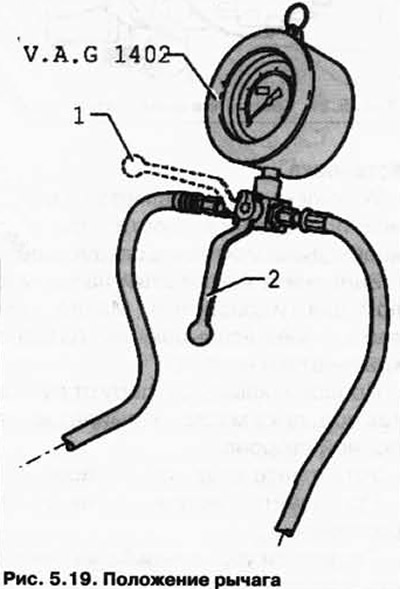
Start the engine and add hydraulic oil to the reservoir if necessary.
Turn the steering wheel from lock to lock approximately 10 times.
After this, check the pump pressure. To perform the check, the system must be tight. Hoses and pipelines must not have kinks and must not be pinched.
With the engine idling, close the shut-off valve for no more than 5 s (position 1) and read the pressure (Fig. 5.20).
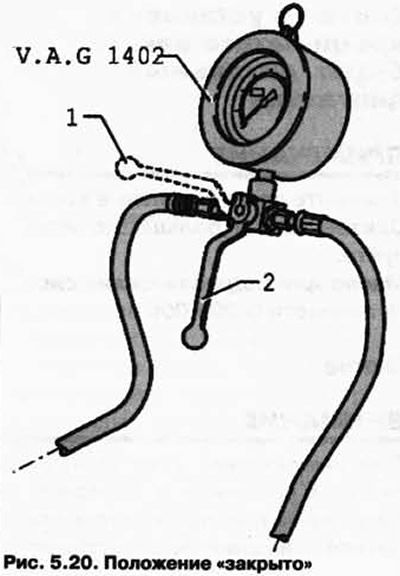
Nominal pressure: 110-120 bar.
If the value is less than the nominal value, replace the impeller pump.
Remove the pressure gauge and adapters.
Bleed the steering system.
Check the hydraulic oil level and top up if necessary.
Check the steering system for leaks.
Visitor comments