



Note: The brake fluid level depends on the degree of wear of the brake pads.
Caution: Do not mix brake fluid with fluids containing mineral oil (oil, gasoline, cleaning agents). If mineral oils enter the brake system, they will damage the brake system gaskets and seals.
Caution: Brake fluid is poisonous. Do not allow brake fluid to come into contact with paintwork as this will damage it.
Attention: Brake fluid is hygroscopic – it absorbs moisture from the surrounding air. Therefore, brake fluid may only be stored in closed containers.
Caution: If you find any brake fluid droplets, wash them off with plenty of water.
Attention: Observe the disposal regulations
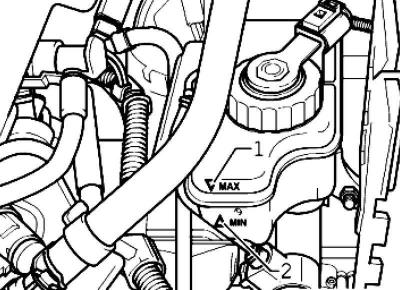
Fig. 6.5. Brake fluid reservoir
Note: To prevent brake fluid from leaking out of the reservoir, do not exceed the MAX 1 mark (fig. 6.5Note:).
Brake fluid level at interval inspection service
The brake fluid level should always be judged based on the degree of wear of the brake pads.
When driving, due to wear and automatic adjustment of the brake pads, the brake fluid level decreases slightly.
Recommended brake fluid level when brake pads are almost completely worn out
View the original on this resource: VWMANUAL
At the MIN mark and slightly above it 2, brake fluid should not be added.
Recommended brake fluid level for new or nearly new brake pads
Between the MIN and MAX marks.
Attention: If the brake fluid level has dropped below the MIN 2 mark, the brake system must be checked for leaks before topping up.
Sequence / amount of brake fluid
| Ripeness | The amount of brake fluid that should flow out of the brake cylinders or calipers: |
| front left | 0.25 l |
| front right | 0.25 l |
| rear left | 0.25 l |
| rear right | 0.25 l |
| Clutch slave cylinder | 0.15 l |
Visitor comments