



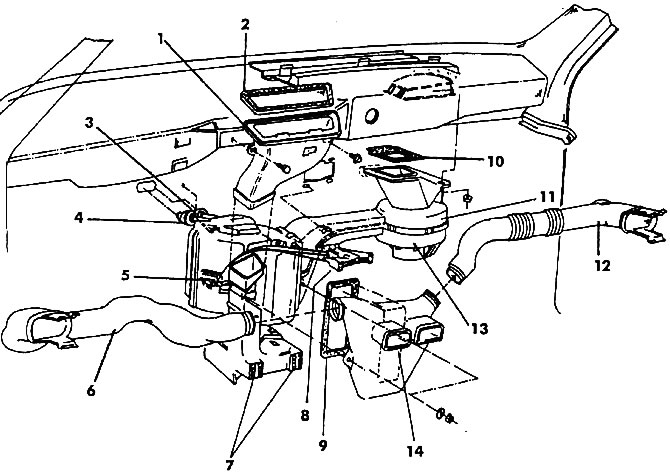
Figure 106. Schematic diagram of the interior heating and ventilation system: 1 - windshield air duct, 2 - gasket, 3 - heater radiator, 4 - gasket (must be replaced each time), 5 - heater casing, 6 - left air duct, 7 - air nozzles for supplying air to the feet, 8 - heating, ventilation and temperature control levers, 9 - gasket, 10 - gasket, 11 - air duct, 12 - right air duct, 13 - fan, 14 - distribution casing
General repair recommendations
The warm air distributor, air ducts, control levers and the rods connected to them are dismantled as a single unit.
All inspection and repair operations are carried out without the use of great force. It should be remembered that plastic parts are quite fragile and can be easily damaged.
The operations related to the heating and ventilation control levers will be described below. The procedure for removing and installing the central air ducts will be described below.
If the air distributor has to be disassembled in order to replace the heater, the instructions below should be followed.
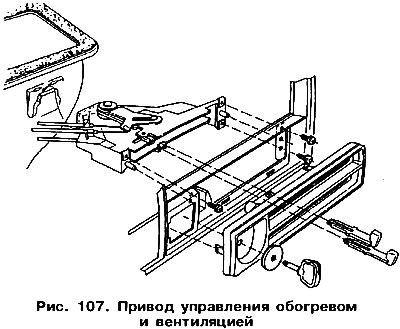
Figure 107 shows the diagram of the heating and ventilation control drive. This unit is removed together with the rods through the central air outlet opening of the distribution panel. Three rods must be disconnected from the air distributor. The decorative cover of the heating control levers is removed after releasing from the side latches. Installation is carried out in the reverse order. Adjustment of the rods is carried out in the manner described below. The rods are of different colors so that they can be easily distinguished. Before adjustment, all rods should be connected to the control levers, while the black long and short rods are connected to the heating and ventilation control lever.
Insert the rod casings into the holders (arrows in figure 108).
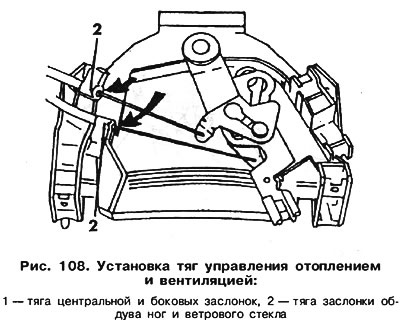
Black Long Rod 1 (figure 108) connect to the lever that controls the central and side flaps.
Connect the black short rod 2 to the lever that controls the footwell and windshield blower.
Pull 1 (figure 109) connect to the lever that controls the air temperature.
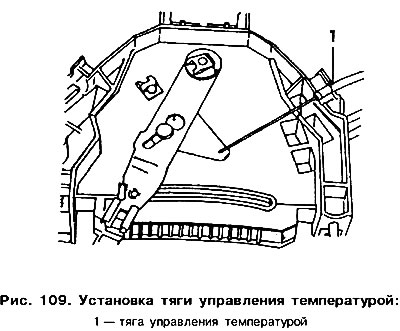
Install the control unit and move both levers to the left, i.e. close the heater valve and hot air access channels and open the cold air access.
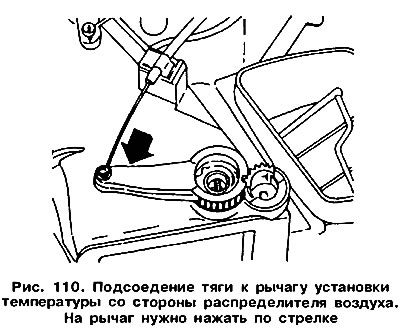
Connect the long black rod on the other side to the central damper lever mounted on the air distributor. Push the lever in the direction of the arrow (figure 110) and remove the protective bushings.
Attach the black short rod on the other side to the footwell and windshield air vent lever mounted on the air distributor, as shown in Figure 111.
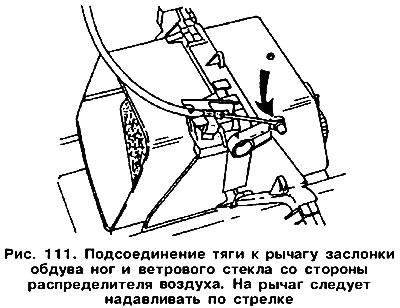
Move the lever in the direction of the arrow and insert the safety bushings on both sides.
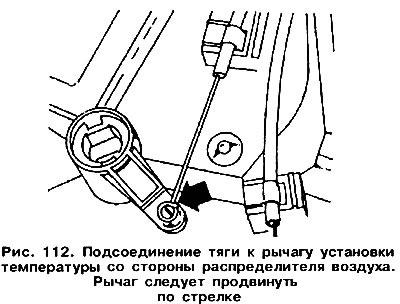
Connect the blue rod to the temperature control valve (figure 112). Move the lever (arrow) and insert the tie rod housing safety bushings.
After connecting the rods, move the heating, ventilation and temperature control levers one by one. You should hear the flaps hitting the stops.
The elements of the central air duct are shown in Figure 113. Based on this diagram, perform all actions for their removal and installation. The side nozzles have a similar design.
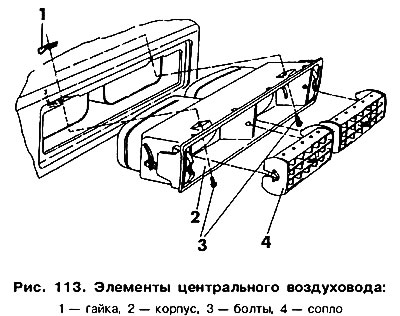
Figure 114 shows the components of the air distributor. By disconnecting the control levers and bending the heater clamps, the distributor housing can be separated into two parts and the remaining parts can be removed. If the clamps do not hold the distributor housing during assembly, it can be connected with two self-tapping screws that should be screwed into the upper housing.
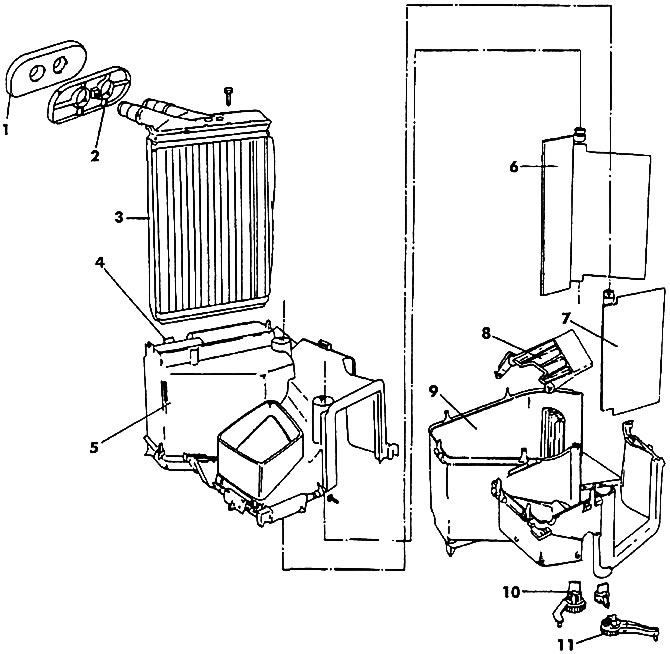
Figure 114. Heater casing: 1 - gasket, 2 - cover, 3 - radiator, 4 - clamp, 5 - upper part of the casing, 6 - temperature control flap, 7 - central flap, 8 - flap with lever regulating the blowing of the feet and windshield, 9 - lower part of the casing, 10 - lever of the flap regulating the temperature, 11 - lever of the central and side flaps
Visitor comments